A 200-room hotel renovation is behind schedule because the shower enclosures specified in the design package don’t match the plumbing rough-in dimensions on site. The procurement manager has 150 units sitting in a warehouse, and none of them fit. This scenario plays out more often than you’d think — and it’s entirely avoidable with the right specification process. If you’re sourcing hotel shower enclosures for a hospitality project, the difference between a smooth rollout and a costly delay comes down to one thing: knowing exactly what to ask for before you place the order.
This guide walks you through every specification decision a hotel project manager or procurement agent needs to make — from glass thickness and safety certifications to ADA compliance, dimensionnement personnalisé, and manufacturer evaluation. The information here draws on 25 years of manufacturing experience supplying brands like Hilton, Marriott, and Hyatt.
Points clés à retenir
- Tempered glass for hotel projects should be 8mm or 10mm — 6mm is too thin for high-traffic floors, and 12mm adds unnecessary weight and cost.
- Frameless enclosures dominate upscale hotel specifications, but semi-frameless offers a better cost-to-durability ratio for mid-scale properties.
- Four safety certifications matter: SGCC, CE, ANSI Z97.1, et AS/NZS 2208 — your target market determines which ones you need.
- ADA-compliant units require a minimum 36-inch clear opening and zero-threshold entry — plan this before finalizing bathroom layouts.
- Expect 15 jours pour les échantillons et 30 days for production from a qualified manufacturer with a 10-set MOQ.
- 304 stainless steel hardware outperforms aluminum and chrome-plated zinc in hotel environments — salt spray test results confirm the difference.
Why Hotel Shower Enclosures Require Different Specifications
Residential shower enclosures and commercial hotel enclosures share the same basic function. That’s where the similarity ends. Hotels subject glass enclosures to conditions that residential units rarely encounter: hundreds of guests per month per room, industrial cleaning chemicals, luggage carts bumping into glass panels, and rotating maintenance teams.
A Hilton property we supplied needed to replace enclosures on an entire floor within 18 months of opening. The original supplier used 6mm glass with chrome-plated zinc hardware. The glass survived, but the hardware corroded from aggressive cleaning agents. The replacement order specified 10mm tempered glass with 304 stainless steel hardware — and the problem never returned.
Hotels also face liability exposure that residential projects don’t. A guest injured by shattering glass triggers insurance claims, regulatory scrutiny, and brand damage. Safety certifications aren’t optional — they’re your first line of defense in a liability dispute.
The specification gap between residential and hospitality-grade enclosures shows up in three areas: épaisseur du verre (8-10mm minimum for hotels), hardware grade (304 acier inoxydable, not plated zinc), et certificat de sécurité (SGCC or ANSI Z97.1 at minimum). Skip any of these, and you’re building a maintenance liability into the property.
Key Specifications for Hotel Bathroom Shower Enclosures
Every hotel shower enclosure specification should address five core parameters. These are the numbers that determine whether the unit survives a decade of commercial use or ends up in a replacement cycle within three years.
Glass Specification
Hotels need tempered safety glass, minimum 8mm thickness for standard installations. The glass must be sourced from certified float glass producers — certified float glass are the standard we use across all production runs. Tempering increases glass strength by 4-5 times compared to annealed glass, and when breakage does occur, il se brise en petits morceaux, blunt fragments rather than sharp shards.
| Épaisseur du verre | Meilleure application | Hotel Suitability |
|---|---|---|
| 6millimètre | Budget residential, light-use guesthouses | Not recommended for full-service hotels |
| 8millimètre | Hôtels de milieu de gamme, propriétés de charme | Standard choice — good balance of strength and weight |
| 10millimètre | Upscale hotels, high-traffic floors | Recommended for premium brands — superior rigidity |
| 12millimètre | Suites de luxe, custom installations | Overkill for most rooms — adds 20-25% weight over 10mm |
Matériaux de quincaillerie
Hardware is the component that fails first in a hotel shower enclosure. The two materials that perform reliably are 304 acier inoxydable et 6063-Alliage d'aluminium T5. Stainless steel handles hinges, supports, and handles. Aluminum alloy works for frame profiles and tracks. Both resist corrosion from cleaning chemicals and maintain structural integrity under repeated use.
Chrome-plated zinc alloy looks identical on day one. Après 500 cleaning cycles, the plating wears through and the underlying zinc corrodes. We run a salt spray test on all hardware batches — 304 stainless steel passes 48+ heures sans corrosion visible. Plated zinc typically fails before 24 heures.
Hardware Grade Comparison
| Matériel | Salt Spray Resistance | Cost Relative | Hotel Recommendation |
|---|---|---|---|
| 304 Acier inoxydable | 48+ heures | Baseline | Strongly recommended |
| 6063-T5 Aluminum | 36+ heures | -15% à -20% | Acceptable for frames and tracks |
| Chrome-Plated Zinc | Sous 24 heures | -30% à -40% | Avoid for hotel projects |
Frameless vs Semi-Frameless vs Framed: Which Works Best for Hotels
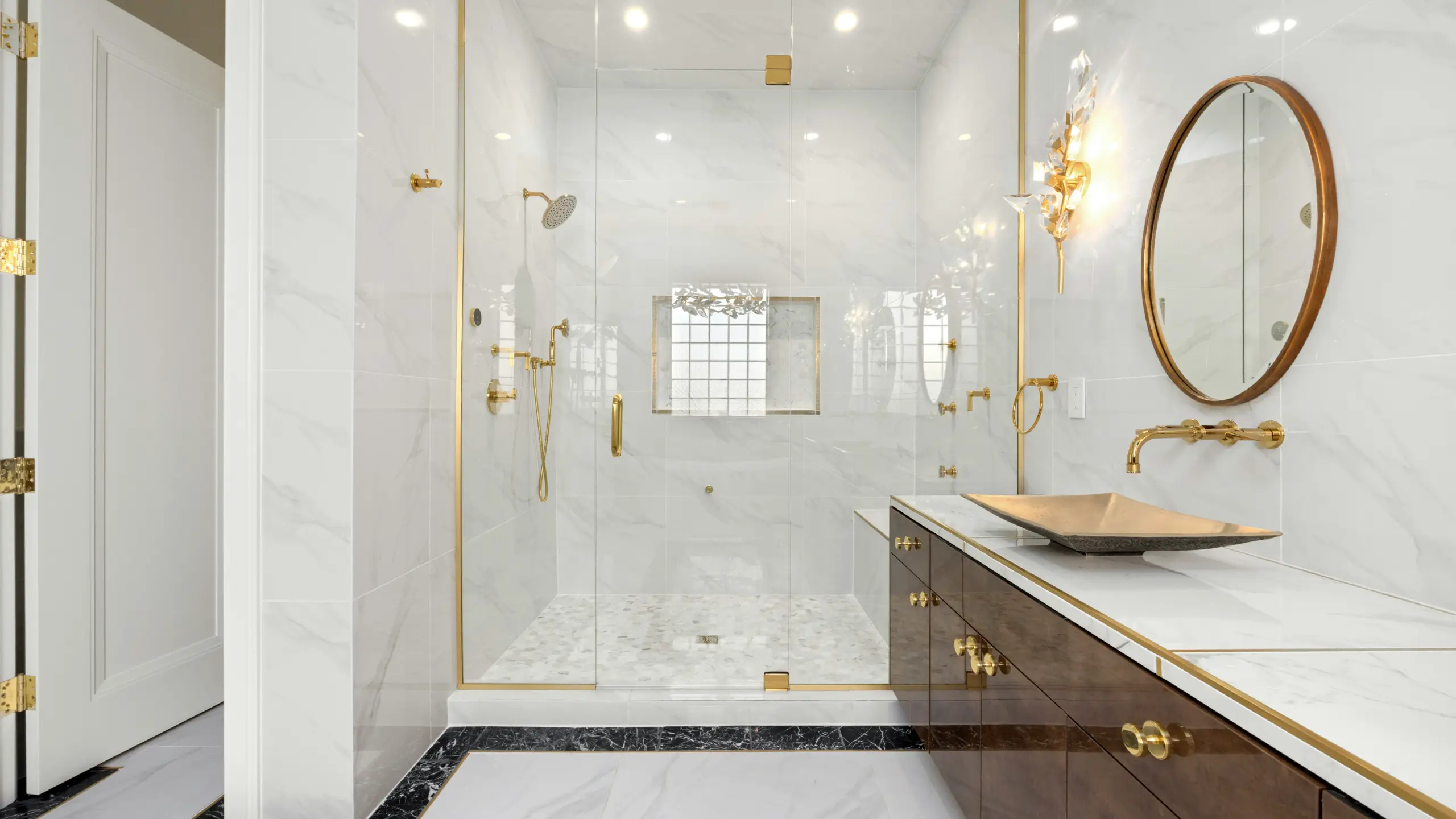
The frame question comes up on every hotel project. Each option has a legitimate use case depending on your brand standard, budget, and guest expectations.
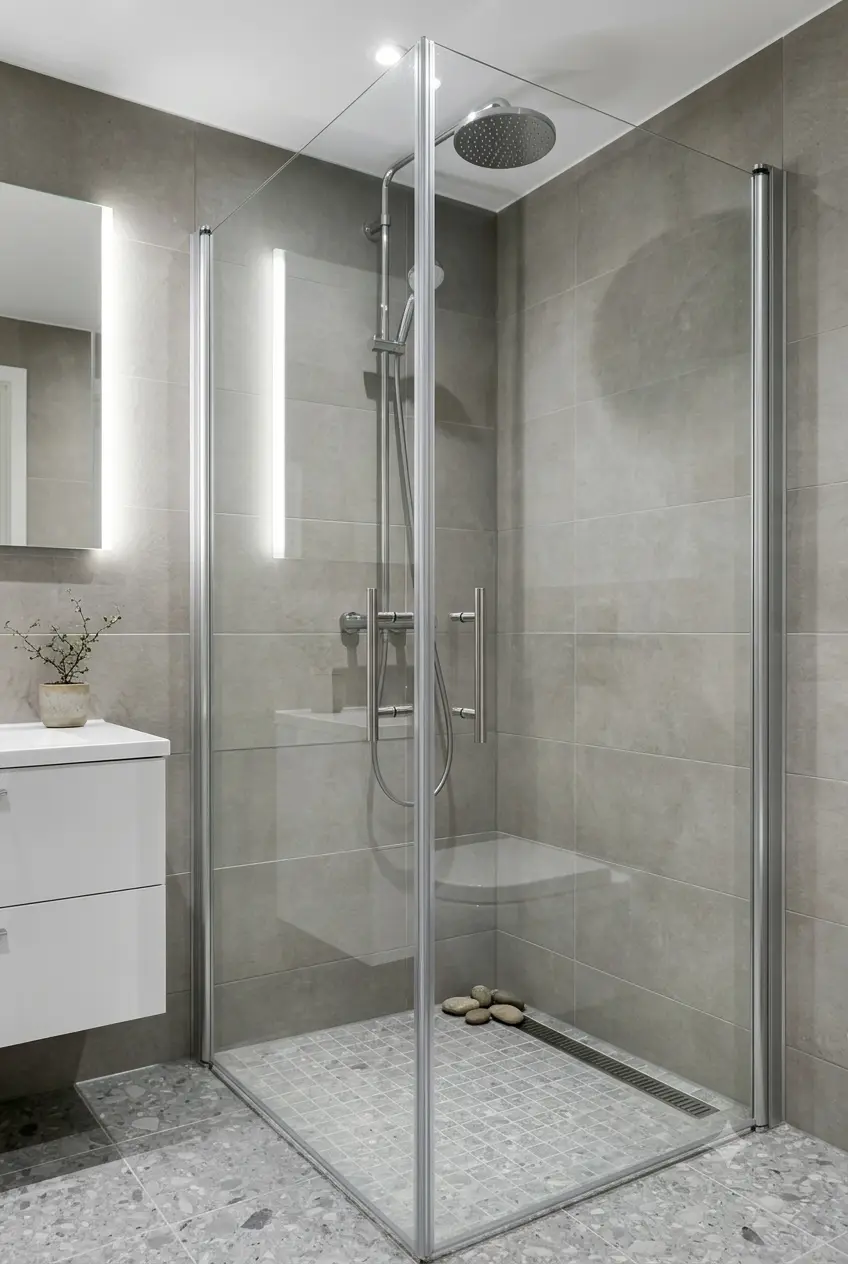
Frameless enclosures use 8-10mm tempered glass with minimal stainless steel clips and hinges. No metal frame surrounds the glass. They deliver the clean, open look that upscale brands like Hyatt and Element specify. The tradeoff: higher glass cost, heavier units requiring reinforced wall mounting, and more precise installation tolerances. For properties positioning at the upper-midscale to luxury tier, frameless is the default specification.
Semi-frameless enclosures combine a metal frame around part of the glass with exposed glass edges on other sides. They cost 15-25% less than frameless while still delivering a modern appearance. Marriott’s mid-scale brands and Doubletree properties have used this configuration effectively. The frame provides structural support that reduces glass thickness requirements, which lowers weight and simplifies installation.
Enclos encadrés use a full aluminum or steel frame around all glass edges. They’re the most economical option and the most structurally rigid. For budget-limited renovations, staff bathrooms, or properties where durability matters more than aesthetics, framed units make sense. The visual tradeoff is a busier appearance that reads as dated in premium brand contexts.
| Taper | Cost Index | Aesthetic | Best Hotel Tier |
|---|---|---|---|
| Sans cadre | $$$ | Prime, minimal | Upper-upscale, luxury |
| Semi-sans cadre | $$ | Moderne, clean | Mid-scale, upper-midscale |
| Encadré | $ | Traditional, utilitarian | Budget, back-of-house |
My recommendation for most hotel projects: specify frameless for guest-facing rooms and semi-frameless for secondary bathrooms. This approach controls costs without compromising the guest experience where it matters most.
Sliding vs Pivot vs Walk-In: Configuration Choices for Hotel Layouts
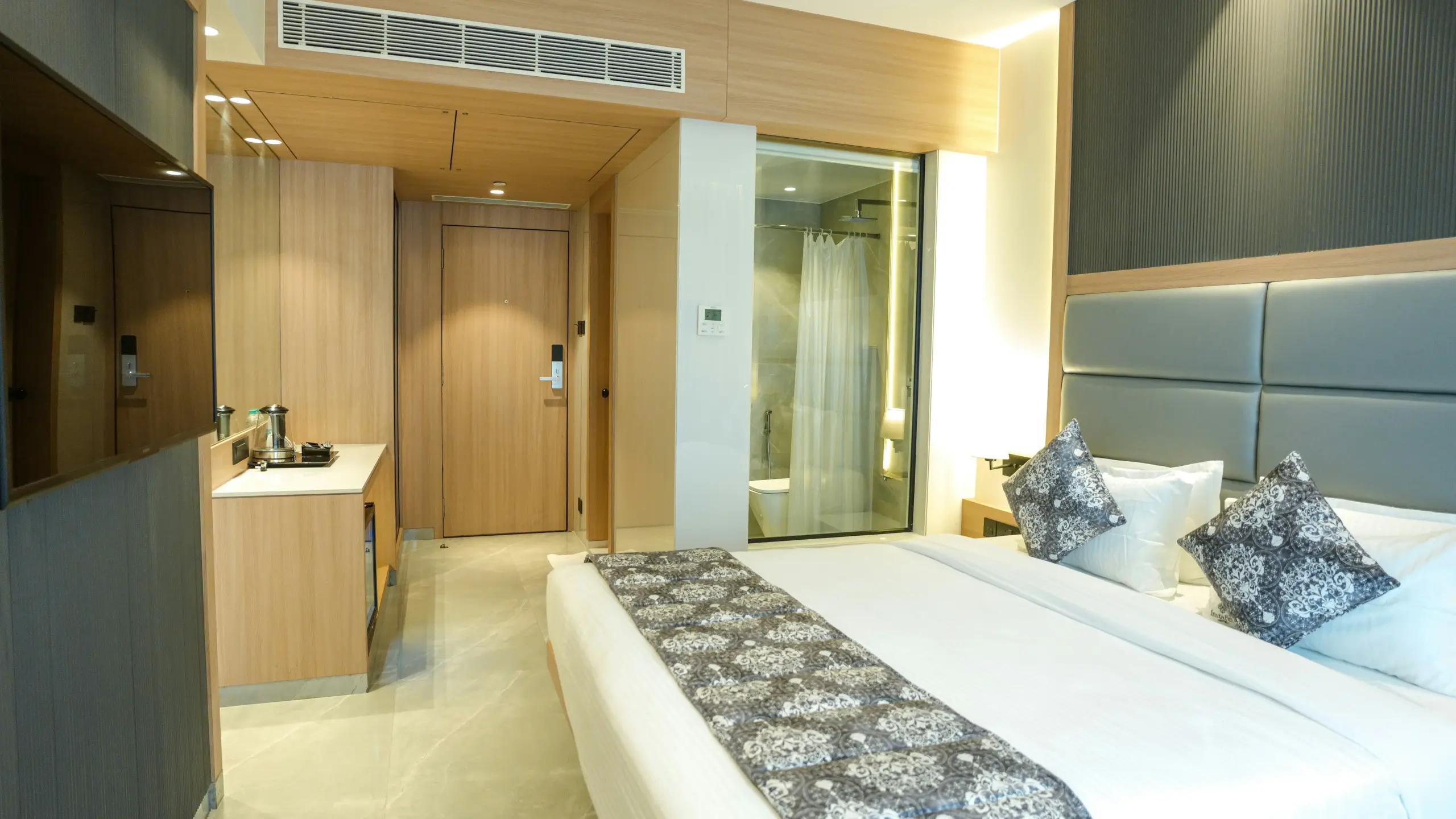
The configuration you choose affects bathroom square footage, plumbing layout, guest experience, and maintenance costs.
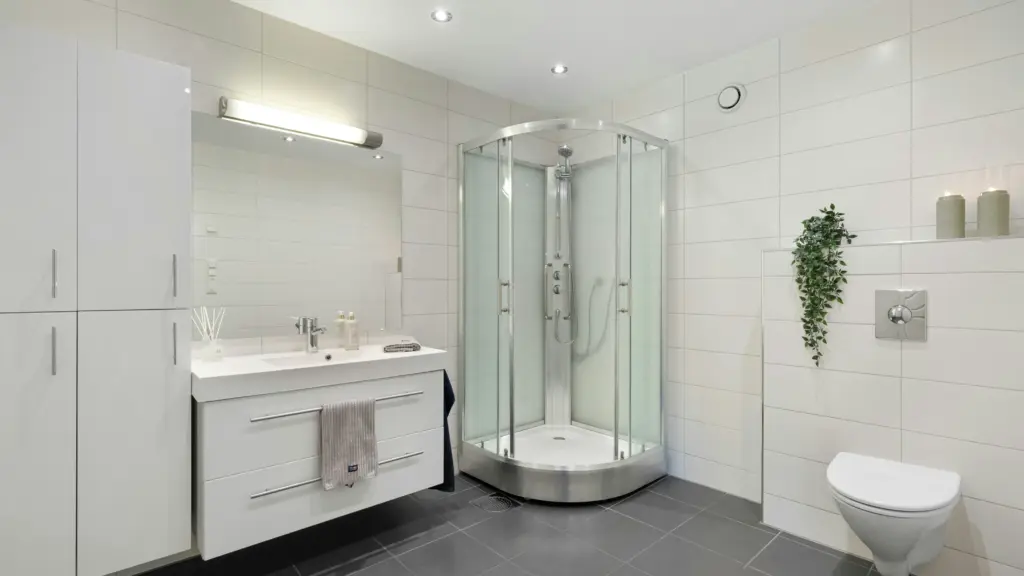
Sliding shower enclosures are the workhorse of hotel bathroom design. They don’t require swing clearance, which saves 12-18 inches of floor space. In a standard 5’x8′ hotel bathroom, that space saving is the difference between a comfortable layout and a cramped one. Sliding units use roller mechanisms that need periodic inspection — specify sealed bearing rollers rated for 50,000+ cycles. Our push-pull test on rollers simulates 10,000 cycles per test batch to catch premature wear.
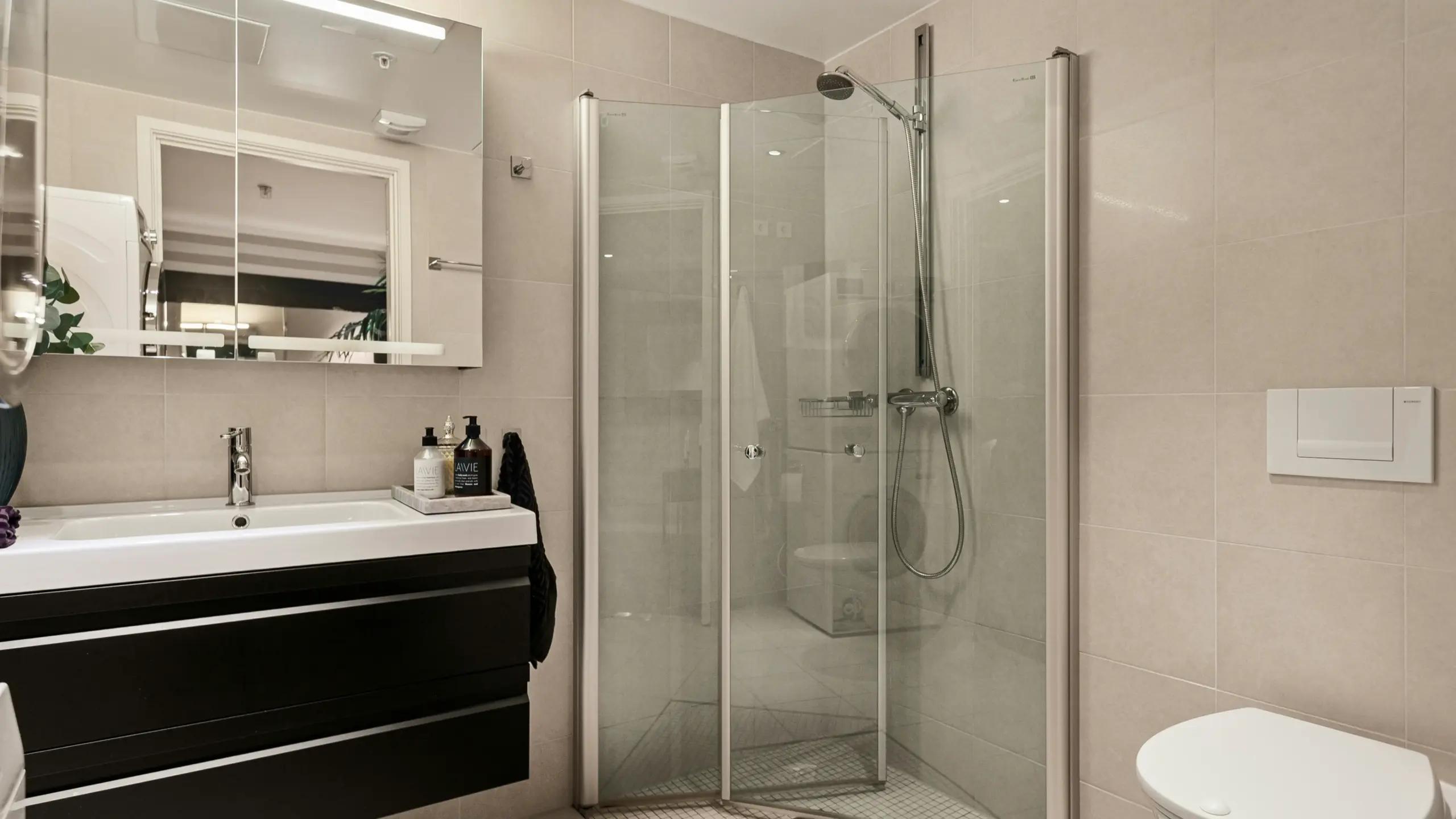
Pivot door enclosures swing inward or outward on a hinge. They feel more substantial to guests and work well in larger bathrooms where swing space isn’t a constraint. Upscale properties like Hilton Garden Inn and Embassy Suite have used pivot configurations in suite-level rooms. The hinge mechanism must be heavy-duty stainless steel — a weak pivot hinge on a 10mm glass door creates a safety hazard within months.
Walk-in enclosures (often called space-saving enclosures) use a fixed glass panel with an open entry. They’re increasingly popular in boutique hotels and renovation projects where existing plumbing constraints make enclosed configurations difficult. Walk-ins require a properly sloped shower base and excellent drainage to prevent water migration. They work best in markets where guests expect a wet-room-style experience.
For sliding door specifications, passez en revue notre porte de douche coulissante options. For projects with tighter layouts, parois de douche offer an alternative configuration that maintains an open feel while containing splash zones.
Safety Compliance: SGCC, CE, ANSI Z97.1, et AS/NZS 2208 Explained
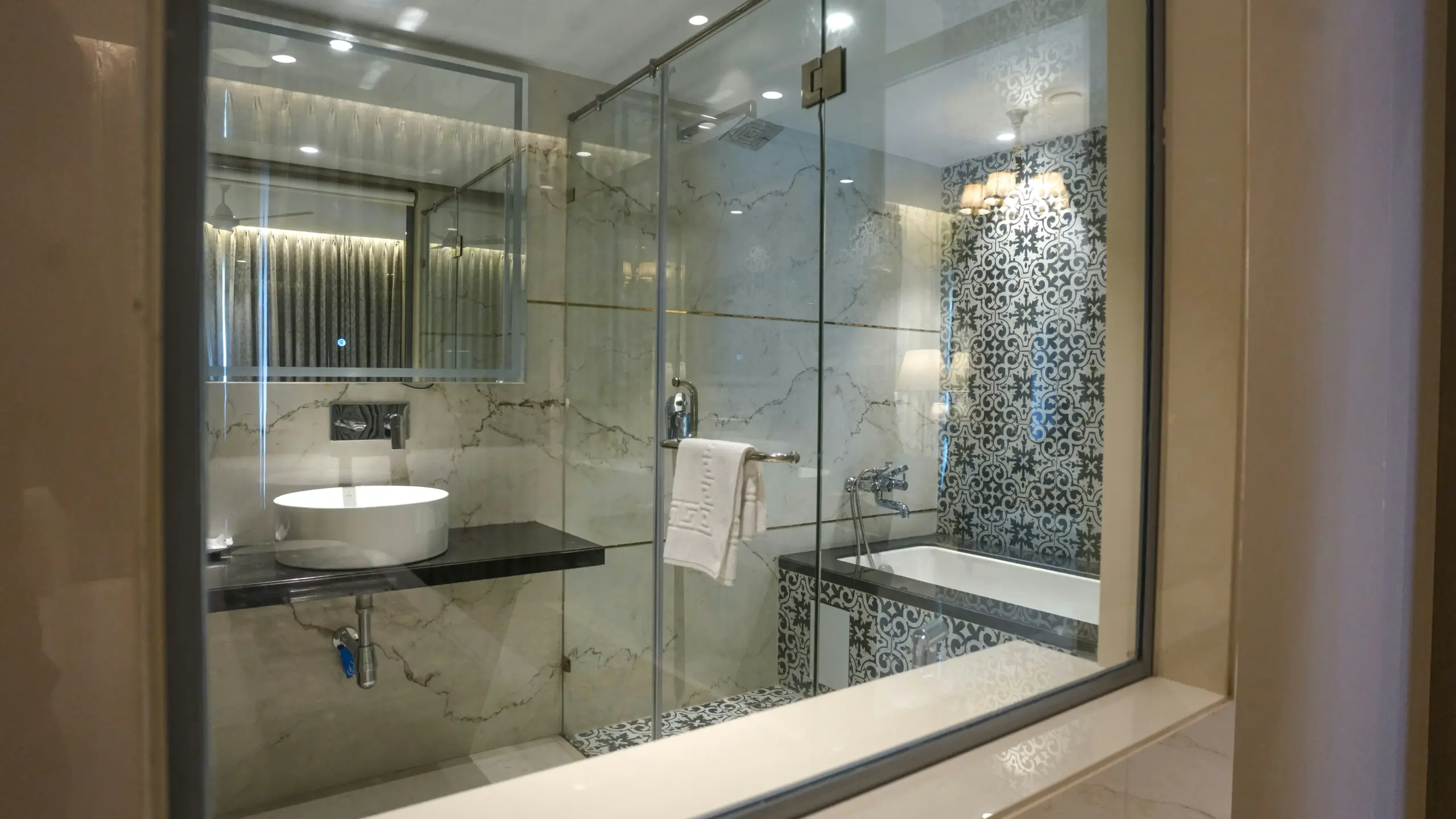
Safety certifications aren’t paperwork exercises. They’re your legal protection when a guest gets injured. Here’s what each certification actually means and which markets require them.
SGCC (Safety Glass Certification Council) — The U.S. standard for tempered safety glass. SGCC certification confirms the glass meets impact resistance and fragmentation requirements. Any hotel project in the United States needs SGCC-certified glass. The certification requires annual factory audits and random sample testing.
ANSI Z97.1 — The American National Standards Institute performance standard for safety glazing materials used in buildings. It covers impact testing, temperature resistance, and optical quality. ANSI Z97.1 is often specified alongside SGCC in U.S. commercial building codes. Some jurisdictions require one, the other, or both.
CE Marking — Required for any building product sold in the European Economic Area. For glass enclosures, CE marking confirms compliance with EN 12150 (thermally toughened glass) and EN 14449 (verre feuilleté). European hotel projects will require CE documentation at customs and during building inspection.
AS/NZS 2208 — The Australian/New Zealand standard for safety glazing in buildings. It specifies impact test methods and performance requirements similar to ANSI Z97.1 but with different test parameters. Any hotel project in Australia or New Zealand must meet this standard.
A manufacturer that holds all four certifications can supply hotel projects across North America, Europe, Australie, and Southeast Asia without certification delays. Multi-certification capability also signals a mature quality management system. Each production batch carries traceable certification documentation.
Sourcing Hotel Shower Enclosures?
25 years of manufacturing experience. 10-définir MOQ. Full customization. Certified for every major market.
ADA and Accessibility Requirements for Hotel Shower Enclosures
The Americans with Disabilities Act sets clear requirements for accessible hotel bathrooms. These are federal law for any hotel operating in the United States, and most countries have equivalent legislation.
For shower enclosures in accessible hotel rooms, the ADA requires a minimum 36-inch by 36-inch clear floor space at the shower entry. Transfer-type showers need a minimum 36-inch by 36-inch interior, while roll-in showers require at least 30 inches by 60 pouces. The threshold must be zero or no higher than 1/2 inch for roll-in designs.
Grab bar placement follows specific dimensions: 33-36 inches above the finished floor, mounted to structural backing capable of supporting 250 pounds. Shower controls must be positioned between 38 et 48 inches above the floor, accessible from outside the shower spray pattern.
For the enclosure itself, the door must provide a minimum 32-inch clear opening when open at 90 degrees. This measurement runs from the face of the door to the opposite stop. Pivot doors often work better than sliding doors for accessible rooms because they achieve the full clear opening width. If a sliding door is specified, the clear opening must still meet 32 pouces.
Here’s what catches hotel project managers off guard: the ADA requires accessible rooms in specific proportions. Hotels with 1-25 rooms need at least one accessible room. Properties with 500+ rooms may need 2% of total inventory as accessible units. Plan your enclosure order to include ADA-compliant configurations from the start — retrofitting is significantly more expensive.
Custom Sizing and Branding Options for Hotel Projects
Hotels rarely fit standard enclosure dimensions. Renovation projects encounter out-of-plumb walls, non-standard rough openings, and architectural features that demand custom sizing. New-build projects may have standardized dimensions but still need enclosures configured for specific brand standards.
Full customization covers four dimensions of the product:
- Taille: Largeur, hauteur, and depth manufactured to your exact bathroom dimensions. Tolerances of +/- 2mm are achievable with experienced manufacturers.
- Style: Sans cadre, semi-sans cadre, or framed. Glissement, pivot, pliable, or walk-in. The configuration must match your bathroom layout and brand aesthetic.
- Color and finish: Hardware finishes include brushed nickel, noir mat, chrome poli, oil-rubbed bronze, and custom PVD colors. Glass options include clear, givré, tinted, and patterned.
- Emballage: Hotel projects often require individual room-number labeling, protective packaging rated for site storage conditions, and staged delivery by floor or wing.
Branding extends beyond the product. Some hotel brands require custom packaging with the hotel brand’s logo, while others specify hardware finishes to match their design standards. A manufacturer with end-to-end customization capability handles both without adding lead time. Our facility includes four dedicated workshops — aluminum processing, traitement du verre, assemblée, and automated packaging — which means customization happens in-house rather than through subcontractors.
The practical advantage: sourcing custom-sized enclosures from a single manufacturer with full production capability gives you consistent quality across 200 rooms instead of slight variations from different batches.
Durability Requirements for High-Traffic Hotel Bathrooms
A hotel shower enclosure needs to perform flawlessly for 50,000+ uses before replacement becomes a capital expense conversation. That’s the reality of a room with 70% occupancy over five years. The durability requirements break down into three categories.
Glass Durability
Tempered glass doesn’t degrade with age or use. The risk isn’t the glass losing strength — it’s impact damage from housekeeping carts, guest luggage, or improper installation that creates stress points. Our impact test simulates a 45 kg soft-body impact at heights that exceed real-world hotel scenarios. Glass that passes will handle anything a hotel environment throws at it.
Hardware Durability
Hardware is the wear component. Charnières, rouleaux, poignées, and brackets endure mechanical stress daily. Specify 304 stainless steel for all moving parts. Run a salt spray test on every batch — 48 hours minimum with no visible corrosion. For rollers, the push-pull test should simulate 10,000+ cycles. A hotel room generating 30 uses per day hits 10,000 cycles in roughly 11 mois. You want hardware rated for 5x that minimum.
Seal and Gasket Durability
Vinyl seals and gaskets prevent water leakage. In hotel environments, these face constant moisture, temperature fluctuation, and chemical exposure. Specify UV-stabilized vinyl with a hardness rating of 70-80 Shore A. Expect seal replacement every 3-5 years as part of preventive maintenance — budget for it in your FF&E reserve.
The packaging drop test matters more than most buyers realize. Enclosures that survive a 1-meter drop test on all six faces handle warehouse storage, transport, and installation without damage. Units that fail arrive on site with micro-fractures that don’t show up until months later.
Budgeting for Hotel Shower Enclosures: Quantité minimale de commande, Pricing, and Lead Times
Hotel procurement operates on project timelines and capital budgets. Understanding the cost structure helps you plan accurately and avoid surprises.
Minimum Order Quantity
A 10-set MOQ is standard for custom hotel shower enclosures. This works for boutique properties, pilot floors, and sample approvals. For a 200-room project, you’ll likely place one large order or split into two deliveries by phase. The per-unit cost drops significantly at volume — ask for tiered pricing at 50, 100, et 200+ unités.
Pricing Factors
Five variables drive the unit price:
- Épaisseur du verre: 10mm costs 20-30% more than 8mm per unit.
- Frame type: Frameless units cost more than semi-frameless, which cost more than framed.
- Hardware finish: Standard finishes (chrome, nickel brossé) cost less than custom PVD colors.
- Custom sizing: Non-standard dimensions add 10-15% to the base price.
- Order volume: 200+ units typically unlock 8-12% volume discount.
Délais
Plan for 15 days for sample production et 30 jours pour une production complète after sample approval. For a 200-room project, the realistic timeline from inquiry to site delivery is 60-75 jours: 15 jours pour les échantillons, 5-7 days for review and approval, 30 jours pour la production, et 10-15 days for shipping. Build this into your project schedule before the renovation start date.
| Phase | Duration | Key Action |
|---|---|---|
| Production d'échantillons | 15 jours | Approve glass, matériel, finition, and dimensions |
| Sample Review | 5-7 jours | Install test unit, verify fit and finish |
| Production | 30 jours | Full order manufacturing and QC testing |
| Shipping | 10-15 jours | Ocean freight or expedited options |
One warning: don’t compress the sample approval phase. The sample is your last chance to catch specification errors before 200 units go into production. A week spent verifying the sample saves months of replacement logistics.
How to Evaluate a Hotel Shower Enclosure Manufacturer
Not every shower enclosure manufacturer can handle hotel projects. The gap between a residential supplier and a hospitality-capable manufacturer shows up in five areas.
Manufacturing Capability
A hotel-ready factory needs dedicated production lines for both glass processing and hardware fabrication. Look for at least 10,000 sqm of production space with separate workshops for aluminum processing, traitement du verre, assemblée, et emballage. A monthly capacity of 1,000+ sets ensures the factory can deliver a 200-room project within a single production cycle.
Quality Certifications
Require ISO 9001 (gestion de la qualité), OIN 14001 (gestion environnementale), et ISO 45001 (santé et sécurité au travail). Together these indicate a factory that manages quality, environmental impact, and worker safety systematically — exactly what international hotel brands require in supply chain audits.
Hotel Project Track Record
Ask for references from named hotel brands. A manufacturer that has supplied Hilton, Marriott, Hyatt, Arbre double, and Embassy Suite has demonstrated the ability to meet the quality standards and delivery timelines that major hotel brands demand. Verify the references — call the procurement contact at one of the named properties.
Testing Infrastructure
The manufacturer should perform four tests on every production batch: vérification de la trempe, impact/collision testing, test de chute d'emballage, and salt spray testing for hardware. If they can’t show you test reports from the last three production runs, they’re not running consistent QC.
Warranty and Support
A 5-year warranty on the enclosure and 3-year warranty on parts is the standard you should expect. Pair that with a 12-hour response time for technical inquiries. Hotel projects don’t wait — when a specification question arises during installation, you need an answer the same day, not next week.
Conclusion
Specifying shower enclosures for hotel projects requires attention to glass thickness, hardware grade, safety certifications, conformité en matière d'accessibilité, and manufacturer capability. The decisions you make during specification determine whether the installation performs for a decade or becomes a recurring maintenance expense.
Start with the guest experience your brand promises, work backward to the specifications that deliver it, and source from a manufacturer with proven hotel project experience. The 15-day sample and 30-day production timeline means you can move from specification to site delivery in under 75 days — if you plan the process correctly.
Points clés à retenir
- Specify 8-10mm tempered glass with 304 stainless steel hardware for hotel-grade durability.
- Match safety certifications (SGCC, CE, ANSI Z97.1, AS/NZS 2208) to your target market.
- Plan ADA-compliant configurations from the start — retrofitting costs 3-5x more.
- Choose a manufacturer with ISO certifications, hotel brand references, and in-house testing capability.
Ready to specify enclosures for your next hotel project? Explore our shower enclosure range or contact our team for project-specific pricing and sample requests.
Specifying hotel shower enclosures involves dozens of decisions — glass thickness, hardware grade, attestations, dimensionnement personnalisé, lead times. KJ Bath has supplied enclosure systems for Hilton, Marriott, and Hyatt properties with a 5-year warranty and 12-hour response commitment. Contact us with your project requirements and we’ll put together a specification package within 24 heures.
Bain KJ: Hotel Shower Enclosure Manufacturer Since 1999
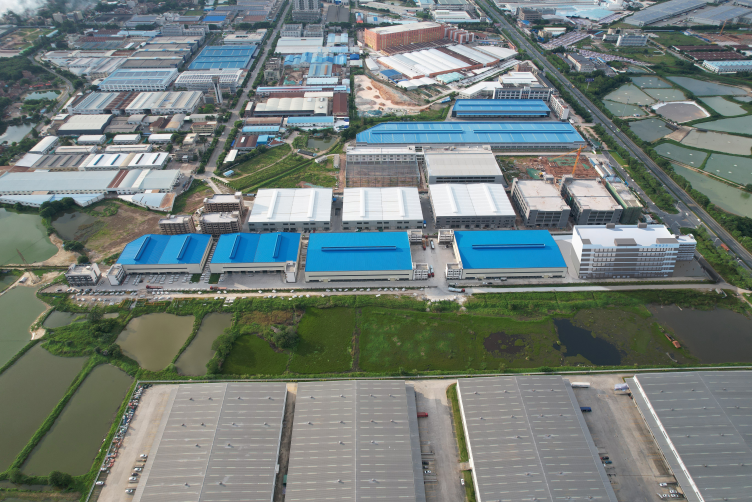
KJ Bath operates a 15,000 sqm facility in Foshan with 151 personnel, including a 12-person R&D team and 120 production workers. The factory produces 1,000 shower enclosure sets per month using tempered glass panels (8-10mm standard for hotels) et 304 stainless steel hardware that passes 48+ hour salt spray tests. ISO 9001, ISO14001, and ISO45001 certified, with SGCC and CE product approvals. KJ Bath has delivered enclosure systems for Hilton, Marriott, Hyatt, and Doubletree properties. Full customization covers size, glass finish, hardware color, et emballage. Sample turnaround is 15 jours, production 30 jours, with a 5-year enclosure warranty and 12-hour response commitment. Send your hotel project requirements to KJ Bath.
Questions fréquemment posées
What is the minimum order quantity for hotel shower enclosures?
The standard MOQ is 10 ensembles, which works for pilot floors, sample approvals, and boutique hotel projects. Volume orders of 100+ units typically unlock tiered pricing discounts.
How long does it take to produce and deliver hotel shower enclosures?
Sample production takes 15 jours. Full production runs 30 jours après l'approbation de l'échantillon. Add 10-15 days for shipping. Total timeline from inquiry to delivery is approximately 60-75 jours.
Can shower enclosures be customized to fit non-standard hotel bathroom sizes?
Oui. Full customization covers size, épaisseur du verre, finition du matériel, frame style, et emballage. Tolerances of +/- 2mm are achievable for custom dimensions.
What safety certifications should hotel shower enclosures have?
For U.S. projects, require SGCC and ANSI Z97.1. European projects need CE marking. Australian projects require AS/NZS 2208. A manufacturer holding all four can supply globally.
What warranty should I expect from a hotel shower enclosure manufacturer?
A 5-year warranty on the enclosure structure and 3-year warranty on parts is the industry standard for hospitality-grade products. Expect 12-hour response times for technical support inquiries.