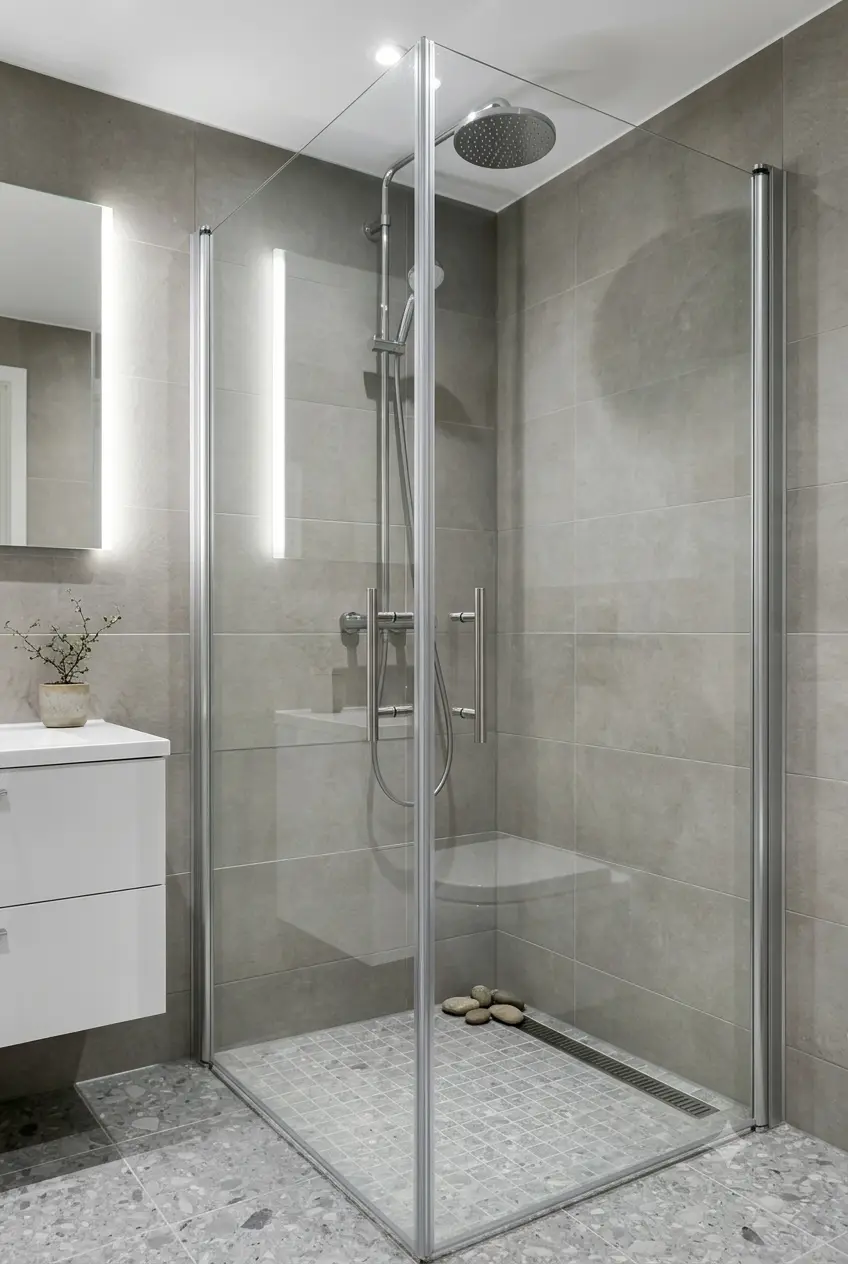
Every compact bathroom project poses the same question: how do you fit a working shower into a corner that a standard square enclosure would waste. The answer is almost never “make the square smaller.” It is to change the shape. Corner, neo-angle, diamond, and quadrant enclosures each reclaim floor area in a different way, and knowing which geometry suits which room is the difference between a spec that sells and one that gets sent back.
For importers and distributors new to the space-saving category, this guide explains the four shapes in plain terms — what each one looks like from above, where it fits, and what to watch for when you specify it. By the end you can read a floor plan, match an enclosure shape to the room, and build a compact-line catalog that answers the questions your contractors will ask. All four shapes are part of KJ Bath’s space-saving enclosure range.
Key Takeaways
- Space-saving enclosures reclaim floor area by changing geometry, not by shrinking a square unit.
- Four shapes dominate the category: corner (square), neo-angle, diamond, and quadrant, each with a distinct footprint and entry.
- Neo-angle and diamond favor a wider entry in a small corner; quadrant favors a soft curved front; square corner favors the simplest, cheapest install.
- The angles that save floor space are the same angles that make waterproofing and door glide harder to engineer.
- Match the shape to the room’s wall length and clearance, then choose the door type that opens inside what is left.
- A compact line needs one spec sheet per shape covering minimum wall, entry width, and glass thickness.
Why Shape, Not Size, Drives the Compact Category
A square enclosure needs two full walls at right angles and swings or slides a door across a square opening. In a large bathroom that is fine. In a small guest bath, service apartment, or RV-style layout, the square’s corners eat the floor a fixture or a doorway needs. Space-saving enclosures attack the problem geometrically: cut, angle, or curve the front so the unit occupies the corner wedge and leaves the room’s usable circle open.
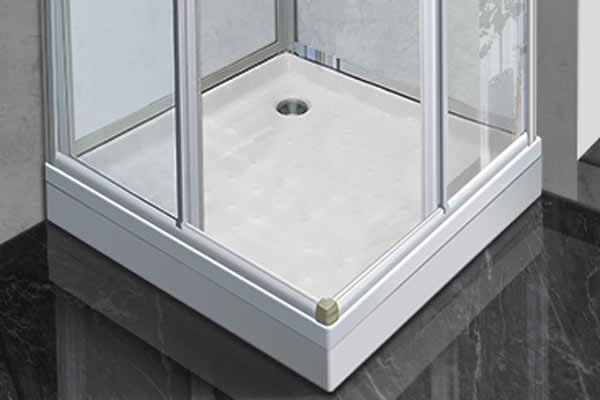
Each cut trades something. Angled panels give a wider opening but add glass joins that must be sealed. A curved front softens the look and clears a walkway but needs a matching curved tray. The buyer’s job is not to find the “best” shape but to match the trade to the room. If you are new to the underlying vocabulary, our shower enclosure glossary defines the terms these specs rely on.
The Four Space-Saving Shapes, Defined
Read from above, four profiles cover most compact projects.
Corner (square) enclosure
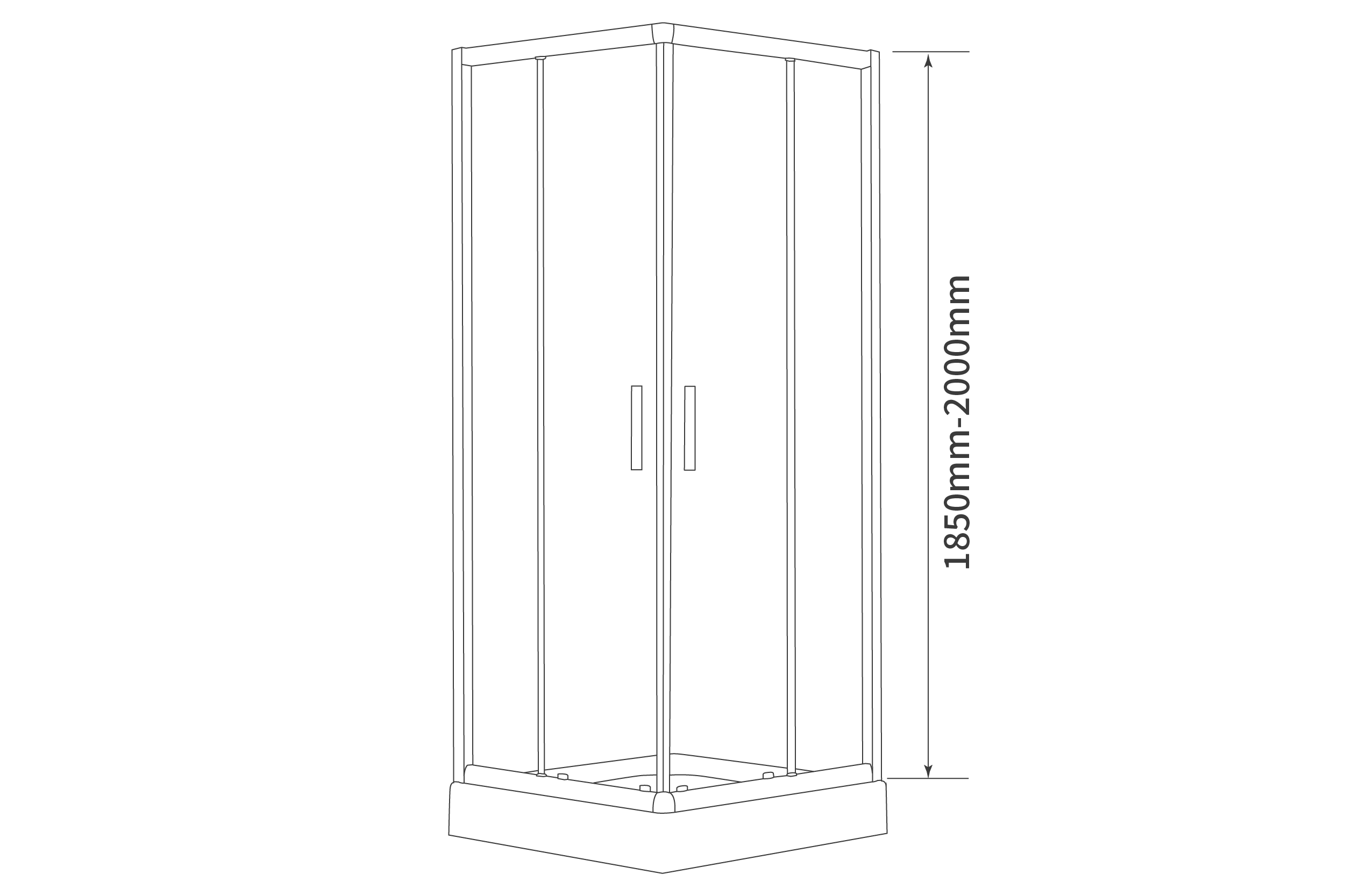
The simplest shape: two glass panels meeting at a right angle into a corner, usually with a square or near-square footprint, commonly around 800 to 1000mm on each wall. It is the easiest to manufacture, the easiest to seal, and the cheapest to ship, which is why it anchors most entry-level compact lines. The trade-off is that its square corners hold some floor area the angled shapes would free up.
Neo-angle enclosure
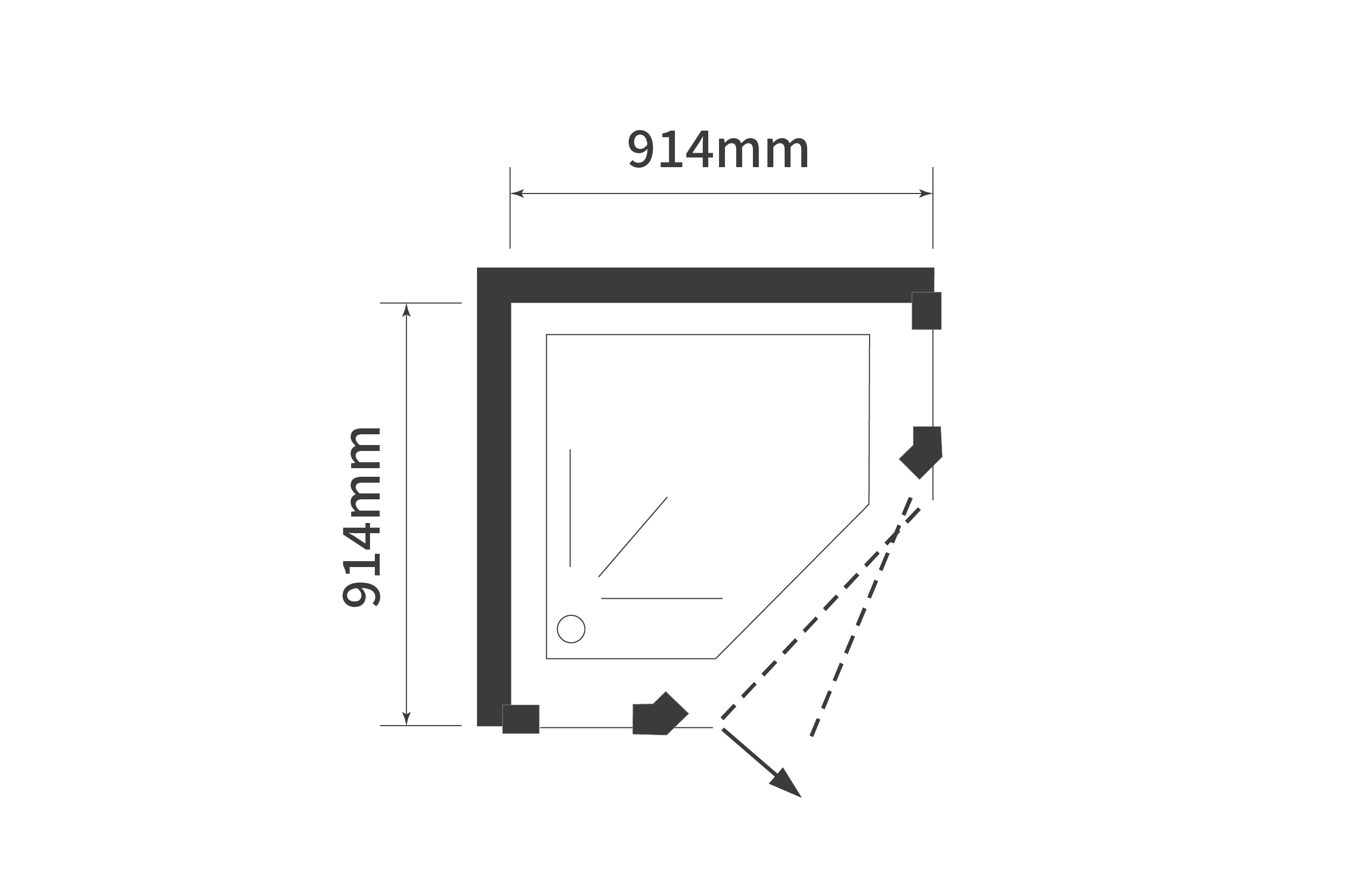
A five-sided corner unit: two panels run along the walls, two angled panels cut in toward the room, and they meet at a front corner or a short centered door. Because the front is pushed back along diagonals, a neo-angle gives a wider standing area and a more open entry than a square unit of the same wall length. It is a common choice for small hotel rooms where the door has to clear a toilet or vanity.
Diamond enclosure
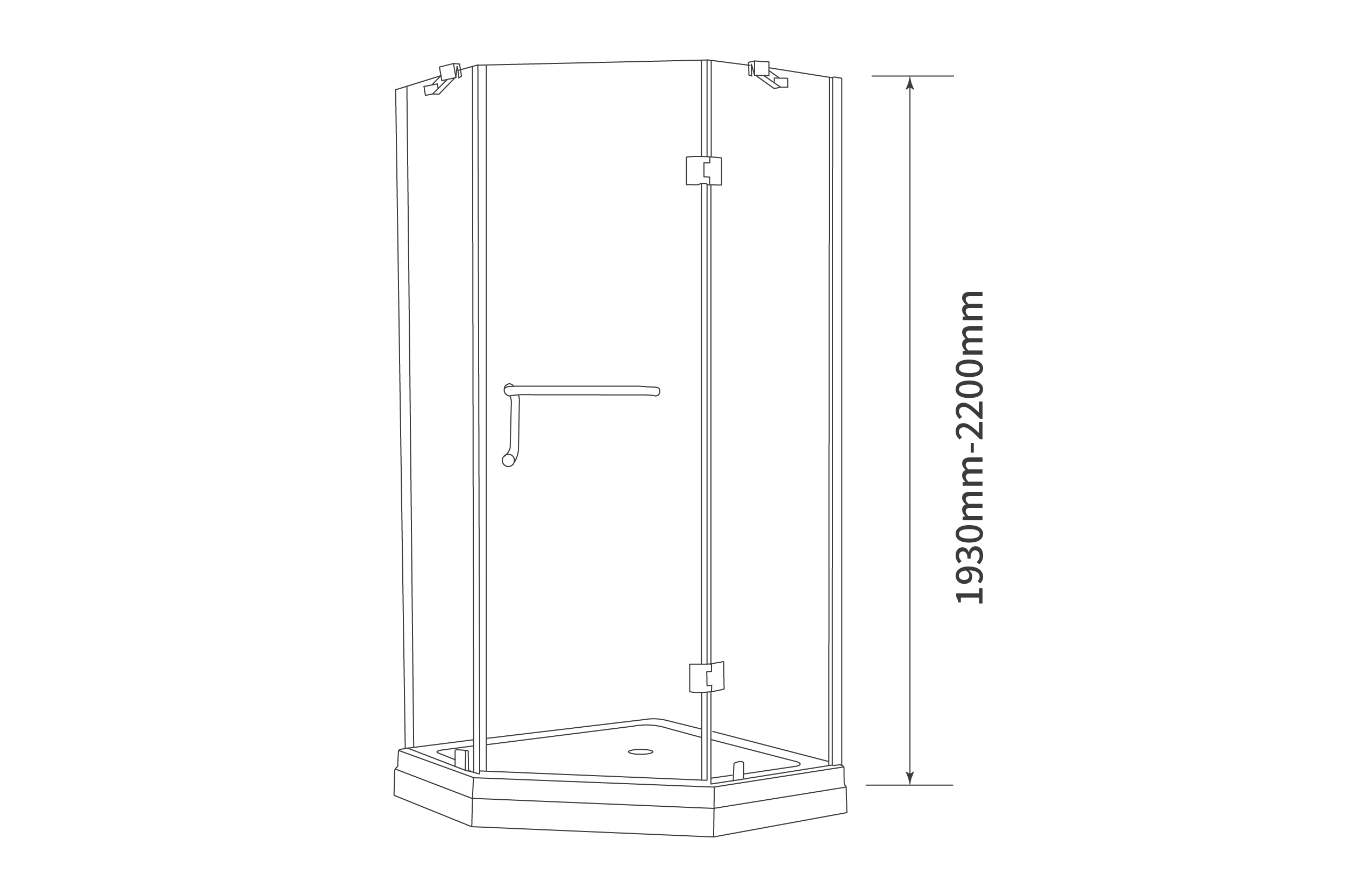
A corner unit whose front panels form a diamond point reaching into the room instead of a flat or curved face. The diamond shape maximizes interior standing room for a given corner because it pushes the usable volume toward the user, and it clears a path along either side wall. The KJ Bath JL139 is a multi-faceted diamond-style corner on this principle, built for apartment and hotel bathrooms where every degree of freedom in the walkway counts.
Quadrant enclosure
A corner unit with a single curved front that follows a quarter-circle footprint. The curved face saves the most floor of any shape and removes the sharp corner a body would otherwise bump, which makes quadrant units popular where a hard edge would crowd the room or snag a doorway. The curve does require a matching curved tray and a bent or segmented track, so quadrant enclosures sit at the premium end of a compact line.

The Four Shapes at a Glance
Use this comparison when you decide which shapes to carry in a catalog and which to recommend for a given room.
| Shape | Front profile | Entry width | Best suited to |
|---|---|---|---|
| Corner (square) | Two flat panels at 90° | Moderate | Entry-level compact lines; simplest, lowest-cost install |
| Neo-angle | Angled, five-sided | Wider | Small hotel rooms; doors that must clear a fixture |
| Diamond | Pointed front reaching in | Widest standing room | Apartments; keeping a path clear on both side walls |
| Quadrant | Curved quarter-circle | Moderate, soft | Tight rooms with a doorway or traffic edge to clear |
The Geometry That Saves Floor Is the Geometry You Must Engineer
Here is the part first-time importers underestimate. Every angled join and every curve that reclaims floor space is also a place water can escape and a place a door can bind. A square corner has one vertical join; a neo-angle has several; a quadrant has a curved track that must stay aligned with a curved tray. The waterproofing and the glide get harder exactly where the shape gets smarter.
Two design features carry the load:
- Magnetic and interlock seals. On angled and sliding shapes, the panels meet at seams that must close tightly. A magnetic seal pulls the adjoining edges together to bridge the gap and keep spray inside the enclosure. On a compact door that opens many times a day, this small part decides whether water stays in the shower.
- Rollers and tracks built for the shape. Sliding compact doors run on stainless rollers in a track that follows the geometry. KJ Bath rates its rollers to 100,000 push-pull cycles so the smooth glide a showroom demo shows is the glide a hotel gets years later. Our breakdown of roller and track cycle testing explains how the rating is earned.
Choosing the Door Inside a Tight Footprint
Shape sets the footprint; the door type sets whether it actually opens in the room you have. A hinged or pivot door needs a clear swing arc, which a very small bathroom often cannot give. Sliding and bi-fold doors keep their motion inside the unit’s line, so they are the usual answer where the floor is short.

Where a sliding door is the right call, the door mechanics become the spec. Our guide to sliding shower door track systems and the comparison of sliding vs pivot vs hinged doors for projects cover which opening type fits which room. For compact commercial bathrooms specifically, see how sliding doors save space in tight layouts.
A Sizing and Clearance Checklist for Compact Specs
Before you build the catalog or place a trial order, confirm the geometry against the real room. Walk these lines per shape:
- Two usable wall lengths at the corner, and whether the target shape needs them equal (square, quadrant) or can tolerate a range (neo-angle, diamond).
- The entry width the shape delivers versus the width a user actually needs to get in.
- The swing or slide envelope, and the nearest fixture or door that could block it.
- A matching tray: square for corner units, curved for quadrant, angled-plan for neo-angle and diamond.
- Glass thickness for the panel size — tempered from 6mm to 12mm, with the thicker end for wider or frameless panels.
- Seal and track detail at every angled join and at the threshold, since that is where compact shapes leak.
Tray and base geometry is its own decision chain; our overview of shower base types and the shower tray sizing guide pair with the shape notes above when you spec the full unit.
Building a Compact or Space-Saving Enclosure Line?
KJ Bath produces corner, neo-angle, diamond, and quadrant enclosures for small hotel and apartment bathrooms, with matched trays, magnetic seals, and 100,000-cycle rollers as standard. Send us your floor plans and we will recommend the shape that fits and quote it at a 10-set MOQ.
Why Choose KJ Bath for Space-Saving Enclosures
KJ Bath (Foshan Nanhai Kangjian Sanitaryware) has manufactured shower enclosures since 1999 and builds the full space-saving category in-house, including the JL139 diamond-style corner and the JK1934 corner sliding models. Glass is tempered on site from 6mm to 12mm using Xinyi original sheets and passes impact and shatter testing, and hardware clears salt-spray and 100,000-cycle checks. The company holds ISO 9001, ISO 14001, ISO 45001, SGCC, and CE certifications, supplies Hilton and Marriott projects, and supports a compact line at a 10-set MOQ with 15-day samples and 30-day first production runs. Its design team returns marked-up floor plans and solves the sealing and glide challenges that angled and curved shapes create. Browse space-saving enclosures or learn more about KJ Bath.
Frequently Asked Questions
What is the difference between a neo-angle and a quadrant shower enclosure?
A neo-angle is a five-sided corner unit with angled flat panels that meet at a front point, giving a wide entry in a small footprint. A quadrant has a single curved front following a quarter-circle, saving the most floor and removing sharp corners. Neo-angle suits compact rooms needing a wide door; quadrant suits rooms where a curved face must clear a walkway or doorway.
Which space-saving enclosure shape is easiest to install?
The square corner enclosure is the simplest, because it has only one right-angle join and a standard tray, which makes sealing and alignment easier and cost lower. Neo-angle, diamond, and quadrant shapes add angled joins or a curved track, so they save more floor but need closer attention to waterproofing and door glide.
Do space-saving enclosures leak more than square ones?
Not when they are engineered for the geometry. The extra angled or curved joins that save floor space are the same places water can escape, so quality compact units use magnetic and interlock seals at panel seams and a well-fitted threshold. A properly specified and installed neo-angle, diamond, or quadrant unit keeps water in as reliably as a square one.
What glass thickness do compact shower enclosures use?
Commercial space-saving enclosures use tempered glass from 6mm to 12mm. Framed and semi-frameless compact units commonly run 6–8mm because the frame supports the panel, while frameless designs need 10mm and up for wider panels, since the glass itself provides the rigidity.
What is a reasonable MOQ for a space-saving enclosure line?
KJ Bath sets a 10-set minimum order quantity for its main compact models, which is low enough for a distributor to test a space-saving line in a market before committing to larger volumes, and lets you trial each shape against real bathroom layouts.