Importar mamparas de ducha significa leer hojas de especificaciones, citas, y correos electrónicos de fábrica llenos de términos como SGCC, PVD, DFM, y evitar. Si eres nuevo en la categoría, el vocabulario por sí solo es suficiente para hacerle dudar antes de cuestionar una cotización o detectar un proveedor débil.
Este glosario define 30 Términos de mamparas de ducha que todo importador B2B y agente de adquisiciones junior debe conocer, agrupados en cinco categorías prácticas. Cada entrada explica qué significa el término y por qué es importante al especificar, precios, o inspeccionar un pedido, para que puedas mantener una conversación con una fábrica en igualdad de condiciones.
Conclusiones clave
- El 30 Los términos se dividen en cinco grupos.: vidrio y seguridad, configuración de la puerta, formas que ahorran espacio, hardware y acabado, y términos comerciales.
- Términos de seguridad (SGCC, ANSI Z97.1, prueba de inmersión en calor) decidir si un proyecto pasa la inspección. Obtenga la documentación antes de realizar el envío.
- Términos de tipo de puerta (sin marco, derivación, pivote, entrada sin cita previa) mapear directamente al tamaño y presupuesto del baño.
- Términos de hardware (revestimiento PVD, prueba de niebla salina, prueba de ciclo) decidir cuánto tiempo sobrevive el gabinete al uso comercial diario.
- Términos comerciales (Cantidad mínima de pedido, OEM/ODM, DFM, plazo de entrega) moldea tu costo, momento, y riesgo como importador.
- Conocer este vocabulario te permite leer una hoja de especificaciones., cuestionar una cita, y comparar dos proveedores sobre la misma base.
Términos de vidrio y seguridad
El vidrio es el componente de mayor costo en una mampara de ducha y la parte que conlleva la responsabilidad de seguridad.. Estos seis términos aparecen en casi todas las especificaciones y en todos los documentos aduaneros..
1. Vidrio templado
Vidrio calentado a aproximadamente 620°C y luego enfriado rápidamente, que comprime las superficies exteriores. Es de cuatro a cinco veces más resistente que el vidrio recocido y, cuando se rompe, se desmorona en pequeños cubos romos en lugar de fragmentos largos. Todas las mamparas de ducha comerciales lo utilizan. Una fábrica seria templa sus propios paneles y verifica cada lote en lugar de comprar vidrio precortado de una fuente no verificada..
2. Vidrio laminado
Dos láminas de vidrio unidas con una capa intermedia de PVB. Si el panel se rompe, la capa intermedia mantiene los fragmentos en su lugar en lugar de dejarlos caer. Los prescriptores exigen vidrio laminado en los acristalamientos superiores, áreas públicas de alto tráfico, y cualquier lugar donde un panel que se caiga pueda dañar a alguien. Puede leer una comparación más completa en nuestra guía para Vidrio templado versus vidrio laminado para puertas de ducha..
3. Prueba de inmersión en calor (HST)
Un ciclo de horno controlado se ejecuta después del templado.. Obliga a que los paneles que contienen inclusiones de sulfuro de níquel se rompan dentro de la fábrica en lugar de meses después en la pared terminada de un hotel.. Pregunte por HST en paneles grandes sin marco. Es un seguro económico contra una falla rara que es muy costosa de reparar después de la instalación..
4. Certificación SGCC
El Consejo de Certificación de Acristalamientos de Seguridad (SGCC) La marca es una certificación ampliamente reconocida para productos de acristalamiento de seguridad en el mercado norteamericano.. Para proyectos hoteleros y residenciales multifamiliares en EE. UU. y Canadá, A menudo se requiere un acristalamiento de seguridad que cumpla con las normas aplicables., y la certificación SGCC puede ayudar a demostrar el cumplimiento. Se deben incluir copias de los certificados pertinentes con la documentación del proyecto y los registros de envío para respaldar la verificación del producto., inspección del sitio, y cumplimiento normativo.
5. ANSI Z97.1
La norma de rendimiento de EE. UU. para el acristalamiento de seguridad utilizado en puertas, bañeras, y mamparas de ducha. Define la prueba de impacto que debe pasar un panel. El listado SGCC se basa en este estándar, Es por eso que los dos nombres aparecen juntos en la mayoría de las hojas de especificaciones e informes de calidad..
6. Bajo en hierro (Ultra claro) Vaso
El vidrio templado estándar tiene un tinte verde tenue que se puede ver a lo largo de los bordes.. El vidrio con bajo contenido de hierro elimina la mayor parte del contenido de hierro para lograr una mayor claridad y un color más real.. Cuesta alrededor 20-30% más y aparece en baños de hoteles de lujo que se comercializan como una característica de diseño en lugar de una utilidad.
Términos de configuración de puertas
Estos seis términos describen cómo se abre un recinto y cuánto espacio necesita.. El tipo de puerta suele ser la primera decisión que toma el especificador., porque está limitado por las dimensiones del baño, presupuesto, y requisitos de accesibilidad.
7. Sin marco
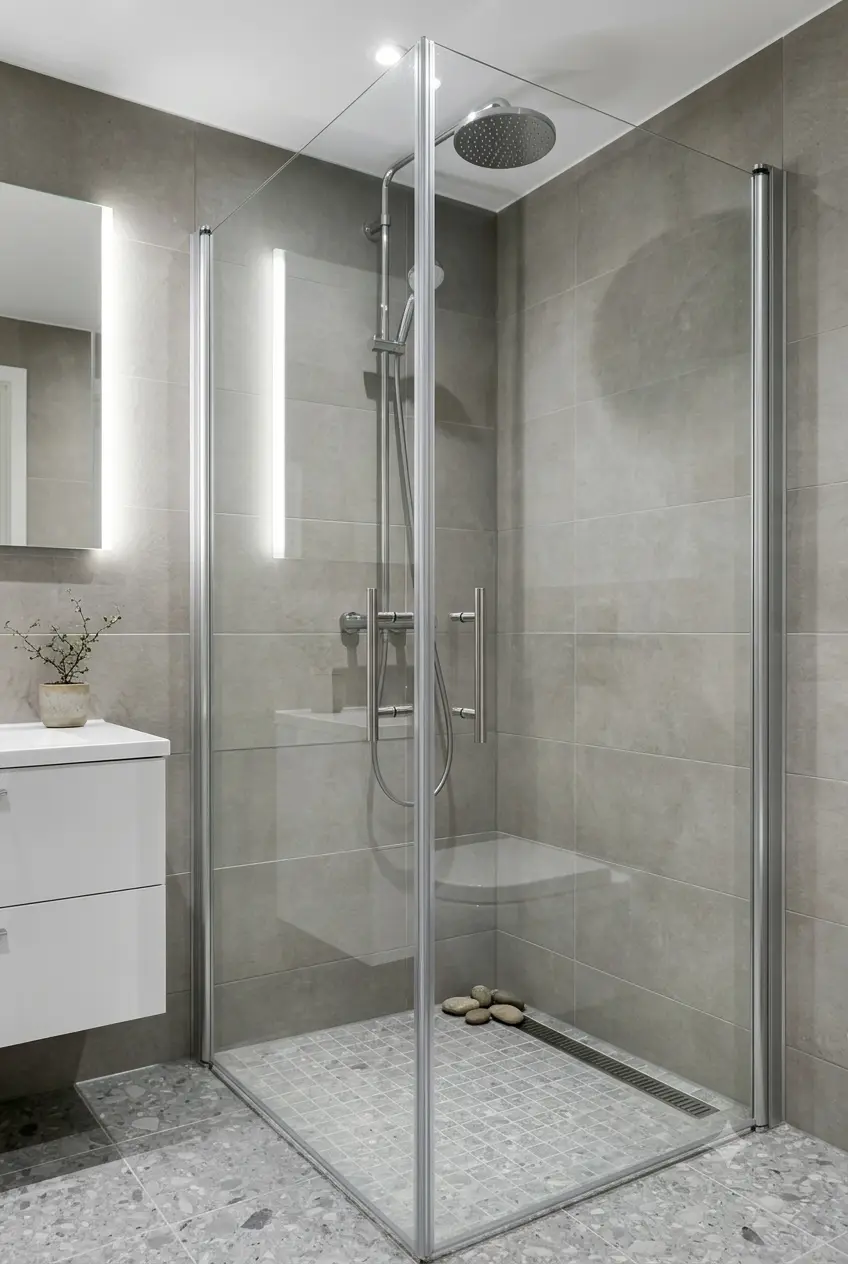
Un recinto sostenido por clips y bisagras mínimos sin metal rodeando los bordes del vidrio.. Necesita vidrio mas grueso, 10mm como mínimo y 12 mm para paneles anchos, porque el propio panel proporciona la rigidez. La línea de visión limpia hace que el baño parezca más grande, Por eso las marcas de hoteles de lujo lo especifican en las categorías de habitaciones premium..
8. Sin framas
Un híbrido que enmarca sólo uno o dos bordes, generalmente el riel superior o un solo lado vertical, y deja los bordes restantes expuestos. Obtendrá la mayor parte de la apariencia sin marco con mayor rigidez estructural y una instalación más sencilla., y el marco parcial absorbe pequeñas irregularidades de las paredes en un edificio donde no hay dos baños perfectamente idénticos.
9. Enmarcado
Cada borde de vidrio se encuentra dentro de un canal de aluminio o acero inoxidable.. Las unidades enmarcadas ofrecen la contención de agua más fuerte, ocultar completamente las paredes desplomadas, y cuesta menos. Los hoteles de escala media y los vestuarios de gimnasios los prefieren porque un solo panel agrietado es barato y rápido de reemplazar sin tocar el resto de la unidad..
10. Derivación (Corredizo) Puerta
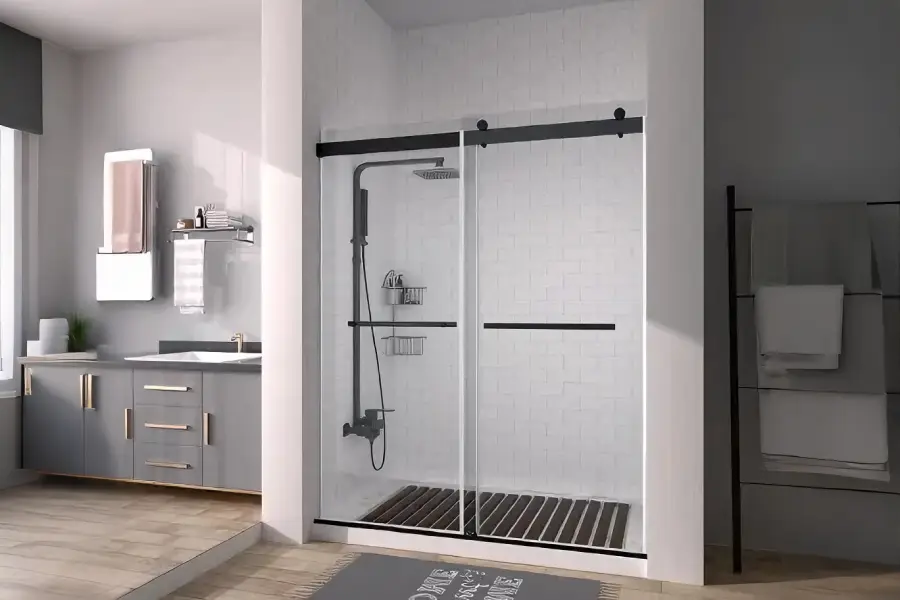
Dos o tres paneles que se deslizan entre sí en un riel superior o inferior. Porque nada se mueve hacia afuera, Las puertas bypass ahorran espacio y se adaptan a baños compactos de hotel y diseños accesibles.. La calidad de los rodillos decide cuánto tiempo permanecen suaves, Entonces aquí es donde los términos de hardware a continuación son más importantes.. Explora el completo puerta corredera de ducha rango de opciones de configuración.
11. Puerta pivotante
Un solo panel que gira sobre un eje superior e inferior en lugar de sobre bisagras laterales.. Ofrece una amplia apertura de entrada y una declaración moderna., pero el arco giratorio necesita espacio despejado. Las puertas pivotantes se adaptan a baños medianos y grandes y no encajan bien donde el arco golpearía un tocador o un inodoro..
12. Sin cita previa / Panel fijo
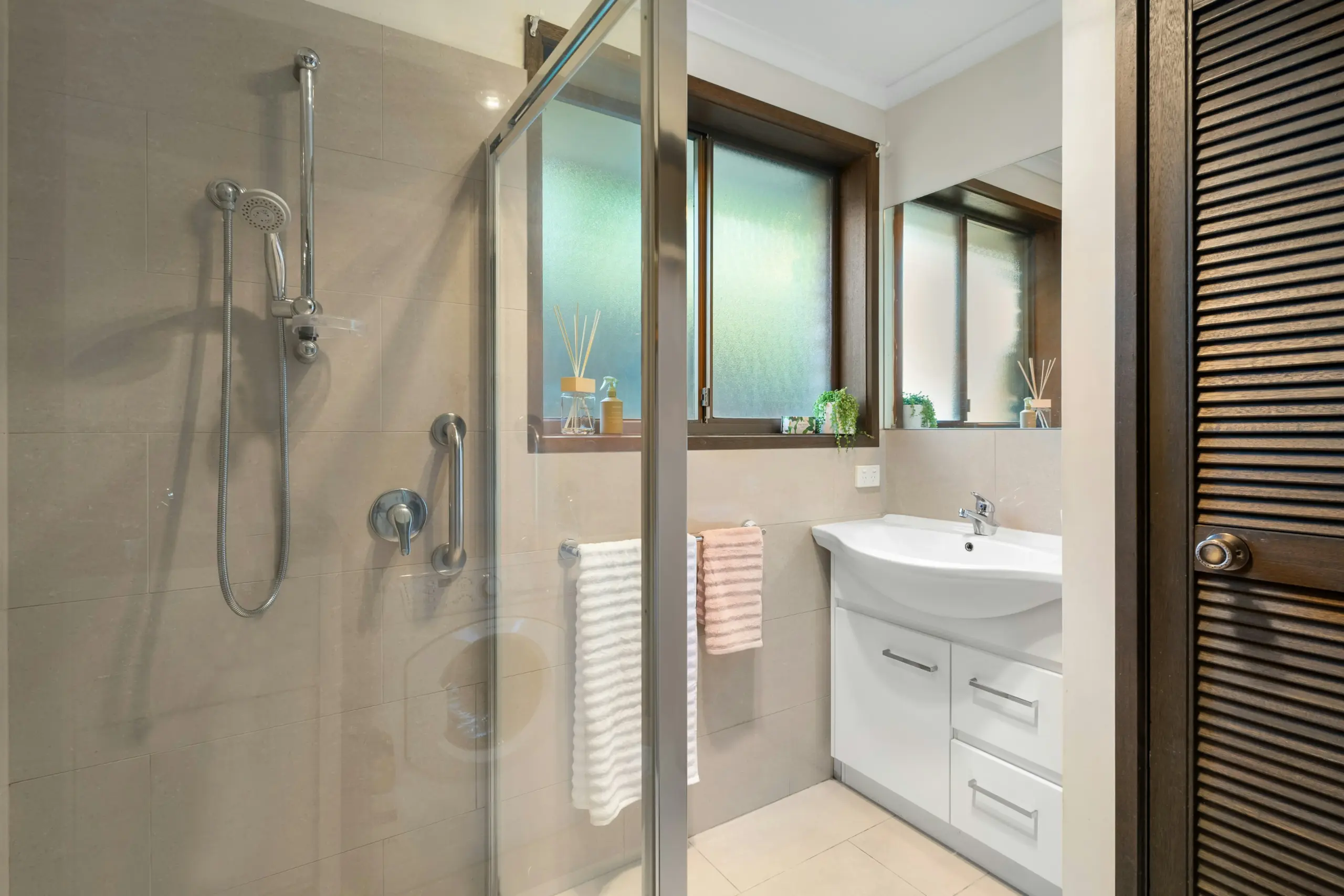
Uno o dos paneles de vidrio fijos sin puerta. El agua fluye más allá del borde abierto hacia un drenaje lineal.. Esta es la configuración estándar para cuartos húmedos y duchas accesibles para personas con acceso para silla de ruedas., y su simplicidad significa que hay menos piezas móviles que fallan durante una década de uso diario..
Términos modulares y que ahorran espacio
Baños compactos y proyectos de construcción acelerados impulsan estos seis términos. Describen formas de esquina que recuperan espacio en el piso y unidades construidas en fábrica que acortan el tiempo de instalación en el sitio..
13. Neo-ángulo
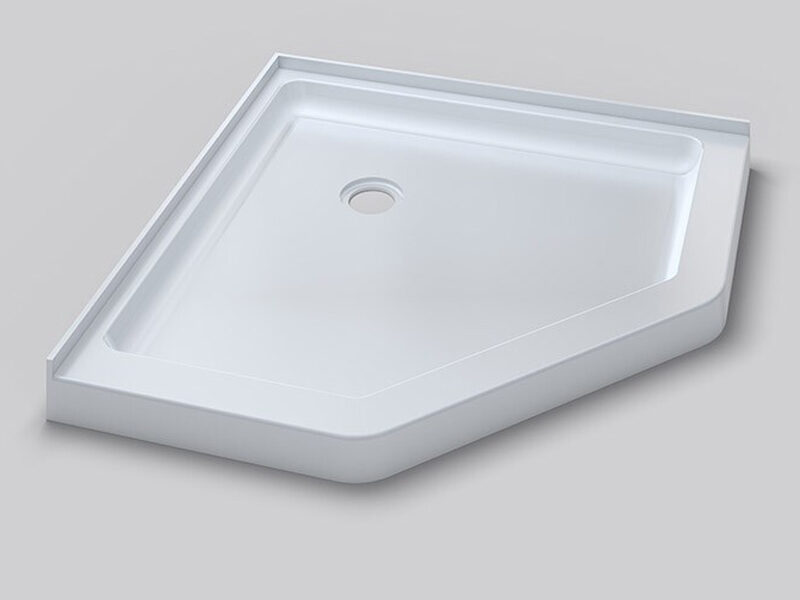
Un recinto esquinero de cinco lados con dos paneles de puerta en ángulo que se encuentran en una esquina.. Se adapta a una esquina cuadrada del baño y ofrece una entrada más amplia que una unidad de esquina estándar., lo que lo convierte en una opción común para pequeñas habitaciones de hotel y apartamentos..
14. Cuadrante
Un recinto esquinero con un frente curvo que sigue una huella de un cuarto de círculo.. La curva ahorra espacio y suaviza la apariencia de la habitación.. Verá unidades de cuadrante especificadas donde una esquina cuadrada abarrotaría el área del piso..
15. Diamante
Un mueble esquinero cuyos paneles frontales forman un diamante.. Maximiza el espacio interior para estar de pie dentro de un rincón estrecho y es una de las formas que ahorran espacio que produce KJ Bath para baños de hoteles y apartamentos pequeños..
16. Plegado
Una puerta construida a partir de dos paneles con bisagras que se pliegan cuando se abre la puerta.. Necesita el menor espacio libre que cualquier puerta batiente., lo que lo hace útil cuando una puerta pivotante o con bisagras chocaría con un accesorio cercano.
17. Cabina de ducha modular
Un ensamblado en fábrica, unidad de ducha independiente entregada como una sola pieza o en módulos grandes. Se coloca in situ y reduce drásticamente el tiempo de instalación., Por eso apartamento de larga estancia., alojamiento para estudiantes, y los proyectos sanitarios lo especifican. Ver el cabina de ducha modular opciones para implementaciones prefabricadas.
18. cuarto húmedo
Un baño totalmente impermeabilizado donde la ducha queda a ras del suelo sin bordillo ni plato, Confiando en la pendiente del piso y un drenaje lineal para gestionar el agua.. Las habitaciones húmedas se combinan con paneles de entrada fijos y dependen de detalles cuidadosos para mantener el agua dentro de la zona de la ducha..
Términos de hardware y acabado
El cristal llama la atención., pero el hardware hace el trabajo y normalmente falla primero. Estos seis términos deciden cuánto tiempo un recinto permanece liso, sellado, y atractivo bajo uso comercial diario y limpieza constante.
19. Recubrimiento PVD
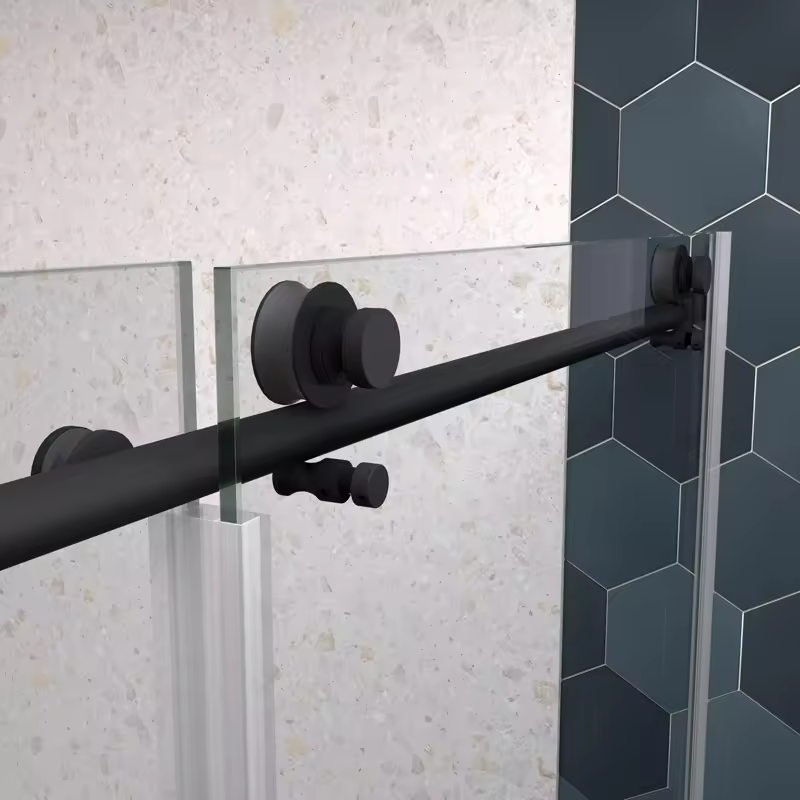
Deposición física de vapor, un proceso de vacío que une una superficie dura, Acabado resistente a la corrosión en herrajes.. Mantiene el color y el brillo por mucho más tiempo que la galvanoplastia estándar en condiciones húmedas., baños limpios quimicamente, y es lo que evita que los acabados en negro mate y oro cepillado se desvanezcan o se picaduras..
20. Prueba del spray de sal
Una prueba de corrosión en la que el hardware permanece en una cámara de niebla salina durante un número determinado de horas.. Los accesorios de calidad comercial deben sobrevivir al menos 48 horas sin óxido visible. Si un proveedor no puede entregarle un informe de niebla salina, tratar sus afirmaciones sobre corrosión como no probadas.
21. Rodillo de acero inoxidable
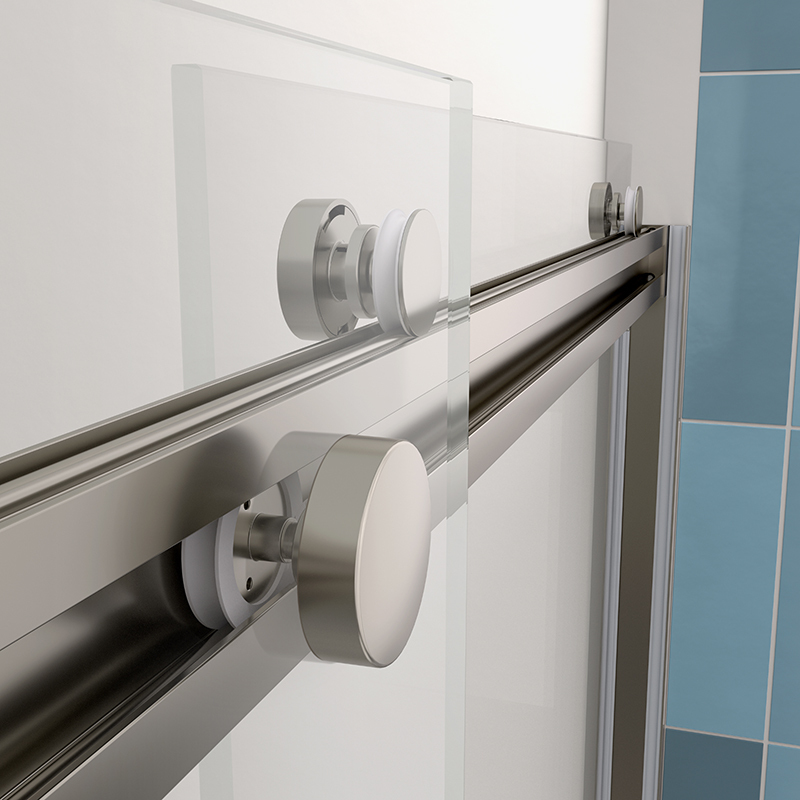
La rueda que lleva una puerta corredera a lo largo de su carril.. Calificación 304 El acero inoxidable resiste la humedad constante y los productos químicos de limpieza del baño de un hotel.. La calidad de los rodillos y la calidad de los rodamientos separan una puerta que permanece lisa durante años de una que desarrolla juego después de unos miles de ciclos..
22. Prueba de ciclo
Una plataforma que abre y cierra una puerta decenas de miles de veces para simular años de uso.. KJ Bath califica sus rodillos como 100,000 ciclos de empujar y tirar, una cifra que representa aproximadamente una década de uso diario en hoteles antes de que el hardware en movimiento requiera atención.
23. Sello magnético
Un sistema de burletes donde dos tiras magnéticas en paneles contiguos se juntan para cerrar el espacio y mantener el agua dentro del gabinete.. es un pequeño, pieza barata que decide si una puerta sin marco gotea al suelo del baño.
24. Canal de pared (Perfil)
La tira en forma de U de aluminio o inoxidable fijada a la pared que recibe un panel de vidrio. Ancla el recinto, permite un pequeño ajuste durante la instalación, y lleva el acabado que une visualmente toda la unidad.
Términos Comerciales y de Calidad
Estos seis términos dan forma al aspecto comercial de un pedido.: cuanto debes comprar, ¿Quién es el dueño del diseño?, Cómo la fábrica elimina el riesgo de tus dibujos., y cuanto tiempo lleva todo. Es allí donde la mayoría de los importadores primerizos quedan atrapados..
25. Cantidad mínima de pedido (Cantidad mínima de pedido)
El menor número de unidades que una fábrica producirá para un pedido.. KJ Bath fija su MOQ en 10 conjuntos para sus principales modelos, que es lo suficientemente bajo como para que un importador pruebe un mercado sin comprometerse a tener un contenedor lleno de existencias..
26. OEM / ODM
OEM significa que la fábrica construye según su diseño y su marca.. ODM significa que usted otorga licencia y marca un diseño que la fábrica ya desarrolló.. Los importadores utilizan OEM para un producto diferenciado y ODM para lanzarlo rápidamente sin su propio equipo de ingeniería..
27. DFM (Diseño para fabricación)
Una revisión donde la fábrica revisa tus dibujos en busca de cualquier cosa que sea difícil., costoso, o riesgoso de construir y sugiere cambios antes de que comiencen las herramientas. Un buen DFM detecta los problemas en papel en lugar de en la línea de producción, donde son caros de arreglar.
28. Ingeniería de valor
La práctica de ajustar un diseño para reducir costos o riesgos de instalación sin renunciar al rendimiento.. En proyectos hoteleros, un fabricante con ingeniería interna puede proponer cambios que ahorren dinero en cientos de baños idénticos a la vez.
29. Plazo de entrega
Los días laborables entre la confirmación del pedido y la mercancía lista para enviar.. KJ Bath cita sobre 15 días laborables para muestras y 30 días para una primera tirada de producción, acortando a 20-25 días en pedidos repetidos una vez que se establecen los cronogramas de moldes y materiales.
30. Prueba de caída / CUALQUIER
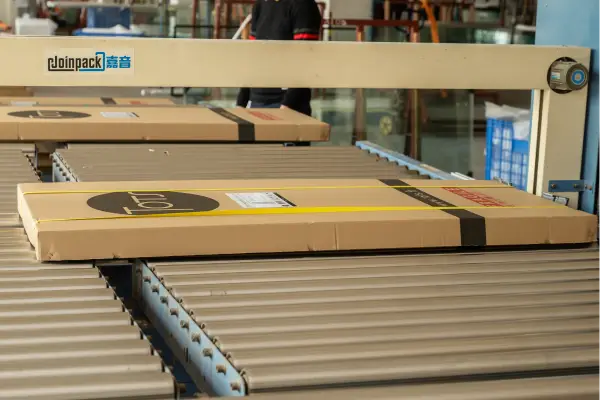
Una prueba de embalaje en la que se deja caer una unidad en caja desde alturas establecidas para simular la manipulación del paquete.. Pasar un protocolo de entrega estilo ISTA es la forma en que un proveedor demuestra que el vidrio sobrevivirá a la mensajería y la entrega de última milla, que protege directamente los daños y la tasa de devolución de un vendedor de comercio electrónico.
Adquirir mamparas de ducha y necesita un proveedor que hable inglés sencillo?
KJ Bath apoya a importadores y compradores de proyectos por primera vez con especificaciones claras, trámites de certificación, y un MOQ bajo de 10 juegos. Envíanos tus dibujos o una foto de referencia y te explicaremos las opciones en términos sobre los que puedes actuar..
Cómo utilizar este glosario cuando busca fuentes
Un glosario sólo es útil si cambia la forma de comprar. Mantenga cerca la terminología de esta mampara de ducha cuando lea una cotización o una hoja de especificaciones, y úsalo para hacer preguntas más agudas.
- Primero haga coincidir la configuración de la puerta con el tamaño del baño., luego trabaje hasta obtener el espesor del vidrio y el grado del hardware.
- Requerir SGCC, CE, y documentación ANSI Z97.1 en el contrato, no como una promesa después del pago.
- Solicite informes de pruebas de ciclo y niebla salina en el hardware antes de comprometerse con el acabado..
- Confirmar cantidad mínima de pedido, plazo de entrega, y los resultados de la prueba de caída del empaque por escrito para que el costo de entrega y el cronograma sean reales.
- Solicite una muestra. Un plazo de entrega de muestra de 15 días es estándar y le permite verificar la claridad del vidrio., acabado de hardware, y calidad del sello.
¿Por qué elegir el baño KJ?

Baño KJ (Artículos sanitarios Foshan Nanhai Kangjian) fabrica mamparas de ducha desde 1999. El 15,000 La fábrica de m2 cuenta con cuatro talleres dedicados al procesamiento de aluminio., corte y templado de vidrio, asamblea, y embalaje automatizado, con 151 personal, una R para 12 personas&equipo D, y una producción mensual de 1,000 conjuntos. Todo el vidrio está templado de 6 mm a 12 mm utilizando láminas originales de Xinyi y pasa cinco pruebas de control de calidad.: verificación de templado, impacto, caída de embalaje, spray de sal, y ciclo push-pull. La empresa posee ISO 9001, ISO 14001, ISO 45001, SGCC, y certificaciones CE y ha suministrado Hilton, Marriot, y proyectos Hyatt. La cantidad mínima de pedido es 10 conjuntos, tomar muestras 15 días, producción 30 días, todo respaldado por una garantía de gabinete de 5 años y una garantía de hardware de 3 años. Más información sobre KJ Bath.
Preguntas frecuentes
¿Qué significa SGCC en la hoja de especificaciones de una mampara de ducha??
SGCC significa Consejo de Certificación de Acristalamiento de Seguridad, La reconocida lista de vidrio de seguridad para el mercado norteamericano.. Confirma que el vidrio fue probado según ANSI Z97.1 para determinar su resistencia al impacto.. Los proyectos hoteleros y multifamiliares en EE. UU. y Canadá generalmente requieren vidrio certificado por SGCC con copias del certificado después del envío..
¿Qué espesor debe tener el vidrio de la mampara de ducha??
Los cerramientos comerciales utilizan vidrio templado de 6 mm a 12 mm.. Los diseños sin marco necesitan 10 mm como mínimo y 12 mm para paneles de más de 1000 mm de ancho.. Las unidades con marco pueden usar 8 mm porque el canal de metal agrega soporte estructural.
¿Qué es un MOQ normal al importar mamparas de ducha??
Las cantidades mínimas de pedido varían según la fábrica.. KJ Bath fija su MOQ en 10 conjuntos para sus principales modelos, que es lo suficientemente bajo como para que un importador por primera vez pruebe un mercado sin comprometerse con un contenedor completo de inventario.
¿Cuál es la diferencia entre OEM y ODM??
OEM significa que la fábrica fabrica según su diseño y su marca.. ODM significa que usted otorga licencia y marca un diseño que la fábrica ya desarrolló.. Los importadores eligen OEM para un producto diferenciado y ODM para lanzarlo más rápido sin sus propios recursos de ingeniería..
¿Cuánto tiempo lleva la producción de un pedido de mampara de ducha personalizada??
KJ Bath cita sobre 15 días laborables para muestras y 30 días para una primera tirada de producción. Las órdenes repetidas generalmente se reducen a 20-25 días una vez que los moldes y los programas de materiales ya estén en su lugar.