
If you manage hotel, квартира, or care-facility projects, you already know where bathroom construction loses time: wet trades queuing on every floor, waterproofing that fails inspections, and glass arriving from a different supplier than the tray it sits on. A modular shower pod takes most of that work out of the building and moves it into a factory.
But the term gets used loosely. Some suppliers call any framed enclosure a pod; others mean a fully plumbed bathroom cell that cranes into a structural frame. If you are evaluating prefab bathroom solutions for a B2B project, you need to know exactly what arrives in the container, what your site crew still has to do, and which questions separate a real pod manufacturer from an assembler.
This guide defines the modular shower pod from a buyer’s perspective: the components, the factory processes behind them, how units ship, and what to check before you commit to a supplier.
Ключевые выводы
- A modular shower pod is a factory-built, self-contained shower unit — base, стены, glazing, and drainage pre-assembled or supplied as matched modules — installed on site in a fraction of the time wet trades need.
- Pods move the risky work (гидроизоляция, glass cutting, alignment) from a dusty floor into a controlled factory with repeatable QC.
- Pods suit repetitive B2B programs best: отели, long-stay apartments, студенческое общежитие, senior living, and healthcare, where identical bathrooms repeat hundreds of times.
- Supplier capability matters more than the product name: check tempering, hardware cycle testing, сертификаты (СГКК, CE, ИСО), and whether the factory controls its own glass and aluminum processing.
- Delivery format — one-piece versus flat-packed modules — drives your logistics, crane requirements, and on-site labor plan.
What Is a Modular Shower Pod?
A modular shower pod is a shower unit manufactured in a factory and delivered to site as a complete product or as a small number of pre-engineered modules. The defining feature is not any single component but the shift of responsibility: instead of assembling a shower from a tray, tiles, a tradesperson’s waterproofing, and separately sourced glass, you receive a matched system whose parts were designed, резать, and tested together.
In practice, a pod integrates four layers that traditional construction treats as separate packages:
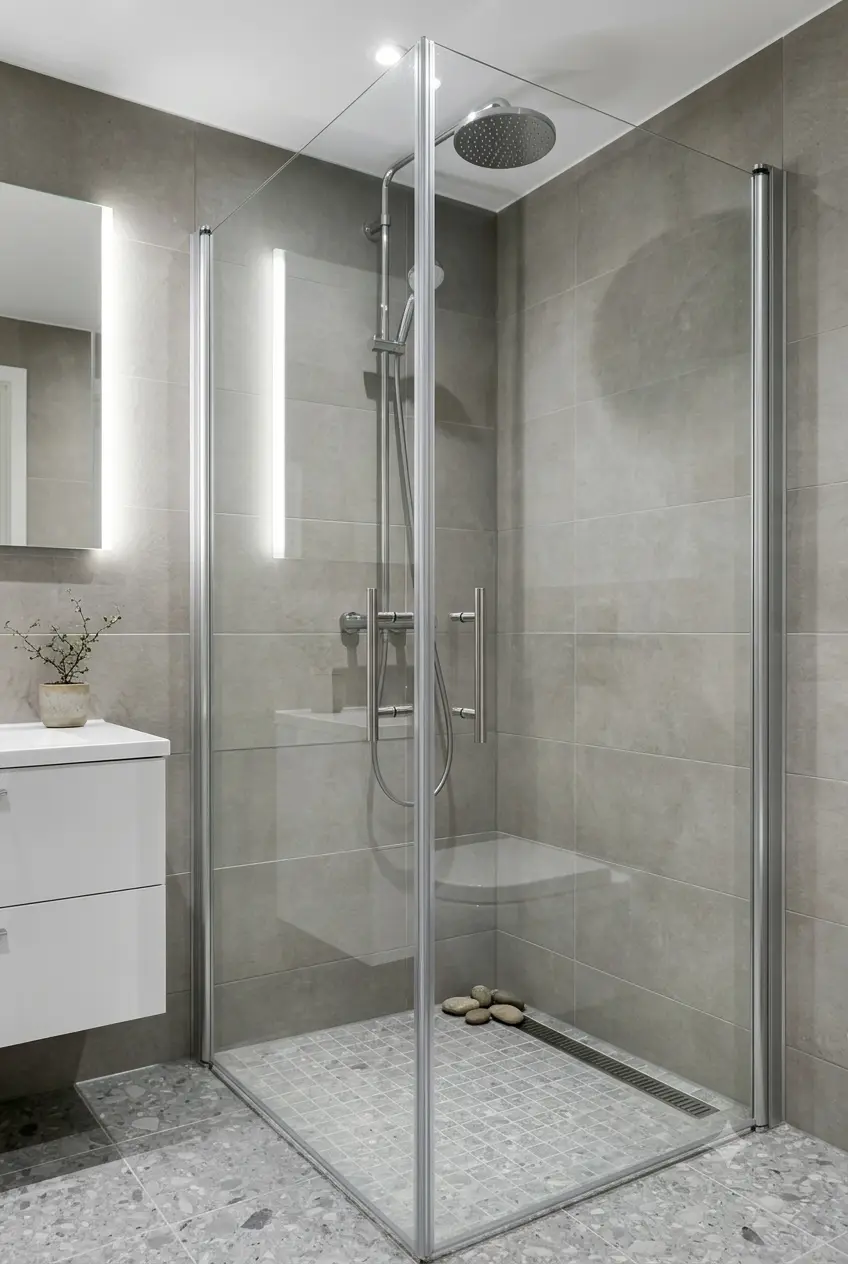
- A structural base — usually a molded tray (SMC or acrylic over a reinforced core) with an integrated drain position and a defined load path, replacing site-built screed and membrane work.
- Wall surfaces — factory-finished panels that fix to the structure without tiling, cutting weeks of wet trades from each floor.
- The enclosure itself — tempered glass and aluminum or stainless hardware, engineered for the pod’s exact footprint rather than cut to fit on site.
- Drainage interface — a predetermined connection point that your plumber ties into, instead of coordinating tray, осушать, and pipe locations between three subcontractors.
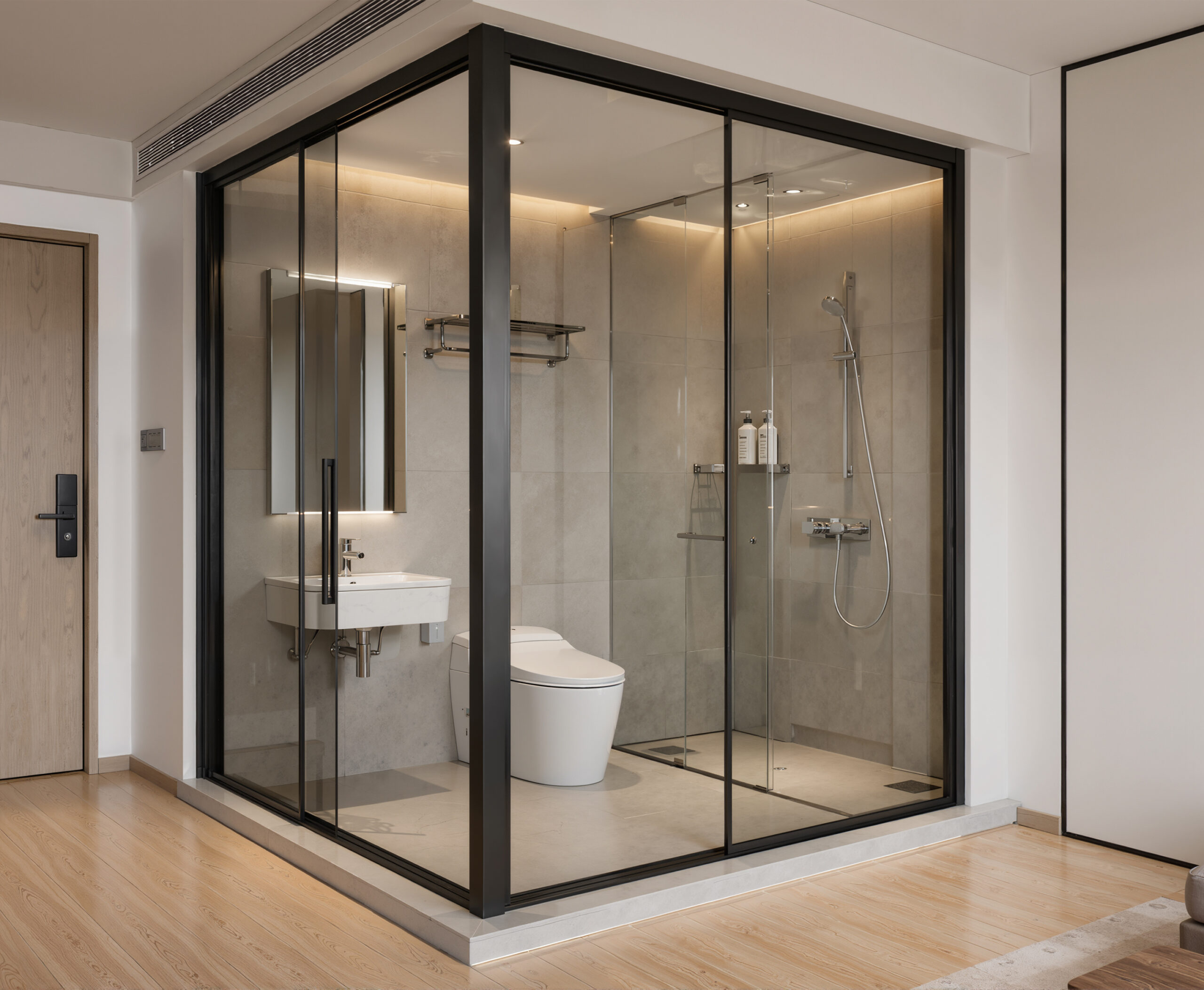
The concept sits inside a broader family of prefab bathroom solutions. A full bathroom pod includes the entire room — floor, стены, ceiling, and all sanitaryware. A modular shower pod covers the shower function only, which makes it lighter to ship, easier to retrofit into existing room layouts, and more flexible when your bathroom design mixes tubs and showers across floors. For many hotel and apartment programs, that balance of prefabrication benefit and design freedom is the practical choice.
The term appears in our Словарь терминов для душевых кабин alongside related concepts like wet rooms and walk-in configurations, because buyers often compare all three when planning room layouts.
Core Components and What Each One Demands From a Factory
A pod is only as good as its weakest layer. Когда вы проводите аудит поставщика, evaluate each component against what it must survive: daily commercial use, aggressive cleaning chemicals, and hundreds of identical units rolling off the line.
Base Tray and Drainage
The tray carries the waterproofing burden that site construction spreads across screed, membrane, and tile. Molded SMC (sheet molding compound) trays cure into a single watertight body with a molded slope toward the drain — no seams near the waterline, no membrane to puncture during installation. Look for ribbed reinforcement underneath and clearly defined mounting points, which tell you the tray is engineered rather than decorated.

Стеновые панели
Factory-finished wall panels replace tiles and the grout lines that eventually fail in commercial bathrooms. Panels arrive cut to the pod’s footprint with openings pre-formed for valves, душевые насадки, and accessories. The material decision — solid surface, compact laminate, or SMC — affects scratch resistance and repairability, so match it to how harshly your housekeeping staff actually clean.

Glazing and Hardware
This is where pod quality intersects the shower-enclosure standards you already know. Glass must be tempered — 6mm to 12mm depending on panel size and frame format — and certified for your market (SGCC для Северной Америки, CE для Европы). Hardware is the component that moves thousands of times a year in a hotel; rollers rated for 100,000 push-pull cycles and corrosion-protected finishes are the baseline for commercial use, not an upgrade.
How Modular Shower Pods Are Made
Factory control is the entire value proposition, so look inside it. A pod manufacturer with in-house processing can hold tolerances across hundreds of units and trace every defect to a machine, not to a subcontractor’s memory.
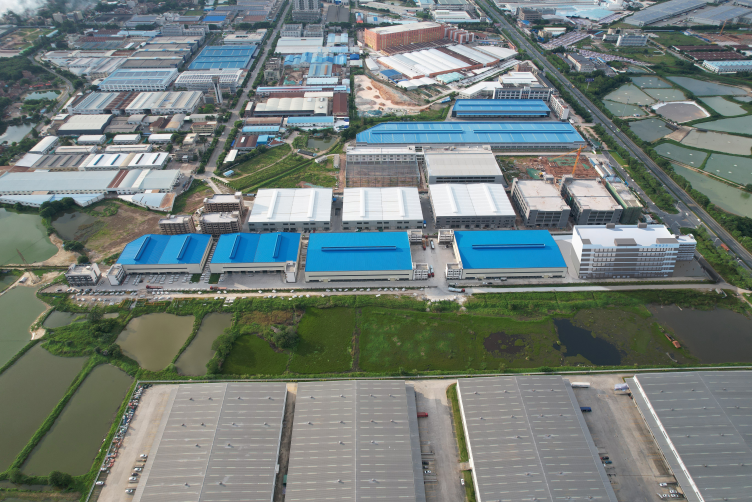
KJ Bath’s Foshan facility illustrates the production chain a capable supplier runs: an aluminum workshop profiles and cuts the framing, a glass workshop cuts and tempers panels from Xinyi original sheets, an assembly workshop marries the two, and an automated packaging line prepares units for export. Вокруг 151 персонал, включая 12 человек R&D team run roughly 1,000 sets per month through this chain.
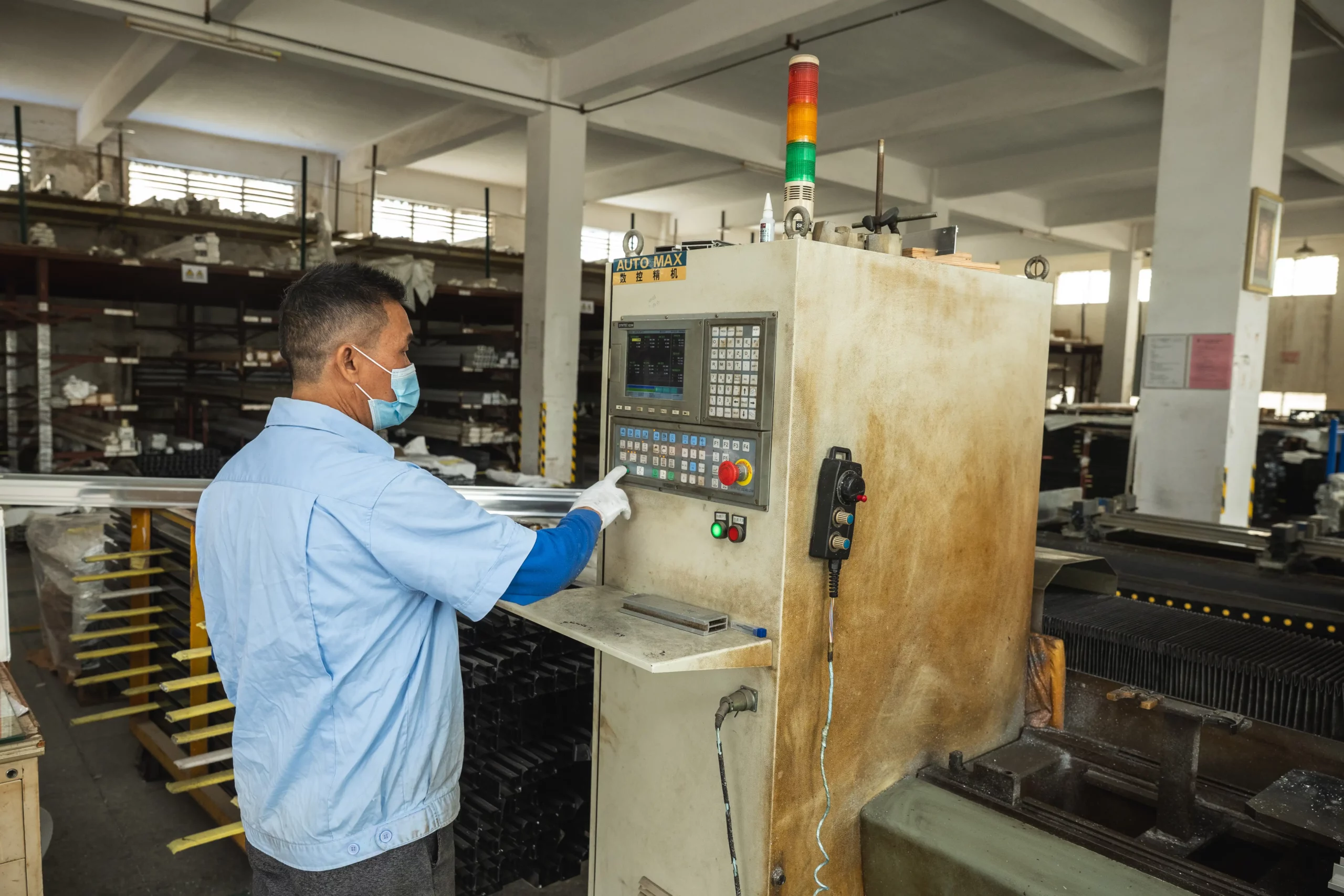
The sequence that matters to a buyer is the QC gate at the end: tempering verification for every glass batch, impact testing on the enclosure structure, salt spray testing on hardware, push-pull cycle testing on moving parts, and packaging drop testing before anything ships. Ask for these five reports on your specific order — a manufacturer running them routinely can produce them without a pause; an assembler will start explaining why certificates from “our supplier” are equivalent. They are not.

Delivery Formats: One-Piece Units vs Flat-Packed Modules
Pods reach site in two basic formats, and the choice ripples through your logistics plan more than most first-time buyers expect.
One-piece pods leave the factory fully assembled. Installation is fast — position, connect drainage, fix to walls — but each unit is a large, rigid object: freight class, crane access, corridor widths, and elevator dimensions all constrain the program. One-piece makes sense on new-build projects with open facades and planned lifting schedules.
Flat-packed modular pods ship as a matched kit — tray, панели, glazing, аппаратное обеспечение, and fasteners — assembled on site in a defined sequence. You trade some site labor for dramatically easier freight: more units per container, standard handling, and no crane per bathroom. For retrofits and dense urban sites, this is often the only workable format.

Either way, packaging is engineering, не второстепенная мысль. Export pods travel in honeycomb cardboard with reinforced corners and, for glass-heavy configurations, wooden crating — and the packaging design should have survived drop testing before your order ships, not after your receiver reports damage.
Where Pods Fit B2B Projects
Prefabrication rewards repetition. The more identical bathrooms your program contains, the faster the factory amortizes tooling and the more consistent the output. That places several project types squarely in pod territory:
- Отели — identical room layouts across floors; installation speed compresses the fit-out critical path, and factory QC reduces defect lists at handover.
- Long-stay and serviced apartments — the durability logic of commercial enclosures applies, with the added benefit of matched tray-plus-glass systems replacing multiple supply packages.
- Student housing — high-traffic, low-tolerance-for-downtime environments where a unit that swaps out quickly beats a repaired bathroom.
- Senior living and healthcare — layouts can incorporate accessible clearances, seating, and grab-bar reinforcement at the engineering stage rather than as a site retrofit.
Pods coexist with traditional enclosures rather than replacing them everywhere. A mixed program might use pods in the repetitive guest-room block and conventional frameless enclosures in suites and public areas. You can compare the two product families directly in the модульная душевая кабина collection, and our piece on space-saving enclosures for multifamily housing covers the conventional side of that decision.
Modular Shower Pod vs Conventional Shower Enclosure
The two products overlap but answer different site conditions. Here is the comparison as a project buyer should read it:
| Измерение | Модульная душевая кабина | Conventional Shower Enclosure |
|---|---|---|
| What arrives on site | Matched system: поднос, панели, glazing, drainage interface, аппаратное обеспечение | Glass and hardware; tray and waterproofing procured separately |
| Waterproofing responsibility | Largely factory-built into the molded base | Site membranes and trades, quality varies by crew |
| Installation time per unit | Short — positioning and connection work | Longer — depends on wet trades finishing first |
| Consistency across 200+ единицы | High — same fixtures, same QC line | Subject to site conditions and crew variation |
| Гибкость дизайна (unique rooms) | Moderate — engineered per project, but amortizes with repetition | High — cut and configured to any opening |
| Freight and handling | Bulkier or kit-form; format choice is critical | Flat-pack glass is well understood |
| Best fit | Repetitive B2B programs: отели, квартиры, student and senior housing | Mixed layouts, one-off bathrooms, premium custom rooms |
What to Verify Before Sourcing Pods From Any Supplier
The pod market includes glass factories, tray specialists, and pure assemblers who buy everything and weld nothing. Each can produce a sample that looks identical. The differences appear at production scale and at the three-year mark. Verify these points in writing:
- In-house processing depth. Does the manufacturer machine its own aluminum and temper its own glass, or buy finished components? In-house control is what keeps unit 300 identical to unit 1.
- Certifications for your market. SGCC for North American glazing, CE для Европы, и ИСО 9001/14001/45001 for the management system behind them. Certificates should name the actual factory you are buying from.
- Test reports tied to your order. Проверка закалки, влияние, соляной туман, push-pull cycle, and packaging drop tests — generated for the batches that ship to you.
- MOQ and lead time realism. A 10-set minimum order quantity lets you pilot a program without a container-scale commitment; sample lead times around 15 working days and first production runs around 30 are industry-workable benchmarks.
- Warranty terms in years, не прилагательные. A 5-year enclosure warranty with a 3-year hardware warranty, backed by a stated response time, tells you the manufacturer has priced in its own failure rate.
Our broader guide on на что обратить внимание при выборе производителя душевой кабины expands the factory-audit side of this checklist, including workshop-by-workshop evaluation.
Planning a Prefab Shower Program?
KJ Bath has manufactured shower systems in Foshan since 1999, with in-house aluminum and glass processing, five-stage QC testing, and modular pod solutions like MODEL D for hotel, квартира, and care projects. Send us your room layouts and we will tell you plainly whether a pod, a flat-packed module, or a conventional enclosure fits your timeline.
Часто задаваемые вопросы
What is a modular shower pod, in simple terms?
It is a shower built in a factory. The base tray, wall surfaces, стеклянный корпус, аппаратное обеспечение, and drainage interface are manufactured and tested together, then delivered as a complete unit or a matched kit of modules that your site crew positions and connects — instead of assembling all those layers on site from separate suppliers.
How is a shower pod different from a normal shower enclosure?
A normal enclosure is the glass and hardware only; the tray, гидроизоляция, and walls come from other packages and are finished by site trades. A pod integrates all of those layers into one factory-built system, which trades some design flexibility for speed, последовательность, and single-source responsibility across repetitive rooms.
Which projects benefit most from modular shower pods?
Programs with many identical bathrooms: отели, long-stay apartments, студенческое общежитие, senior living, and healthcare facilities. Repetition is what makes factory production efficient and keeps every unit consistent. One-off luxury bathrooms are usually better served by conventional custom enclosures.
What is the minimum order quantity for modular shower pods?
KJ Bath устанавливает минимальный заказ на 10 sets for main models including the MODEL D modular pod. That threshold lets a project buyer pilot a program — one floor, one building phase — before committing to container-scale volumes for the full rollout.
What certifications should a shower pod supplier provide?
For the glazing: SGCC certification for North American projects and CE for Europe, with the underlying tempering tested to recognized safety glazing standards. For the factory: ИСО 9001, ИСО 14001, и ИСО 45001 management system certificates. Ask that certificate copies travel with the shipment so customs clearance and site acceptance both run without disputes.