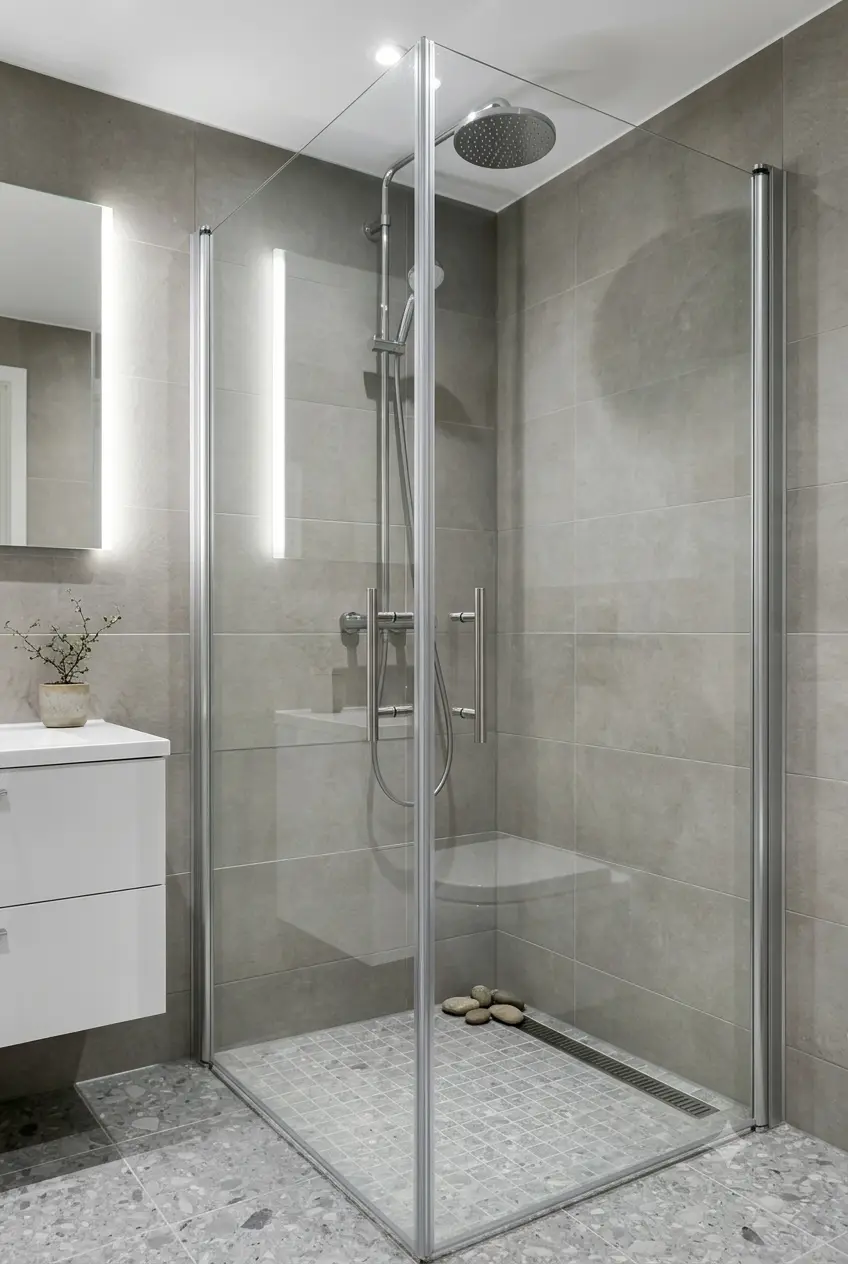
Une fiche technique vous indique ce qu'est censée être une cabine de douche. Seul un test de contrôle qualité vous dit de quoi il s'agit réellement. Entre un bon de commande signé et un conteneur de verre et de quincaillerie posé sur un chantier, une douzaine de choses peuvent mal tourner, et presque aucun d'entre eux n'est visible sur une photo de produit.
Le problème pour la plupart des acheteurs est que le contrôle qualité s’effectue dans une usine que vous visiterez rarement.. Vous dépendez du fournisseur pour exécuter les tests et vous remettre les rapports. Si vous ne savez pas quels tests sont importants, tu ne peux pas les exiger, et un fournisseur qui en saute un ne dira jamais qu'il a été ignoré.
Ce guide répertorie les tests de qualité que vous devriez exiger de tout fabricant de cabine de douche., explique ce que chacun protège, et vous montre comment les cinq tests principaux correspondent aux parties du produit qui échouent en premier. Il est écrit pour les entrepreneurs hôteliers, importateurs, et les vendeurs de commerce électronique qui ont besoin que les marchandises passent l'inspection, survivre au fret, et reste lisse pendant des années d'utilisation quotidienne.
Points clés à retenir
- Exiger cinq tests de base sur chaque commande: vérification de la trempe, impact, chute d'emballage, brouillard salin, et cycle push-pull.
- Essais de verre (trempe et impact) décider si le produit passe l'inspection de sécurité et est dédouané.
- Tests matériels (brouillard salin et cycle) décider combien de temps la porte reste scellée, lisse, et sans rouille dans un environnement humide, salle de bain nettoyée chimiquement.
- Le test de chute de l'emballage protège votre coût au débarquement et, pour les vendeurs en ligne, votre taux de retour.
- Demandez le rapport de test réel et la durée, pas une réclamation verbale. Un numéro que vous ne voyez pas est un numéro que vous ne pouvez pas appliquer.
- Renforcez les tests avec des certifications: SGCC et ANSI Z97.1 pour le verre nord-américain, CE pour l'UE, et ISO 9001 pour le système de gestion.
Pourquoi le contrôle qualité décide si la commande fonctionne
Les cabines de douche tombent en panne dans des endroits prévisibles. Le verre mal trempé peut se briser lors de l'installation ou, pire, spontanément sur un mur d'hôtel fini. Le matériel qui n'a pas été testé au brouillard salin rouille en une saison dans une salle de bain côtière ou fortement nettoyée. Les rouleaux qui n'ont jamais été testés en cycle développent du jeu après quelques milliers d'ouvertures et de fermetures.. Et un emballage qui n'a pas été testé contre les chutes transforme une commande rentable en réclamation..
Chacun de ces échecs est soumis à un test de correspondance qui le détecte avant expédition.. Un fabricant disposant d’un véritable système de contrôle qualité effectue ces tests en routine et peut produire le rapport sur demande.. Une société commerciale ou un atelier de montage ne peut généralement pas.
Les cinq tests de base à exiger
KJ Bath effectue cinq tests de contrôle qualité de base sur ses parois de douche, chacun visant un mode de défaillance différent. Le tableau ci-dessous montre ce que chaque test vérifie, le matériel utilisé, et quel poids les acheteurs étrangers y accordent généralement.
| Test | Ce qu'il vérifie | Équipement | Priorité de l'acheteur |
|---|---|---|---|
| Vérification de la trempe | Coefficient de sécurité et régularité du verre | Essai de trempe | Le plus haut |
| Essai d'impact | Stabilité structurelle et résistance aux chocs | Machine d'essai d'impact | Haut |
| Test de chute d'emballage | Survie grâce à la logistique longue distance | Banc d'essai de chute | Le plus haut |
| Essai au brouillard salin | Matériel anticorrosion et résistance à la rouille | Chambre de brouillard salin | Haut |
| Test de cycle push-pull | Douceur et durabilité des rouleaux | Machine d'essai de cycles | Moyen |
Notez que les deux tests les plus prioritaires sont ceux que les acheteurs ressentent le plus directement.: sécurité du verre, qui peut arrêter un projet lors de l'inspection, et emballage, qui décide si le produit arrive en un seul morceau. Les deux méritent un rapport écrit dans votre dossier.
Essais de verre: Vérification et impact de la trempe
Le verre est l'élément de coût le plus important et celui qui porte la responsabilité en matière de sécurité., donc ses tests passent en premier.
Vérification de la trempe
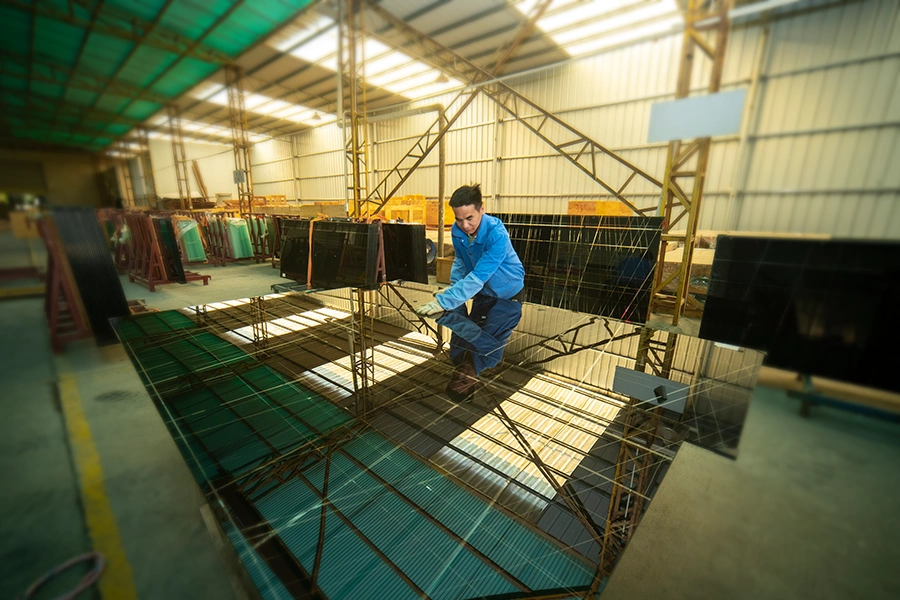
Le verre trempé est chauffé à haute température puis refroidi rapidement, qui met les surfaces extérieures en compression. Le verre correctement trempé est plusieurs fois plus résistant que le verre recuit et, quand ça casse, s'effrite en petits cubes émoussés au lieu de longs éclats. La vérification de la trempe confirme que le processus a été effectué correctement sur le lot que vous achetez. KJ Bath tempère ses propres panneaux à partir de feuilles originales Xinyi, de 6 mm à 12 mm, plutôt que d'acheter du verre prédécoupé auprès d'une source non vérifiée, c'est ce qui rend le résultat de la trempe traçable. Vous pouvez en savoir plus sur le verre lui-même dans notre guide sur si les portes de douche sont en verre trempé.
Essai d'impact
L'essai d'impact frappe un panneau ou une unité finie pour confirmer la stabilité structurelle et la résistance aux chocs. En Amérique du Nord, la norme de performance pertinente pour le vitrage de sécurité des portes et des cabines de douche est ANSI Z97.1., et la liste SGCC est construite sur cette norme. Exiger un test d'impact lié à ANSI Z97.1 est la façon dont un hôtel ou un projet multifamilial réussit l'inspection du site. Pour grands panneaux sans cadre, demandez également si le fournisseur effectue un test de trempage thermique après la trempe, ce qui oblige les panneaux contenant des inclusions de sulfure de nickel à se briser en usine au lieu de plusieurs mois plus tard sur un mur fini.
Tests matériels: Brouillard salin et cycle
Le verre attire l'attention, mais le matériel fait le travail et échoue généralement en premier. Deux tests déterminent combien de temps un boîtier reste lisse, scellé, et beau.
Essai au brouillard salin
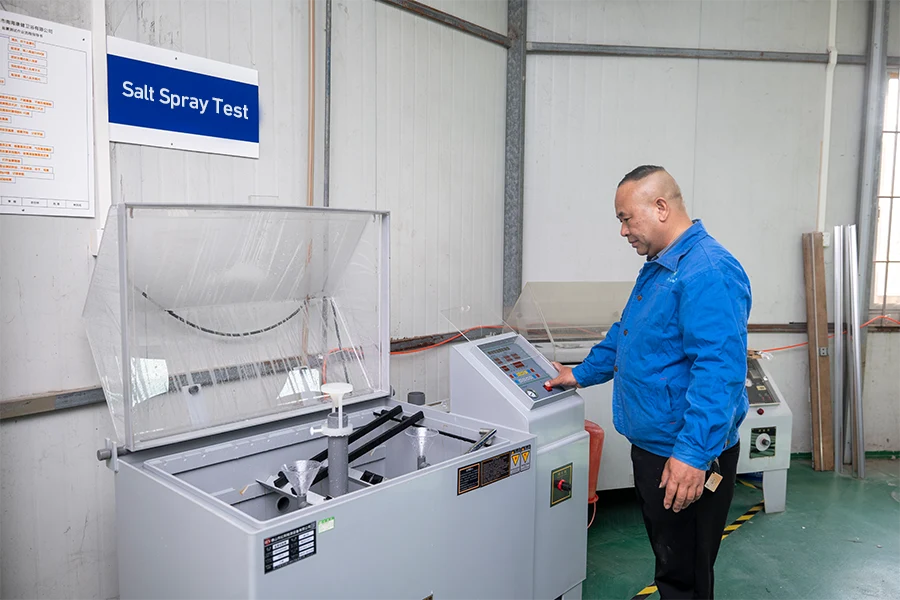
Dans un test au brouillard salin, le matériel reste dans une chambre à brouillard salin pendant un nombre défini d'heures pour simuler des années d'exposition à l'humidité et aux produits chimiques de nettoyage. Les raccords de qualité commerciale doivent émerger sans rouille visible. La durée exacte est le nombre qui compte, demandez donc au fournisseur les heures de test et le rapport plutôt que d'accepter une réclamation de “résistant à la corrosion.” KJ Bath protège les finitions du matériel avec un revêtement PVD, un processus sous vide qui lie un matériau dur, couche résistante à la corrosion et empêche les finitions noir mat et or brossé de se décolorer ou de se piquer dans les salles de bains humides.
Test de cycle push-pull
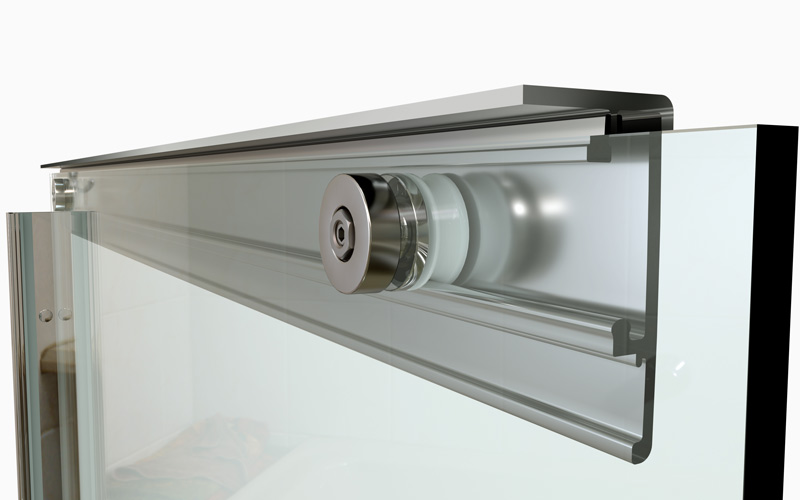
Le banc d'essai de cycles ouvre et ferme une porte des dizaines de milliers de fois pour simuler des années d'utilisation. KJ Bath évalue ses rouleaux à 100,000 cycles push-pull, un chiffre qui correspond à environ une décennie d'utilisation commerciale quotidienne avant que le matériel en mouvement ne nécessite une attention particulière. La qualité des rouleaux compte aussi: 304 les roues en acier inoxydable résistent bien mieux à l'humidité constante et aux produits chimiques de nettoyage d'une salle de bain d'hôtel que l'acier non marqué.
Test d'emballage: Le test de chute
Pour les produits en verre, l'emballage est un gage de qualité, pas une réflexion après coup. Le test de chute d'emballage fait tomber une unité en boîte d'une hauteur définie pour simuler la manutention des colis et du fret.. Le respect d'un protocole de dépôt permet à un fournisseur de prouver que le verre survivra à la livraison par courrier et sur le dernier kilomètre..
Ce test est le plus important pour les vendeurs de commerce électronique, parce qu'un colis qui échoue pendant le transport devient un retour, un remboursement, et une annonce endommagée. KJ Bath emballe les unités dans des cartons nid d'abeilles standardisés avec un cadre en bois renforcé, conçu pour le fret maritime longue distance, et fournit une vidéo et un rapport de test de chute afin qu'un vendeur en ligne puisse vérifier l'emballage avant de s'engager dans un catalogue. Si vous vendez sur Amazon ou Wayfair, traiter le rapport de test de chute comme un document obligatoire, ce n'est pas agréable à avoir.
Contrôle dimensionnel et planéité
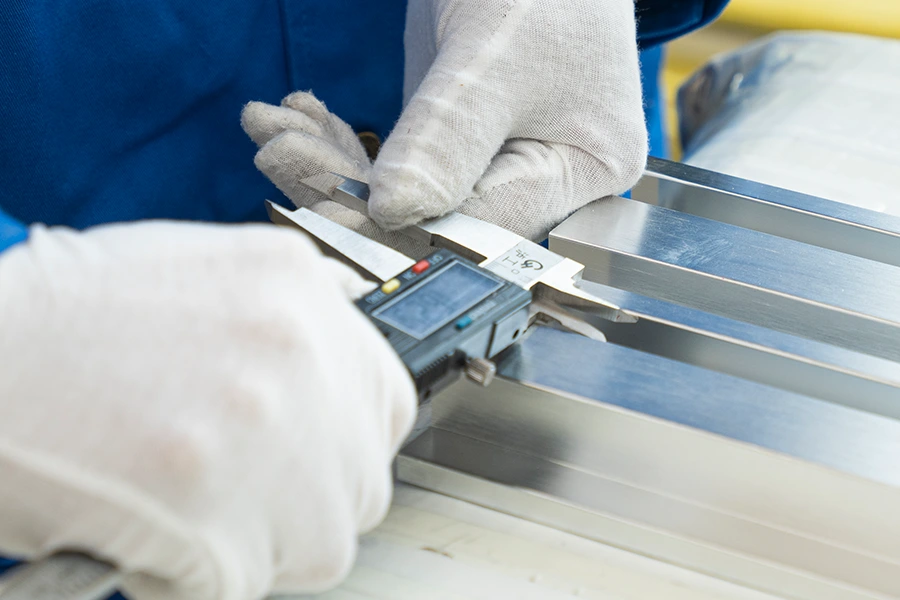
Les tests de performances font la une des journaux, mais l'inspection dimensionnelle est ce qui rend un ensemble d'enceintes cohérent dans un bâtiment où il n'y a pas deux salles de bains parfaitement identiques.. Les techniciens vérifient les longueurs de profil, positions des trous, et dimensions du verre par rapport au dessin, et vérifiez la planéité pour qu'un panneau repose correctement dans son canal.

Un contrôle dimensionnel cohérent permet également à un cadre partiel d'absorber les irrégularités mineures des murs., et c'est pourquoi une usine qui usine son propre aluminium maintient des tolérances plus strictes qu'une usine qui achète des profilés prédécoupés.. Un ingénieur senior vérifiant un appareil de mesure laser est un bon signe que l'usine considère la précision comme une discipline., pas un espoir.

Certifications qui soutiennent les tests
Les tests prouvent qu'un lot spécifique est bon. Les certifications prouvent que l'usine dispose d'un système qui continue de produire de bons lots. Exiger les deux.

- SGCC — la liste du Safety Glazing Certification Council, la marque reconnue de verre de sécurité pour le marché nord-américain. Les projets hôteliers et multifamiliaux aux États-Unis et au Canada l’exigent généralement.
- ANSI Z97.1 — la norme de performance américaine pour le vitrage de sécurité des portes et des cabines de douche. La liste SGCC est construite sur cette norme.
- CE — la marque de sécurité pour le marché européen.
- OIN 9001, OIN 14001, OIN 45001 — gestion de la qualité, gestion environnementale, et les systèmes de santé et de sécurité au travail.
Les copies du certificat doivent accompagner l'envoi afin que les marchandises soient dédouanées et passent l'inspection sur place.. Notre comparaison de SGCC contre CE contre ANSI Z97.1 explique quelle marque s'applique à quel marché, et notre contrôle de qualité la page montre la configuration complète des tests derrière ces certifications.
Comment exiger la qualité dans le contrat
Connaître les tests ne représente que la moitié du travail. Vous devez les inscrire dans l'ordonnance pour qu'ils soient exécutoires.
| Ce qu'il faut exiger | Où le mettre | Pourquoi |
|---|---|---|
| Cinq rapports de tests QC | Joint au bon de commande | Fait du test une condition de paiement, pas une faveur |
| Heures de brouillard salin et nombre de cycles | Fiche technique | Transforme une vague affirmation en un nombre mesurable |
| SGCC / CE / Certificats ANSI Z97.1 | Contracter, expédié avec des marchandises | Nécessaire pour l'inspection des douanes et du site |
| Rapport et vidéo du test de chute | Liste de contrôle avant expédition | Protège le coût au débarquement et le taux de retour |
| Pack de pièces de rechange | Conditions de livraison | Les rouleaux et les joints sont les premiers éléments d'usure |
Mettez le 70% solde par rapport à l'acceptation avant expédition, Ainsi, le paiement final n'est effectué qu'une fois les rapports en main et le passage des marchandises.. KJ Bath soutient ses enceintes avec une garantie de 5 ans et son matériel avec une garantie de 3 ans, ainsi qu'une assistance technique en ligne à vie et un engagement de réponse dans les 12 heures pour les demandes internationales.. Un fournisseur qui soutient le produit avec une réelle garantie est un fournisseur qui a effectué les tests. Pour une liste de contrôle plus large, voir notre guide sur comment garantir la qualité des portes de douche personnalisées, garder notre Glossaire terminologique des cabines de douche fermez lorsque vous lisez un rapport, et parcourez les testés cabines et portes de douche gamme.
Vous voulez un fournisseur qui vous remet les rapports de test?
Bain KJ effectue cinq tests de contrôle qualité de base sur chaque commande de cabine de douche et est livré avec un rapport d'inspection de qualité, Copies des certificats SGCC et CE, un manuel d'installation, et un pack de pièces détachées. Faites-nous part des exigences de votre projet et nous vous confirmerons quels tests et certifications s'appliquent à votre marché.
Questions fréquemment posées
Quels tests de qualité dois-je exiger d'un fabricant de cabines de douche?
Exiger cinq tests de base: vérification de la trempe du verre, un test d'impact sur la structure de la porte, un test de chute d'emballage, un test au brouillard salin sur le matériel, et un test de cycle push-pull sur rouleaux. Demandez le rapport écrit pour chacun, y compris la durée du brouillard salin et le nombre de cycles, les résultats sont donc exécutoires plutôt que verbaux.
Pourquoi le test au brouillard salin est-il important pour la quincaillerie des portes de douche?
Un test au brouillard salin expose le matériel à un brouillard salin pour simuler des années d'exposition à l'humidité et aux produits chimiques de nettoyage.. Il prédit si les charnières, rouleaux, et les poignées rouilleront ou se piqueront dans une salle de bain humide. Demandez la durée du test et le rapport, et recherchez du matériel recouvert de PVD, qui conserve sa finition beaucoup plus longtemps que la galvanoplastie standard.
Que signifie réellement un test au rouleau de 100 000 cycles?
Un banc d'essai de cycles ouvre et ferme la porte à plusieurs reprises pour simuler des années d'utilisation. Une note de 100,000 les cycles push-pull correspondent à environ une décennie d’utilisation commerciale quotidienne avant que le matériel en mouvement n’ait besoin d’attention. Il s'agit du chiffre le plus clair pour prédire combien de temps une porte coulissante reste lisse..
Quelles certifications soutiennent les tests de qualité?
Pour le verre nord-américain, nécessitent une liste SGCC basée sur la norme d'impact ANSI Z97.1. Pour l'UE, exiger le marquage CE. Pour le système d'usine, chercher l'ISO 9001, OIN 14001, et ISO 45001. Les copies du certificat doivent être expédiées avec les marchandises afin qu'elles soient dédouanées et passent l'inspection sur place..
Pourquoi le test de chute des emballages est-il important pour les vendeurs en ligne?
Un test de chute prouve que l'unité en boîte peut survivre au courrier et à la manutention du dernier kilomètre. Pour un vendeur e-commerce, un colis qui échoue pendant le transport devient un retour, un remboursement, et une annonce endommagée. Demandez un carton nid d'abeille avec un cadre en bois renforcé ainsi qu'un rapport de test de chute et une vidéo avant de vous engager sur un catalogue..