Planification d'une gamme de produits ou d'une spécification de projet pour 2026 signifie viser une cible mobile. Les finitions considérées comme haut de gamme une saison paraissent démodées la suivante. Les documents de conformité, autrefois indispensables, déterminent désormais si un conteneur est dédouané.. Et une part croissante du travail multifamilial se déplace vers des unités préfabriquées qui changent la façon dont vous séquencez l'ensemble de la construction..
Pour un prescripteur, un importateur, ou un acheteur de projet, le plus difficile est de séparer le signal réel du bruit du catalogue. Cet article présente six tendances qui changent véritablement la façon dont les cabines de douche commerciales sont spécifiées., provenant, et acheté 2026, et, plus important encore, ce que chacun signifie pour votre prochaine commande.
Les observations proviennent de ce qu'un fabricant avec plus de 25 ans dans la catégorie, vu dans les usines et dans les appels d'offres de projets en Amérique du Nord, Europe, et l'Australie, plutôt qu'à partir d'un rapport générique. Où un chiffre compte et où nous pouvons le soutenir, nous le donnons. Où le marché est véritablement instable, on décrit la direction au lieu d'inventer un numéro.
Points clés à retenir
- Le minimalisme sans et semi-sans cadre continue de prendre la part des unités à charpente lourde dans l'hôtellerie et les travaux résidentiels haut de gamme..
- Noir mat, or brossé, et le bronze à canon sont passés des finitions tendance aux options de spécifications standard, et le revêtement PVD décide s'ils survivent au nettoyage commercial.
- Les cabines de douche modulaires préfabriquées gagnent du terrain sur le marché multifamilial accéléré, logement étudiant, et horaires de soins.
- Les normes de sécurité se renforcent: SGCC et ANSI Z97.1 en Amérique du Nord, CE en Europe, avec des copies de certificat voyageant désormais à l'intérieur de l'envoi.
- Les acheteurs du commerce électronique poussent l’ingénierie de l’emballage, test de chute, et du carton alvéolé pour réduire la casse et les retours du dernier kilomètre.
- Contrôle total de la chaîne d'approvisionnement, notamment la trempe du verre en interne, est devenu un différenciateur d'approvisionnement en termes de délai de livraison et de cohérence des lots.
S'orienter 1: Le design sans cadre et minimaliste continue de prendre des parts
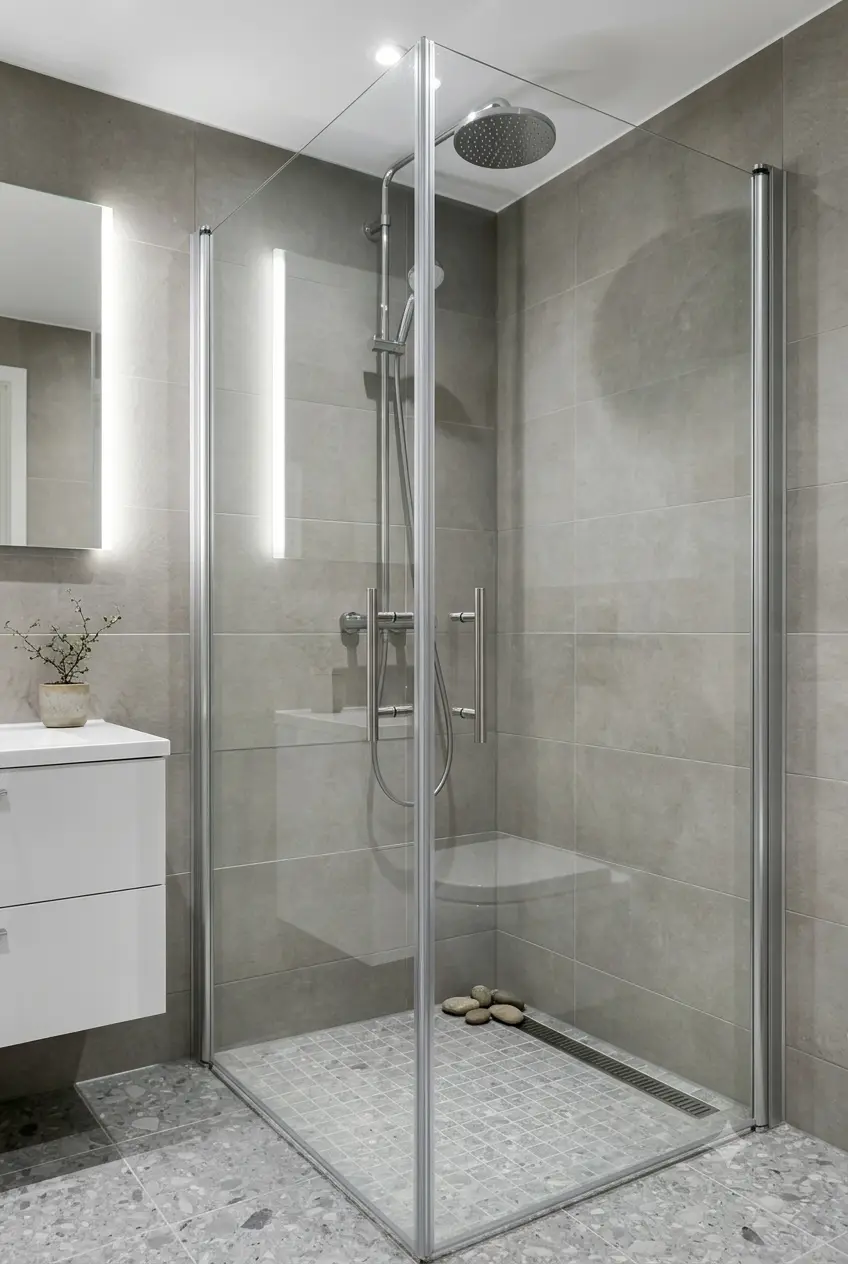
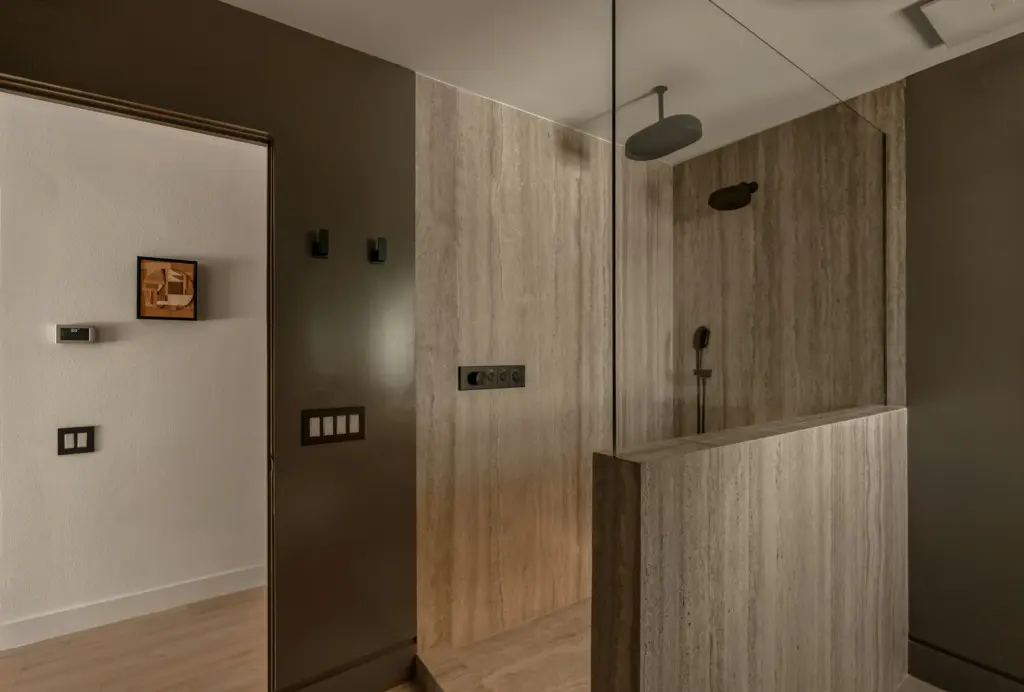
La ligne de vue dégagée d'un abri sans cadre grimpe depuis des années et n'a pas atteint un plateau.. Les hôteliers et les promoteurs résidentiels haut de gamme le précisent car le verre, pas d'aluminium, définit la pièce. Un panneau sans cadre agrandit une salle de bain compacte, c'est exactement l'impression qu'un boutique-hôtel ou un appartement haut de gamme veut projeter.
La conséquence technique est l'épaisseur du verre. Une porte sans cadre repose sur le panneau lui-même pour sa rigidité, il faut donc 10 mm comme minimum pratique et 12 mm pour les panneaux larges. Les unités avec et semi-sans cadre peuvent descendre jusqu'à 8 mm car le canal métallique supporte une partie de la charge. Cet écart d'épaisseur apparaît directement dans le devis, c'est pourquoi le semi-sans cadre est devenu le compromis de choix pour les projets qui souhaitent un aspect sans cadre avec un budget maîtrisé..
Pour un acheteur, la tendance n'est pas simplement “spécifiez sans cadre partout.” Il adapte le type de porte à la pièce et au budget. Notre comparaison de portes de douche sans cadre ou semi-sans cadre parcourt les compromis panneau par panneau.
S'orienter 2: Noir mat, Or brossé, et Gunmetal deviennent des options standard
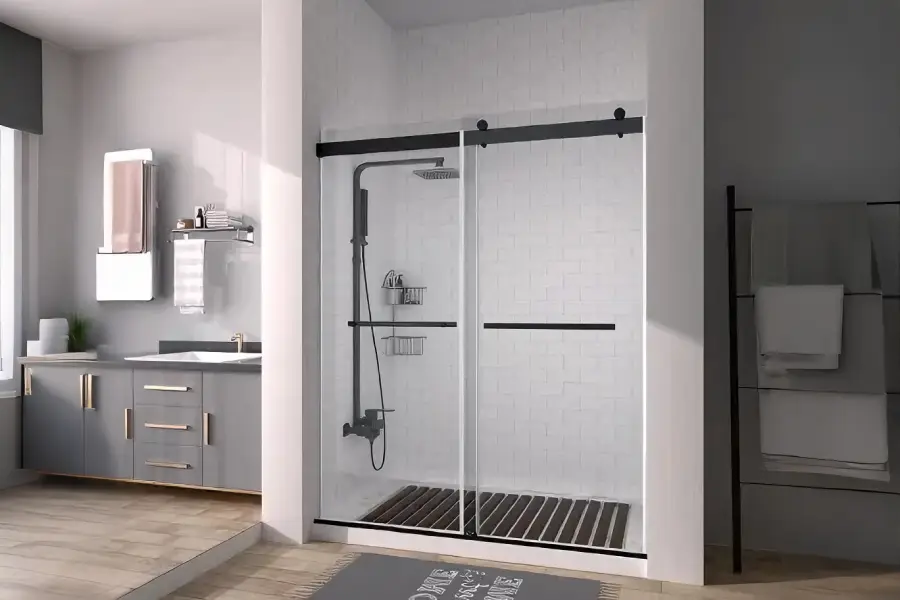
Il n'y a pas longtemps, le chrome poli était la valeur par défaut et tout le reste était une commande spéciale. Aujourd'hui noir mat, or brossé, et le gris bronze côtoient le chrome en tant qu'options de finition standard dans la plupart des catalogues commerciaux. Le changement s’effectue dans deux directions à la fois: les designers hôteliers à la recherche d'un réchaud, look plus différencié, et les vendeurs de commerce électronique qui savent qu'une photo finale porte une liste.
Le problème est la durabilité. Une finition qui semble parfaite au premier jour doit survivre à des années d'humidité et de nettoyage chimique dans une salle de bain d'hôtel.. C'est ici que PVD (Dépôt physique en phase vapeur) le revêtement sépare les fournisseurs sérieux des autres. Le PVD adhère durement, couche résistante à la corrosion sur le matériel dans un processus sous vide, et il conserve la couleur et la brillance beaucoup plus longtemps que la galvanoplastie standard. Demandez à n’importe quel fournisseur un rapport de test au brouillard salin sur la finition. S'ils ne peuvent pas en produire un, traiter l'allégation de corrosion comme non prouvée.
| Finition | Positionnement sur le marché | Type de projet le mieux adapté | Remarque sur la durabilité |
|---|---|---|---|
| Chrome poli | Classique, disponibilité de stock la plus large | Hôtel de milieu de gamme, salle de sport, volume résidentiel | Standard; confirmer la qualité du placage |
| Noir mat | Contemporain, grand attrait photographique | Hôtel de charme, résidentiel haut de gamme, commerce électronique | PVD fortement recommandé pour éviter la décoloration |
| Or brossé | Chaud, différenciation du luxe | Hospitalité haut de gamme, résidentiel design | PVD recommandé pour les milieux humides, espaces nettoyés |
| Gris canon de fusil | Moderne et sobre | Multifamilial haut de gamme, projets dirigés par le design | Confirmer la cohérence de la finition entre les lots |
Un choix de finition est aussi un choix de positionnement. Le tableau ci-dessus mappe les quatre finitions courantes aux projets qui les demandent et les détails de durabilité qu'un acheteur doit confirmer avant de s'engager dans une série complète..
S'orienter 3: Les modules modulaires préfabriqués accélèrent les projets accélérés
La construction modulaire est passée d'une stratégie de niche à une stratégie de planification. Sur le multifamilial accéléré, logement étudiant, et projets de santé, une cabine de douche assemblée en usine se met en place d'une seule pièce et retire plusieurs corps de corps humides du chemin critique. L'enceinte n'est plus quelque chose qu'une équipe construit sur place pendant des jours; il arrive prêt.
La logique commerciale est le temps. Une installation sur site plus courte comprime le calendrier de construction, et le calendrier, c'est de l'argent pour tout projet avec une date d'ouverture fixe. Pour appartement de long séjour, logement étudiant, et opérateurs de santé, que les économies dépassent souvent le coût unitaire plus élevé d'un module préfabriqué.
Les acheteurs évaluant cette voie devraient examiner comment le module s'intègre à l'empreinte et aux services de la salle de bain., et si le fournisseur peut personnaliser le module plutôt que d'imposer une taille fixe. Voir le cabine de douche modulaire plage de configuration des unités préfabriquées. Notre guide du cabine de douche à l'italienne couvre l'alternative où une pièce humide construite sur site a plus de sens.
S'orienter 4: La conformité en matière de sécurité se renforce, et la paperasse voyage avec les marchandises
Autrefois, la conformité était une case que l'on cochait à la fin. De plus en plus, c'est une porte que vous passez avant d'expédier. En Amérique du Nord, les projets hôteliers et multifamiliaux nécessitent régulièrement du verre de sécurité certifié SGCC et testé selon ANSI Z97.1. En Europe, Le marquage CE déclare la conformité des produits vendus dans l'Espace économique européen. Les inspecteurs et les courtiers en douane demandent les certificats, pas une promesse.
Le changement pratique pour les acheteurs est le flux de documentation. Un fabricant sérieux fournit des copies des certificats SGCC et CE qui voyagent à l'intérieur de l'envoi., Ainsi, les marchandises sont dédouanées et passent l'inspection sur place sans avoir à se précipiter à la dernière minute.. Un fournisseur qui considère la certification comme un moyen “trier après paiement” est un signal d'alarme pour tout projet commercial.
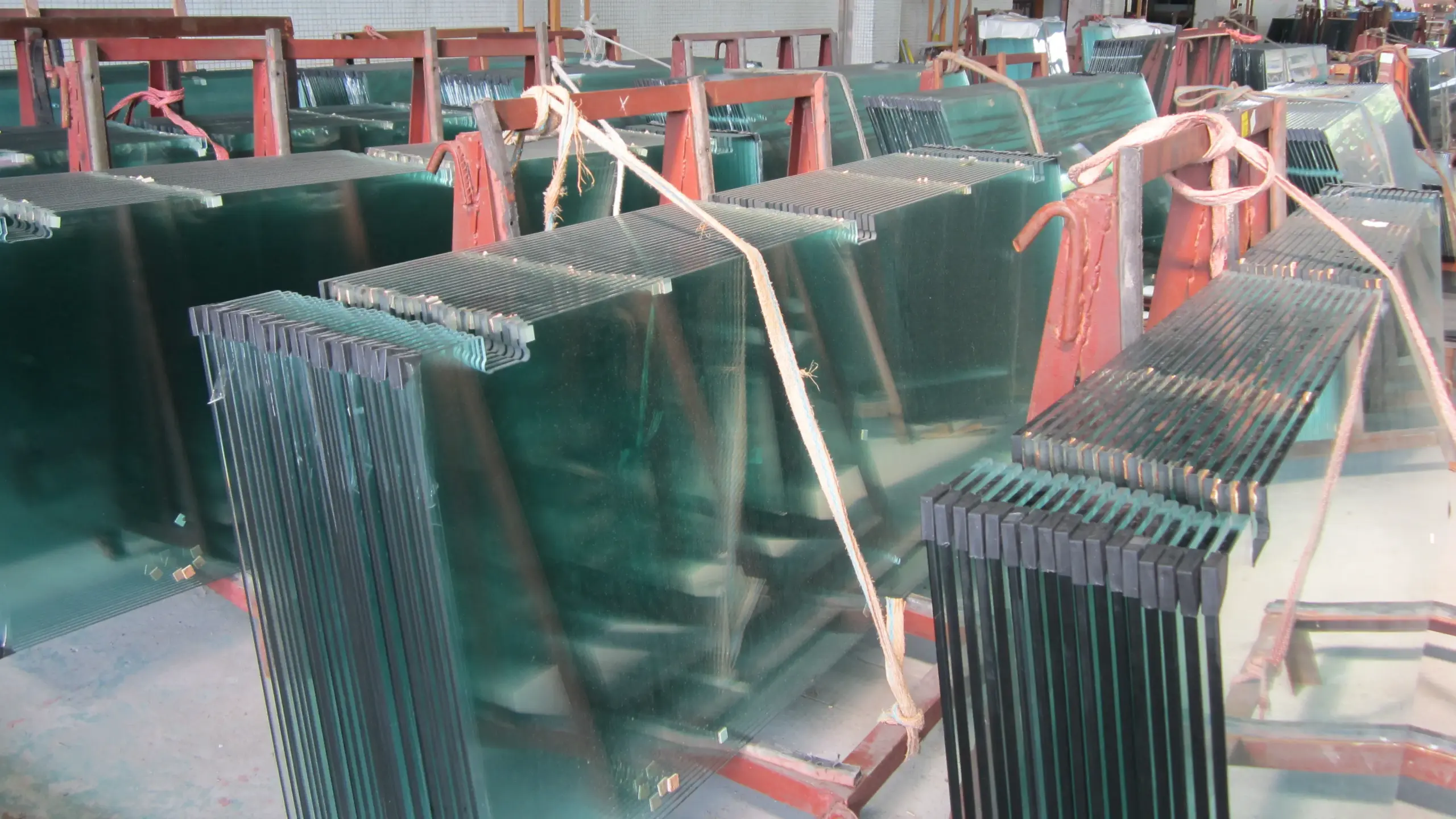
La sécurité du verre est au cœur de tout cela. Le verre trempé est traité thermiquement afin qu'il se brise en petits cubes émoussés plutôt qu'en longs éclats, et il est vérifié par des tests d'impact avant qu'il n'atteigne un mur. Notre introduction sur si les portes de douche sont en verre trempé explique les bases, et le glossaire des cabines de douche définit chaque condition de conformité qu'un importateur devra respecter sur une fiche technique.
S'orienter 5: La croissance du commerce électronique stimule l’ingénierie de l’emballage
La montée en puissance des grands vendeurs de salles de bains sur Amazon, Wayfair, et les vitrines indépendantes ont transformé l'emballage en une caractéristique du produit. Le taux de dommages et le taux de retour d'un vendeur dépendent de la survie ou non d'un panneau de verre lourd à la manutention par courrier et à la livraison du dernier kilomètre.. Un emballage conçu pour un chargement de conteneur palettisé n'est pas la même chose qu'un emballage conçu pour un réseau de colis.
Cela pousse la véritable ingénierie dans la boîte: carton nid d'abeille, caisse en bois renforcée, et abandonnez les tests sur un protocole de style ISTA. Un fournisseur qui peut vous remettre une vidéo et un rapport de test de chute vous dit qu'il a résolu le problème du dernier kilomètre.. Ce qui ne peut pas être le cas, c'est de laisser votre taux de retour au hasard. Pour un vendeur c'est une question de marge, pas un détail.
Il remodèle également la logique commande-quantité. Une commande minimum flexible permet à un vendeur de tester une finition ou une configuration avant de s'engager sur un conteneur complet. Notre article sur assurer la qualité des portes de douche personnalisées couvre les contrôles qui protègent une première exécution.
S'orienter 6: Le contrôle total de la chaîne d’approvisionnement devient un différenciateur en matière d’approvisionnement
Derrière les cinq autres tendances se cache une tendance plus discrète: les acheteurs prêtent attention à la part du processus qu'une usine contrôle réellement. Une usine d'assemblage uniquement qui achète du verre prédécoupé auprès d'une source non vérifiée comporte plus de risques en termes de délais de livraison., cohérence, et une documentation de sécurité qu'une usine qui tempère son propre verre.
Le contrôle interne est ce qui permet à un fabricant de respecter un délai de livraison de 30 jours pour la première commande., raccourcir les commandes répétées à 20-25 jours, et maintenez la couleur et l'épaisseur d'un lot à l'autre dans des centaines de salles de bains d'hôtel identiques.. Il sous-tend également l’ingénierie de la valeur, où une équipe interne propose des modifications qui permettent de réduire les coûts ou de supprimer les risques d'installation sur l'ensemble d'un projet à la fois.
Pour les importateurs et les propriétaires de marques en particulier, le contrôle de la chaîne d'approvisionnement est une question de partenariat à long terme plutôt qu'une question de prix. Notre liste de contrôle sur que rechercher chez un fabricant de cabines de douche explique comment le tester lors de la sélection des fournisseurs.
Demande régionale: Comment la même tendance se produit différemment
Un catalogue mondial est rarement adapté à tous les marchés. Sensibilité aux prix, priorité de conformité, et ce qui remporte réellement un changement de commande par région, et un acheteur qui comprend la différence négocie à partir d'une position plus forte.
| Région | Sensibilité aux prix | Priorité de conformité | Qu'est-ce qui gagne la commande |
|---|---|---|---|
| Amérique du Nord (NOUS, Canada) | Inférieur | SGCC / ANSI Z97.1, tenu strictement | Qualité, conception, délai de livraison fiable |
| Europe (ROYAUME-UNI, Italie, Allemagne) | Plus haut | Lignes de base CE | Prix compétitif avec une qualité constante |
| Australie | Haut | Verre de sécurité standard | Des styles stables à un prix avantageux |
| Asie du Sud-Est | Haut | Varie selon le projet | Prix et quantité de commande flexible |
Acheteurs nord-américains, Par exemple, sont comparativement moins sensibles au prix mais maintiennent une ligne dure sur la qualité des produits, conception, et la fiabilité des livraisons. Les acheteurs européens accordent une plus grande importance au prix et n'ajoutent généralement aucune exigence de certification au-delà du CE.. Les acheteurs australiens maintiennent la demande de style stable et restent très sensibles aux prix. Les acheteurs d’Asie du Sud-Est sont axés sur les prix. Un fournisseur qui lit ces différences propose la bonne finition, épaisseur du verre, et un dossier de documentation pour chaque marché au lieu de citer une seule spécification à tout le monde.
Comment KJ Bath répond à ces tendances

Bain KJ (Articles sanitaires Foshan Nanhai Kangjian) fabrique des cabines de douche depuis 1999. Le 15,000 L'usine de m² gère quatre ateliers dédiés, couvrant le traitement de l'aluminium, découpe et trempe du verre, assemblée, et une ligne de conditionnement automatisée, avec 151 personnel, un R pour 12 personnes&Équipe D, et une production mensuelle de 1,000 ensembles. Le verre est trempé en interne de 6 mm à 12 mm à l'aide de feuilles originales Xinyi et passe cinq tests de contrôle qualité.: vérification de la trempe, impact, chute d'emballage, brouillard salin, et cycle push-pull. L'entreprise est certifiée ISO 9001, OIN 14001, OIN 45001, SGCC, et certifications CE et a fourni Hilton, Marriott, et projets Hyatt. La commande minimum commence à 10 ensembles, les échantillons sont prélevés environ 15 jours, et un premier cycle de production d'environ 30 jours, le tout bénéficiant d'une garantie de 5 ans sur le boîtier et d'une garantie matérielle de 3 ans. En savoir plus sur KJ Bath.
Planifier un 2026 Ligne de produits ou spécification de projet?
Envoyez-nous vos dessins, une photo de référence, ou une finition cible et une épaisseur de verre. Notre équipe vous expliquera lesquelles de ces tendances s'appliquent à votre marché et vous proposera une spécification sur laquelle vous pouvez réellement construire., avec les documents de certification inclus.
Questions fréquemment posées
Quelles sont les plus grandes tendances en matière de cabines de douche commerciales 2026?
Six se démarquent: le passage continu au minimalisme sans cadre et semi-sans cadre, les finitions noir mat et or brossé deviennent des options standard, modules modulaires préfabriqués sur des projets accélérés, un respect plus strict des règles de sécurité concernant les documents qui voyagent à l'intérieur de l'envoi, une ingénierie d'emballage portée par le commerce électronique, et un contrôle total de la chaîne d'approvisionnement comme différenciateur d'approvisionnement.
Les portes de douche sans cadre sont-elles toujours à la mode ? 2026?
Oui. Les modèles sans cadre et semi-sans cadre continuent de prendre part dans l'hôtellerie et les travaux résidentiels haut de gamme, car la ligne de vue épurée donne l'impression qu'une salle de bain est plus grande.. Un panneau sans cadre nécessite un verre d'au moins 10 mm et 12 mm pour les panneaux larges., tandis que le semi-frameless offre un look similaire à un budget maîtrisé.
Quelles finitions de quincaillerie sont les plus demandées pour les projets commerciaux?
Le chrome poli reste la valeur par défaut du volume, mais noir mat, or brossé, et le gris bronze sont désormais des options standard. Pour toute finition en milieu humide, salle de bains commerciale nettoyée chimiquement, demandez une option avec revêtement PVD et demandez un rapport de test au brouillard salin pour étayer l'allégation de corrosion.
Les cabines de douche modulaires préfabriquées valent-elles la peine d'être spécifiées?
Sur le multifamilial accéléré, logement étudiant, et des projets de soins de santé qu'ils sont souvent. Un module assemblé en usine supprime plusieurs métiers humides du chemin critique et raccourcit l'installation sur site, et les économies de calendrier peuvent compenser le coût unitaire plus élevé de l'unité préfabriquée.
De quelles certifications les cabines de douche commerciales ont-elles besoin 2026?
Les projets hôteliers et multifamiliaux nord-américains nécessitent généralement du verre certifié SGCC testé selon ANSI Z97.1, et les ventes européennes nécessitent le marquage CE. Un fournisseur fiable fournit des copies de certificat qui accompagnent l'envoi afin que les marchandises soient dédouanées et passent l'inspection sur place..
En quoi la demande régionale en matière de cabines de douche diffère-t-elle?
L’Amérique du Nord est moins sensible aux prix mais stricte en matière de qualité, conception, et délai de livraison. L’Europe est plus sensible aux prix avec le CE comme référence. L'Australie conserve des styles stables et est très sensible aux prix, et l'Asie du Sud-Est dépend des prix. Faites correspondre la finition, épaisseur du verre, et documentation pour chaque marché.