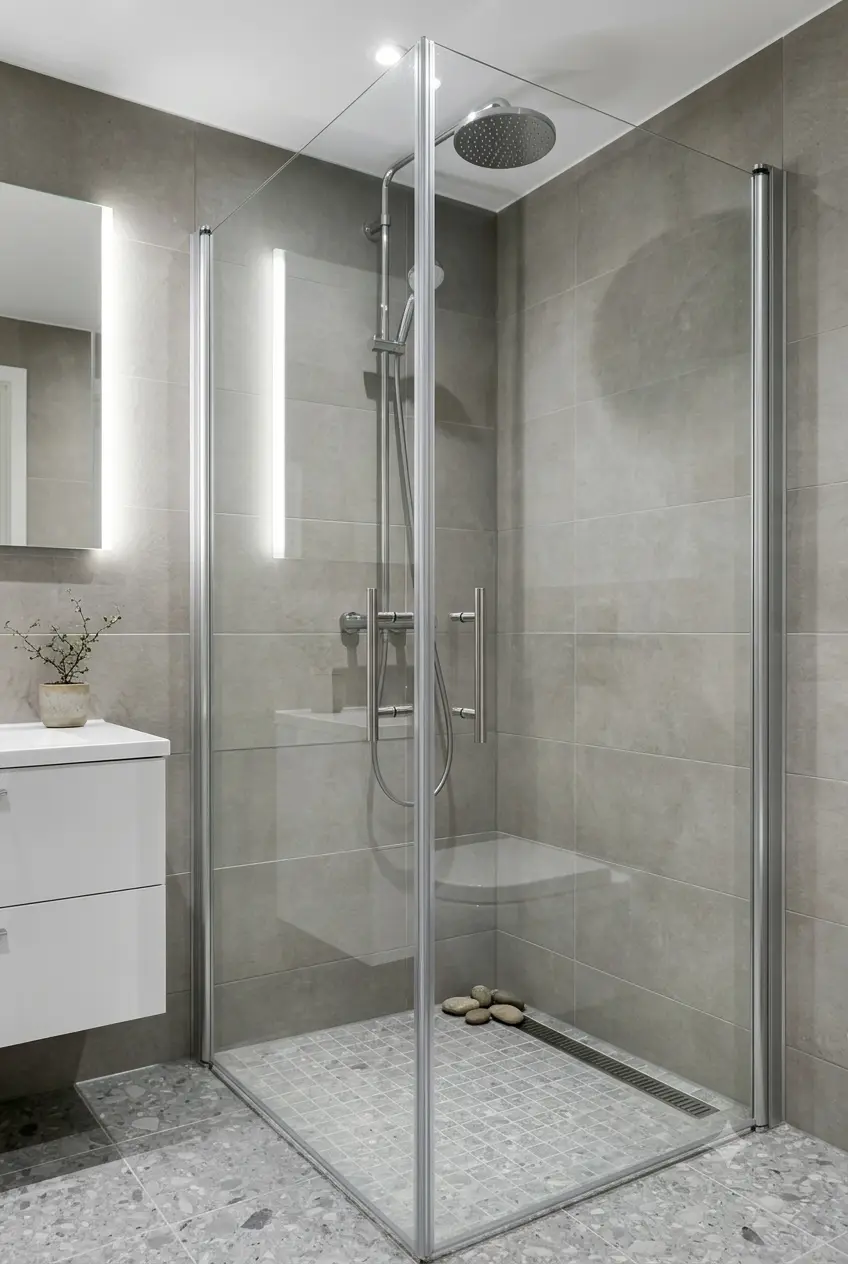
Une cabine de douche d’angle vit ou meurt grâce à son étanchéité. La géométrie qui rend les unités de coin efficaces dans les salles de bains compactes : deux bords en verre rencontrant les murs, deux autres se rencontrent, plus une porte mobile – crée également plus de joints, plus de transitions, et plus de chemins pour l'eau que n'importe quelle installation directe. Lorsqu'une enceinte d'angle fuit, l'eau s'annonce rarement à la porte. Il se déplace derrière le profil du mur, piscines sous le plateau, et se présente comme une tache sur le plafond en dessous.
Les prescripteurs évaluant les enceintes d'angle lisent donc deux documents plus attentivement que toute autre chose dans le dossier de soumission.: le dessin de la disposition des joints et le rapport de test du matériel. Le premier montre où le fabricant s'attend à ce que l'eau soit arrêtée; le second montre si ces sceaux et le matériel qui les maintient fonctionnent toujours après des années d'utilisation quotidienne. Ce guide parcourt les deux, couvrant l'endroit où les boîtiers d'angle fuient réellement, comment les joints magnétiques comblent l'espace de la porte, quelles décisions détaillées les prescripteurs oublient le plus souvent, et quelles preuves de test séparent une unité étanche d'une allégation marketing.
Les exemples ci-dessous s'appuient sur des enceintes d'angle et peu encombrantes du type fabriqué par KJ Bath., et les pratiques de contrôle qualité décrites sont celles appliquées sur son contrôle qualité de la chaîne de production processus.
Points clés à retenir
- Les boîtiers d'angle fuient sur quatre chemins prévisibles: le joint vertical verre-verre, les transitions verre-mur, l'espace de la porte, et l'interface de bordure ou de plateau.
- Les joints magnétiques ferment le panneau de porte sur toute sa hauteur et maintiennent la ligne de fermeture constante., c'est pourquoi ils conservent mieux leur étanchéité que les joints à friction dans le cadre d'un usage commercial quotidien..
- Caniveaux muraux, poteaux d'angle, et les joints inférieurs doivent être spécifiés comme un système; le mélange de profils et de joints provenant de différentes sources brise le chemin de l'eau.
- Les preuves des tests comptent plus que les affirmations: essais de cycles sur rouleaux et charnières, test au brouillard salin sur le matériel, et une inspection documentée avant expédition constituent la base des projets commerciaux.
- Les joints sont des pièces d'usure. Spécifier les unités dont les profils d'étanchéité sont des articles en commande répétée, et un budget pour un remplacement programmé plutôt que pour des réparations d'urgence.
Où les boîtiers d'angle fuient réellement
L'eau suit la gravité et la pression, et dans une enceinte d'angle il trouve les joints. Quatre voies représentent la grande majorité des plaintes concernant les fuites dans les salles de bains commerciales:
1. Le joint vertical verre-verre
Là où deux panneaux fixes se rencontrent à l'angle du coin, le joint va du sol au plafond. Une unité correctement construite ferme ce joint avec un poteau d'angle ou une pince verre à verre crantée plus une bande d'étanchéité continue.. Les problèmes commencent lorsque les murs ne sont plus d’aplomb: si les panneaux sont forcés de se rencontrer selon un angle différent de l'angle de conception du joint, la bande se comprime de manière inégale et laisse un canal sur un côté. C'est pourquoi la compensation murale dans le profilé de montage est aussi importante que le joint lui-même..
2. Les transitions verre-mur
Les deux murs qui abritent l'enceinte ont besoin d'un arrêt d'eau continu. Les profilés muraux - canaux en aluminium ou plaques de serrage - portent un joint qui appuie contre le carrelage, et le joint derrière est scellé lors de l'installation. L'erreur classique du prescripteur est de supposer que l'installateur de carrelage et l'installateur de l'enceinte ont chacun vérifié l'aplomb du mur.. Ni l'un ni l'autre. Sur un 2000 panneau mm, un mur qui s'incline 8 mm hors plan écarte le joint à mi-hauteur, et la pomme de douche dirigée vers ce coin pousse l'eau directement à travers.
3. L'espace de la porte
La porte mobile est la seule partie de l'enceinte conçue pour s'ouvrir des milliers de fois par an, et son écart est contrôlé par des joints qui fléchissent à chaque cycle. La deuxième section couvre ce chemin en détail, car c'est là que les joints magnétiques trouvent leur place dans les spécifications commerciales.
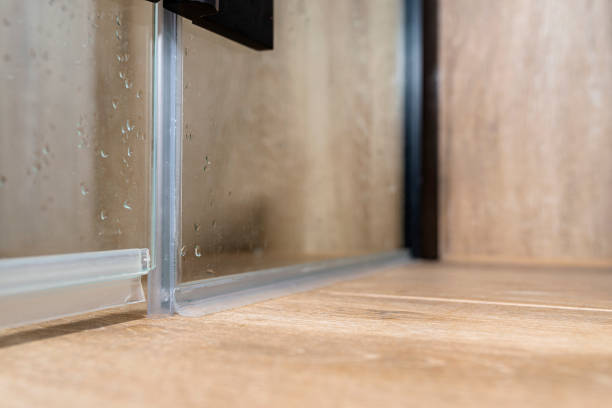
4. L'interface bordure et plateau
Le bas de l’enceinte – bordure, bord du plateau, ou base à profil bas - c'est là que les éclaboussures deviennent de l'eau stagnante. Le joint inférieur de la porte doit correspondre à la hauteur du seuil, et le plateau doit être à niveau pour que l'eau s'écoule vers les déchets plutôt que de s'accumuler contre le cadre.. Une unité installée 3 mm hors niveau peut retenir un film d'eau contre le rail inférieur suffisamment longtemps pour qu'il s'écoule en dehors de la zone humide.
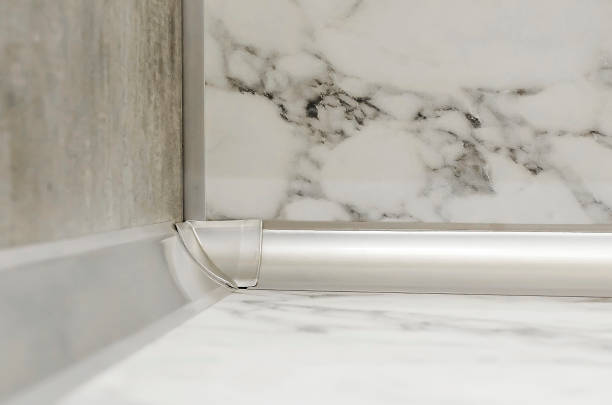
Comment les joints magnétiques comblent l’espace de la porte
La plupart des armoires d'angle avec portes pivotantes ou battantes ferment l'espace vertical de la porte avec l'un des trois types de joints., et les différences apparaissent plus rapidement dans les cycles de service commerciaux.
Joints à friction et essuyables
La fermeture la plus simple est une ampoule creuse ou une bande d'essuyage en PVC souple contre laquelle la porte appuie lorsqu'elle est fermée.. Cela fonctionne bien dès le premier jour et se dégrade de manière prévisible: chaque ouverture entraîne la bande sur sa surface de contact, le PVC s'use et prend un jeu, et en période d'utilisation intensive, la ligne de fermeture ne se comprime plus uniformément. Dans les salles de bains des hôtels nettoyées quotidiennement avec des produits chimiques agressifs, les joints de friction durcissent encore plus vite.
Sceaux magnétiques
Un joint magnétique intègre une bande magnétique flexible à l'intérieur du joint de bord de porte et une bande assortie. (ou une grève en acier) sur le panneau fixe. Lorsque la porte approche de la position fermée, les bandes attirent et tirent la porte sur les derniers millimètres pour l'aligner, comprimer le joint uniformément sur toute la hauteur de la porte. L'étanchéité ne dépend pas du fait que l'utilisateur ferme complètement la porte., et la force de fermeture reste constante à mesure que la porte s'installe au fil des années d'utilisation. Pour les enceintes d'angle, où le bord de la porte est souvent incliné pour correspondre à la géométrie du coin, cet auto-alignement est ce qui maintient la ligne d'écart uniforme.
Les fermetures magnétiques sont standard sur les formats d'angle peu encombrants de la gamme d'enceintes KJ Bath, associé à des roulettes en acier inoxydable sur les variantes coulissantes - une combinaison choisie spécifiquement pour ses performances d'étanchéité dans les appartements compacts et les salles de bains d'hôtel.
Comparaison des systèmes d'étanchéité
| Critère | Friction / essuyer le joint | Joint magnétique |
|---|---|---|
| Action de clôture | Cela dépend de la pression de l'utilisateur pour fermer la porte. | Se tire automatiquement vers une ligne de fermeture fixe |
| Uniformité de la compression sur les portes d'angle en angle | Dérive à mesure que la bande s'use et prend un set | Reste constant; les bandes se réalignent à chaque fermeture |
| Comportement après des années de cycles | L'écart s'ouvre progressivement aux points d'usure | La force de maintien persiste; l'aimant ne s'use pas |
| Résistance au nettoyage chimique | Le PVC durcit avec des nettoyants agressifs | La bande de support reste une pièce d'usure, mais l'alignement survit |
| Action de maintenance typique | Remplacez la bande dès que des espaces apparaissent | Remplacer la bande de support dans les délais; vérifier l'alignement des gâches |
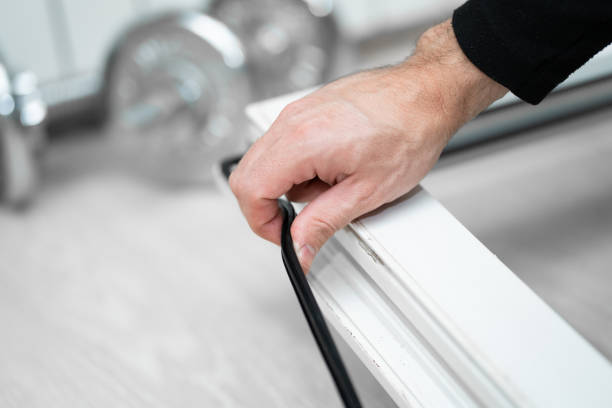
Pour une présentation pas à pas orientée vers le consommateur des types de joints et des étapes de remplacement, notre plus tôt guide des joints de porte de douche couvre le côté pratique; cet article reste sur les décisions de spécification et de test qui comptent à l'échelle du projet.

Les spécificateurs de détails d’étanchéité oublient
Profils muraux et gamme de compensation
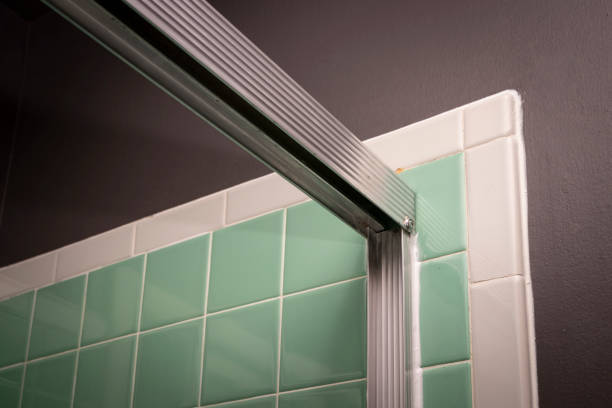
Demandez au fabricant quelle quantité de hors-aplomb le profilé mural absorbe, et lis le dessin du sceau en regard de ce numéro. Une enceinte d'angle s'installe contre deux murs; la probabilité que les deux soient plats augmente la charge de spécification sur le matériel de compensation. Les unités avec profils fendus et canaux avec joints supportent les variations normales. Les coins sans cadre de type pince nécessitent une vérification des murs avant la commande du verre, parce que le verre ne peut pas se plier pour rencontrer un substrat courbé.
Compatibilité des joints inférieurs et des seuils
Le bas de la porte ou le rail d'égouttement doit correspondre au seuil contre lequel il se ferme.. Les portes sans cadre passant sur une bordure utilisent un rail d'égouttement qui rejette l'eau à l'intérieur de la zone humide avant qu'elle ne puisse suivre le dessous du verre.. Les unités à cadre avec rails inférieurs dépendent de la géométrie des rails et des trous de drainage; ces trous doivent rester dégagés, ce qui les place sur la liste de contrôle de maintenance des installations. Nos conseils d'installation pour entrepreneurs commerciaux comprend les contrôles de mise à niveau et d'étanchéité qui déterminent l'étanchéité à long terme.
La corrosion du matériel est un problème d'étanchéité
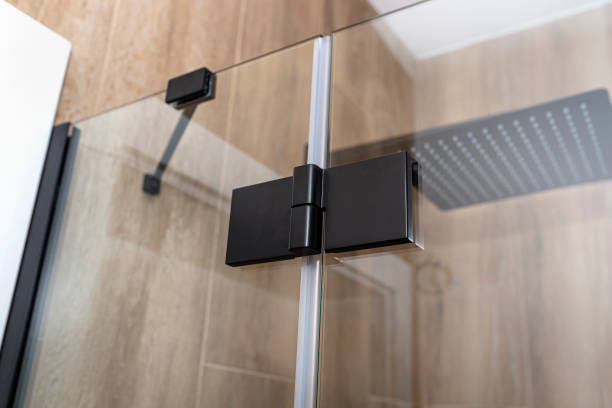
Le matériel corrodé ne maintient plus les joints là où ils appartiennent. Une charnière qui pique et se raidit modifie la géométrie de fermeture de la porte; un rouleau qui devient rugueux laisse la porte s'affaisser d'un côté et espacer la ligne magnétique. C'est pourquoi les résultats des tests au brouillard salin doivent faire partie de l'examen de l'imperméabilisation., pas seulement le cosmétique. Les finitions anticorrosion à revêtement PVD et validées maintiennent la géométrie des charnières stable pendant toute la durée de vie des joints qu'elles positionnent - le raisonnement derrière le programme de matériel PVD résistant à la corrosion de KJ Bath..
Test des performances de fuite avant expédition
Le langage des spécifications n’a de sens que si l’usine peut en témoigner. Quatre contrôles constituent la base pratique pour les enceintes d'angle commerciales:
Tests de cycle sur les pièces mobiles
Les rouleaux et les charnières soutiennent la porte tout au long de sa durée de vie. KJ Bath valide le matériel de son boîtier au moyen d'un test push-pull de 100 000 cycles (l'équivalent d'années d'occupation d'un hôtel compressées en un test sur banc) et la ligne d'étanchéité est vérifiée après le test., pas juste avant. Un fournisseur qui ne peut pas démontrer les performances du joint après cycle vous demande de financer l'expérience. La méthodologie des tests est décrite dans notre article sur 100,000-essais de rouleaux et de chenilles pour cycles.
Tests au brouillard salin sur le matériel
L'exposition au brouillard salin accélère la corrosion humide, produits de salles de bains nettoyés chimiquement. Le rapport de test doit nommer le lot de matériel et la durée d'exposition. Les finitions résistantes à la corrosion sont réussies; le placage non spécifié échoue, généralement au niveau de la charnière en premier.
Documentation sur le verre et la sécurité
Les panneaux trempés de 6 à 12 mm doivent porter une vérification de trempe, et les projets nord-américains nécessitent la certification SGCC selon ANSI Z97.1, avec des copies de certificat qui voyagent avec l'envoi. Rien de tout cela n’est une imperméabilisation en soi, mais une usine qui documente correctement le verre documente presque toujours correctement les sceaux également. Le paysage de la conformité est couvert dans notre article sur SGCC contre CE contre ANSI Z97.1.
Inspection avant expédition
Chaque commande commerciale doit être inspectée avant le chargement du conteneur: sceller le siège dans chaque rainure du cadre, traction magnétique en haut, milieu, et bas de la ligne de porte, planéité des plateaux, et finition du matériel. KJ Bath expédie chaque commande commerciale avec un rapport d'inspection de qualité couvrant la trempe., impact, et données sur le brouillard salin, plus des copies du certificat SGCC/CE pour l'acceptation en douane et sur site — l'ensemble de documents qu'un prescripteur peut déposer contre la soumission.

Liste de contrôle du prescripteur pour l’imperméabilisation des coins
- Dessin de disposition des joints: chaque joint de l'enceinte - verre à verre, verre à mur, ligne de porte, transition inférieure — illustrée avec son type de joint et son sens de compression.
- Spécification de fermeture magnétique: bandes magnétiques côté porte et côté gâche, traction testée à trois hauteurs, avec gâche réglable pour variation du mur.
- Plage de compensation des murs: indiqué en millimètres pour les deux profilés muraux, adapté à l'aplomb mesuré des pièces réelles.
- Détail du seuil: type de joint inférieur adapté à la hauteur du trottoir ou du plateau; direction du rail d'égouttement confirmée pour les portes sans cadre.
- Preuve de test matériel: 100,000-rapport de cycle avec contrôle d'étanchéité post-cycle, rapport sur le brouillard salin nommant le système de finition.
- Engagement pièces d’usure: profils d'étanchéité et rouleaux répertoriés comme pièces de rechange en commande répétée, avec un pack de pièces de rechange proposé pour le stock de l'établissement.
Cette dernière ligne mérite attention lors de la négociation. KJ Bath expédie les commandes commerciales avec un pack de pièces de rechange comprenant des rouleaux d'usure et des sauvegardes de joints., précisément parce que le remplacement des joints est un entretien programmé, pas un défaut. Le flux de travail de remplacement pour les équipes des installations est couvert dans notre guide d'entretien des parois de douche d'hôtel.
Pourquoi choisir le bain KJ
Bain KJ (Articles sanitaires Foshan Nanhai Kangjian) fabrique des cabines de douche depuis 1999, y compris les formats d'angle à fermeture magnétique et les formats peu encombrants spécifiés pour les appartements compacts et les salles de bains d'hôtellerie. Le 15,000 Une usine de m² à Foshan gère le traitement de l'aluminium, découpe et trempe du verre, assemblée, et ateliers de conditionnement automatisés avec 151 personnel et un R de 12 personnes&Équipe D. Le verre trempé de 6 à 12 mm est traité à partir de feuilles originales Xinyi et passe cinq portes QC — vérification de la trempe, impact, chute d'emballage, brouillard salin, et cycle push-pull - avant l'expédition de toute unité, et la ligne de joint magnétique fait partie de ce que le test de cycle revérifie. Les certifications incluent ISO 9001, OIN 14001, OIN 45001, SGCC, et CE, avec Hilton, Marriott, et Hyatt parmi les références du projet. MOQ commence à 10 ensembles, prélèvement d'échantillons 15 jours ouvrables, et chaque commande est expédiée avec le rapport d'inspection, copies de certificats, manuel d'installation, et pack de pièces de rechange. En savoir plus sur KJ Bath.
Mettez à l’épreuve vos spécifications d’étanchéité d’angle
Envoyez-nous vos dessins d'enceintes d'angle et vos exigences en matière de joints. Nous confirmerons la disposition du sceau, spécification de fermeture magnétique, et des preuves de tests matériels par rapport à votre soumission — sur du verre certifié SGCC/CE de 6 à 12 mm avec validation matérielle à 100 000 cycles et packs de joints de rechange inclus, MOQ à partir de 10 ensembles. Commencez par notre programme de contrôle de la qualité ou demander un examen directement.
Questions fréquemment posées
Pourquoi les joints magnétiques sont-ils mieux étanches que les joints de porte ordinaires?
Les joints magnétiques contiennent des bandes magnétiques flexibles qui tirent la porte vers une ligne de fermeture fixe à chaque fois qu'elle se ferme., comprimer le joint uniformément sur toute la hauteur de la porte. Les joints à friction dépendent de la pression exercée par l'utilisateur sur la porte fermée et s'usent de manière inégale au fil de l'utilisation.. La traction magnétique maintient l'écart constant même lorsque la porte s'installe, c'est pourquoi les fermetures magnétiques conservent leur étanchéité plus longtemps dans les cycles de service commerciaux.
Où les cabines de douche d'angle fuient-elles généralement?
Quatre chemins représentent la plupart des fuites: le joint d'angle vertical verre sur verre, les transitions verre-mur derrière les profilés de montage, l'espace de la porte mobile, et l'interface de bordure ou de plateau en bas. Les murs mal d’aplomb sont la principale cause, car ils compriment les joints de manière inégale et ouvrent des canaux d’un côté d’un joint.
Quelles preuves de test dois-je exiger pour une allégation d'imperméabilisation?
Demandez un test push-pull de 100 000 cycles sur la quincaillerie de la porte avec la ligne d'étanchéité vérifiée après le test, un rapport de brouillard salin sur le système de finition, vérification de la trempe du verre, et une inspection avant expédition couvrant l'emplacement des joints et la traction magnétique à plusieurs hauteurs. KJ Bath les fournit en standard sur les commandes commerciales, accompagné de copies du certificat SGCC/CE.
À quelle fréquence les joints des cabines de douche doivent-ils être remplacés dans les salles de bains commerciales?
La durée de vie du joint dépend de la chimie de l'eau, produits chimiques de nettoyage, et cycle de service, il est donc préférable de gérer le remplacement comme une maintenance planifiée plutôt que comme une réparation. Les équipes des installations inspectent généralement les joints lors de l'entretien de routine et remplacent les supports présentant un durcissement., lacunes, ou croissance de moisissures. La commande de packs de joints de rechange avec le boîtier d'origine réduit le temps d'arrêt du remplacement à quelques minutes.
Les joints magnétiques fonctionnent-ils sur les portes coulissantes ainsi que sur les portes pivotantes?
Les fermetures magnétiques sont plus courantes sur les portes d'angle pivotantes et battantes., où ils tirent la porte dans sa ligne de fermeture. Les portes coulissantes dépendent plutôt de la précision des rouleaux, géométrie de la piste, et profils emboîtables avec joints essuyables au niveau des montants de réunion. KJ Bath associe ses unités coulissantes à des rouleaux en acier inoxydable validés par des tests de 100 000 cycles pour maintenir la cohérence de ces lignes de rencontre..