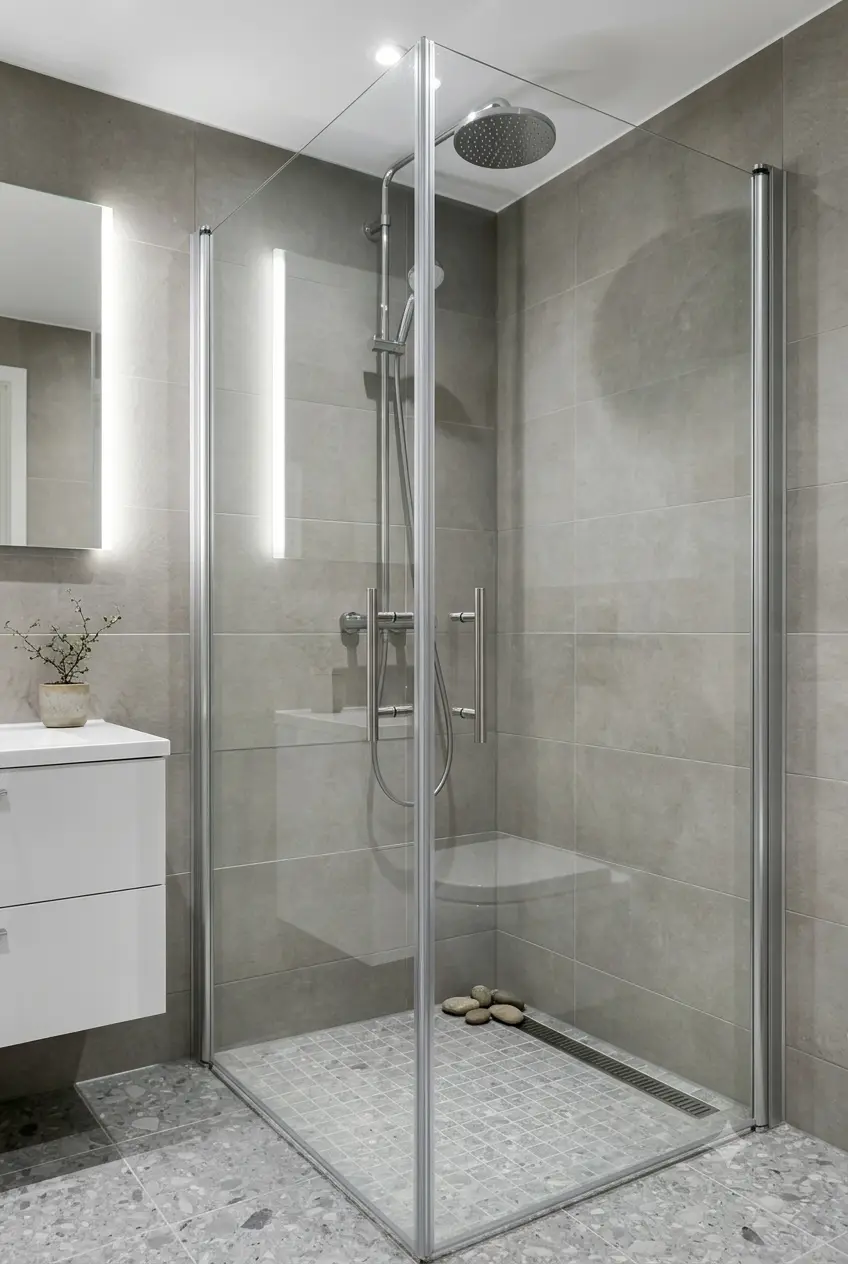
A corner shower enclosure lives or dies on its waterproofing. The geometry that makes corner units efficient in compact bathrooms — two glass edges meeting walls, two more meeting each other, plus a moving door — also creates more joints, more transitions, and more paths for water than any straight-run installation. When a corner enclosure leaks, the water rarely announces itself at the door line. It travels behind the wall profile, pools under the tray, and presents as a stain on the ceiling below.
Specifiers evaluating corner enclosures therefore read two documents more closely than anything else in the submittal package: the seal arrangement drawing and the hardware test report. The first shows where the manufacturer expects water to be stopped; the second shows whether those seals and the hardware holding them still work after years of daily use. This guide walks through both, covering where corner enclosures actually leak, how magnetic seals close the door gap, which detailing decisions specifiers most often miss, and what test evidence separates a watertight unit from a marketing claim.
The examples below draw on corner and space-saving enclosures of the type KJ Bath manufactures, and the quality-control practices described are the ones applied on its production-line quality control process.
Punti chiave
- Corner enclosures leak at four predictable paths: the vertical glass-to-glass joint, the glass-to-wall transitions, the door gap, and the curb or tray interface.
- Magnetic seals pull the door panel closed along its full height and keep the closing line constant, which is why they hold their waterproofing better than friction seals under daily commercial use.
- Canali a parete, corner posts, and bottom seals must be specified as a system; mixing profiles and seals from different sources breaks the water path.
- Test evidence matters more than claims: cycle testing on rollers and hinges, salt spray testing on hardware, and a documented pre-shipment inspection are the baseline for commercial projects.
- Seals are wear parts. Specify units whose seal profiles are repeat-order items, and budget for scheduled replacement rather than emergency repairs.
Where Corner Enclosures Actually Leak
Water follows gravity and pressure, and in a corner enclosure it finds the joints. Four paths account for the large majority of leak complaints in commercial bathrooms:
1. The Vertical Glass-to-Glass Joint
Where two fixed panels meet at the corner angle, the joint runs floor to ceiling. A correctly built unit closes this joint with a corner post or a notched glass-to-glass clamp plus a continuous seal strip. Problems start when walls are out of plumb: if the panels are forced to meet at a angle that differs from the seal’s design angle, the strip compresses unevenly and leaves a channel on one side. That is why wall compensation in the mounting profile matters as much as the seal itself.
2. The Glass-to-Wall Transitions
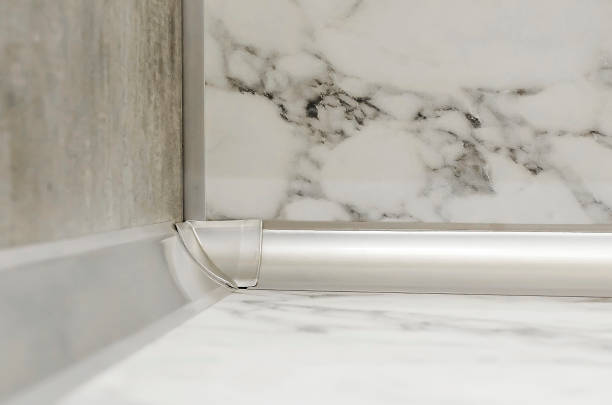
Both walls that host the enclosure need a continuous waterstop. Wall profiles — aluminum channels or clamp plates — carry a gasket that presses against the tile, and the joint behind is sealed at installation. The classic specifier error is assuming the tile installer and the enclosure installer each checked the wall for plumb. Neither did. On a 2000 pannello da mm, a wall that bows 8 mm out of plane gaps the gasket at mid-height, and the shower head aimed at that corner pushes water straight through.
3. The Door Gap
The moving door is the only part of the enclosure designed to open thousands of times a year, and its gap is controlled by seals that flex on every cycle. Section two covers this path in detail, because it is where magnetic seals earn their place in commercial specifications.
4. The Curb and Tray Interface
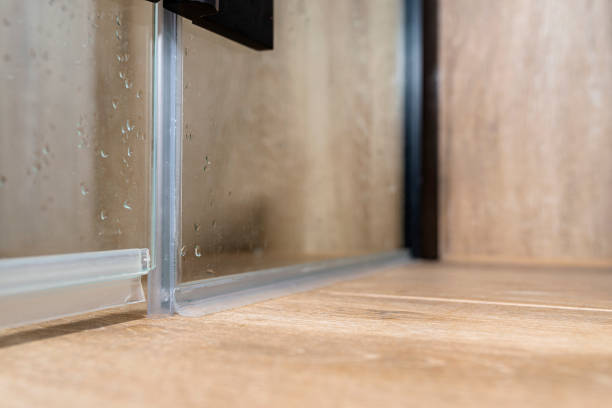
The bottom of the enclosure — curb, tray edge, or low-profile base — is where splash becomes standing water. The door’s bottom seal must match the threshold height, and the tray must sit level so water drains to the waste rather than ponding against the frame. A unit installed 3 mm out of level can hold a film of water against the bottom rail long enough for it to weep outside the wet zone.
How Magnetic Seals Close the Door Gap
Most corner enclosures with pivot or hinged doors close the vertical door gap with one of three seal types, and the differences show up fastest under commercial duty cycles.
Friction and Wipe Seals
The simplest closure is a hollow bulb or wipe strip of soft PVC that the door presses against when shut. It works well on day one and degrades predictably: each opening drags the strip across its mating surface, the PVC wears and takes a set, and within a period of heavy use the closing line no longer compresses evenly. In hotel bathrooms cleaned daily with aggressive chemicals, friction seals harden faster still.
Sigilli magnetici
A magnetic seal embeds a flexible magnet strip inside the door edge seal and a matching strip (or a steel strike) on the fixed panel. When the door approaches the closed position, the strips attract and pull the door the final few millimeters into alignment, compressing the seal evenly along the full height of the door. The seal does not depend on the user pushing the door fully shut, and the closing force stays constant as the door settles over years of use. For corner enclosures, where the door edge is often angled to match the corner geometry, this self-alignment is what keeps the gap line uniform.
Magnetic closures are standard on the space-saving corner formats in KJ Bath’s enclosure range, paired with stainless steel rollers on sliding variants — a combination chosen specifically for its leak-proof performance in compact apartments and hotel bathrooms.
Seal System Comparison
| Criterion | Friction / wipe seal | Magnetic seal |
|---|---|---|
| Closing action | Depends on user pressing door shut | Self-pulls to a fixed closing line |
| Compression evenness on angled corner doors | Drifts as strip wears and takes a set | Stays constant; strips re-align each close |
| Behavior after years of cycles | Gap opens gradually at wear points | Holding force persists; magnet does not wear out |
| Chemical cleaning resistance | PVC hardens with aggressive cleaners | Carrier strip still a wear part, but alignment survives |
| Typical maintenance action | Replace strip once gaps appear | Replace carrier strip on schedule; check strike alignment |
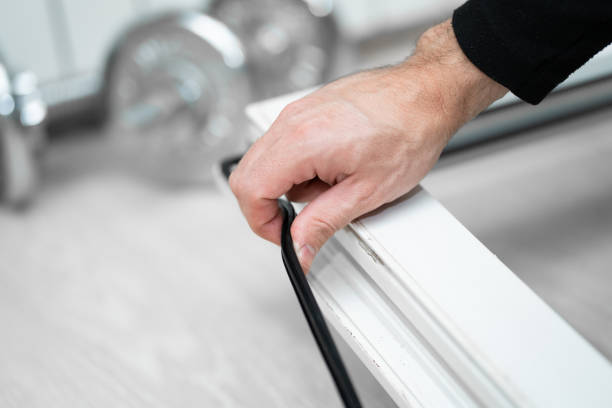
For a consumer-oriented walkthrough of seal types and replacement steps, our earlier guide to shower door seals covers the practical side; this article stays on the specification and testing decisions that matter at project scale.

The Waterproofing Details Specifiers Forget
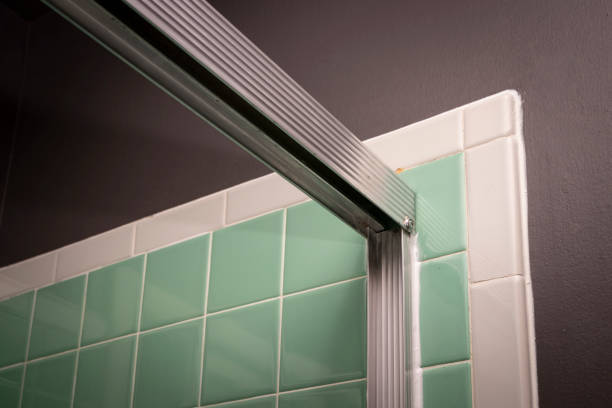
Wall Profiles and Compensation Range
Ask the manufacturer how much out-of-plumb the wall profile absorbs, and read the seal drawing against that number. A corner enclosure installs against two walls; the probability that both are flat increases the specification burden on the compensation hardware. Units with slotted profiles and gasketed channels handle normal variation. Clamp-type frameless corners need the walls verified before glass is ordered, because the glass cannot bend to meet a bowed substrate.
Bottom Seals and Threshold Compatibility
The door’s bottom sweep or drip rail must match the threshold it closes against. Frameless doors running over a curb use a drip rail that sheds water back inside the wet zone before it can track along the glass underside. Framed units with bottom tracks rely on track geometry and drain holes; those holes must stay clear, which places them on the facility maintenance checklist. Our installation guidance for commercial contractors includes the leveling and seal seating checks that decide long-term waterproofing.
Hardware Corrosion Is a Waterproofing Issue
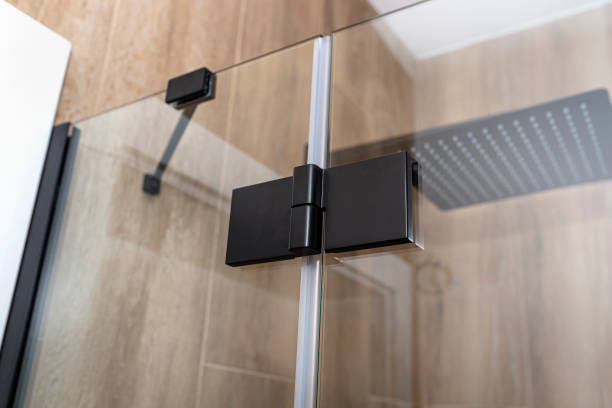
Corroded hardware stops holding seals where they belong. A hinge that pits and stiffens changes the door’s closing geometry; a roller that roughens lets the door sag on one side and gap the magnetic line. This is why salt spray test results belong in the waterproofing review, not just the cosmetic one. PVD-coated and validated anti-corrosion finishes keep hinge geometry stable for the life of the seals they position — the reasoning behind KJ Bath’s corrosion-resistant PVD hardware program.
Testing Leak Performance Before It Ships
Specification language only means something if the factory can evidence it. Four checks form the practical baseline for commercial corner enclosures:
Cycle Testing on Moving Parts
Rollers and hinges carry the door through its working life. KJ Bath validates its enclosure hardware through a 100,000-cycle push-pull test — the equivalent of years of hotel occupancy compressed into a bench run — and the seal line is checked after the test, not just before it. A supplier who cannot show post-cycle seal performance is asking you to fund the experiment. The test methodology is described in our article on 100,000-cycle roller and track testing.
Salt Spray Testing on Hardware
Salt spray exposure accelerates the corrosion that humid, chemically cleaned bathrooms produce. The test report should name the hardware batch and the exposure duration. Corrosion-resistant finishes pass; unspecified plating fails, usually at the hinge knuckle first.
Glass and Safety Documentation
Tempered panels from 6–12 mm should carry tempering verification, and North American projects need SGCC certification against ANSI Z97.1, with certificate copies that travel with the shipment. None of this is waterproofing per se, but a factory that documents glass correctly almost always documents seals correctly too. The compliance landscape is covered in our piece on SGCC rispetto a CE rispetto a ANSI Z97.1.
Ispezione pre-imbarco
Every commercial order should be inspected before container loading: seal seating in every frame groove, magnetic pull at the top, mezzo, and bottom of the door line, flatness of trays, e finitura dell'hardware. KJ Bath ships each commercial order with a quality inspection report covering tempering, impatto, e dati sulla nebbia salina, plus SGCC/CE certificate copies for customs and site acceptance — the document set a specifier can file against the submittal.

A Specifier’s Checklist for Corner Waterproofing
- Seal arrangement drawing: every joint in the enclosure — glass-to-glass, glass-to-wall, door line, bottom transition — shown with its seal type and compression direction.
- Magnetic closure specification: magnet strips on both door and strike side, pull tested at three heights, with the strike adjustable for wall variation.
- Wall compensation range: stated in millimeters for both wall profiles, matched to the measured plumbness of the actual rooms.
- Particolare della soglia: bottom seal type matched to curb or tray height; drip rail direction confirmed for frameless doors.
- Hardware test evidence: 100,000-cycle report with post-cycle seal check, salt spray report naming the finish system.
- Wear parts commitment: seal profiles and rollers listed as repeat-order spare parts, with a spare parts pack quoted for facility stock.
That final line deserves attention during negotiation. KJ Bath ships commercial orders with a spare parts pack including wear rollers and seal backups, precisely because seal replacement is scheduled maintenance, not a defect. The replacement workflow for facility teams is covered in our hotel shower screen maintenance guide.
Perché scegliere il bagno KJ
Bagno di KJ (Sanitari Foshan Nanhai Kangjian) da allora produce cabine doccia 1999, including the magnetic-sealed corner and space-saving formats specified for compact apartments and hospitality bathrooms. IL 15,000 sqm factory in Foshan runs aluminum processing, taglio e tempra del vetro, assemblaggio, and automated packaging workshops with 151 staff and a 12-person R&squadra D. Tempered glass from 6–12 mm is processed from Xinyi original sheets and passes five QC gates — tempering verification, impatto, caduta dell'imballaggio, nebbia salina, and push-pull cycle — before any unit ships, and the magnetic seal line is part of what the cycle test rechecks. Certifications include ISO 9001, ISO 14001, ISO 45001, SGCC, e CE, with Hilton, Marriott, and Hyatt among project references. Il MOQ inizia alle 10 imposta, prelevare campioni 15 giorni lavorativi, and every order ships with the inspection report, certificate copies, installation manual, and spare parts pack. Scopri di più su KJ Bath.
Put your corner waterproofing spec to the test
Send us your corner enclosure drawings and seal requirements. We will confirm the seal arrangement, magnetic closure specification, and hardware test evidence against your submittal — on 6–12 mm SGCC/CE-certified glass with 100,000-cycle hardware validation and spare seal packs included, MOQ da 10 imposta. Start with our quality control program or request a review directly.
Domande frequenti
Why do magnetic seals waterproof better than ordinary door seals?
Magnetic seals contain flexible magnet strips that pull the door to a fixed closing line every time it shuts, compressing the seal evenly along the full door height. Friction seals depend on the user pressing the door closed and wear unevenly with use. The magnetic pull keeps the gap constant even as the door settles, which is why magnetic closures hold their waterproofing longer under commercial duty cycles.
Where do corner shower enclosures usually leak?
Four paths account for most leaks: the vertical glass-to-glass corner joint, the glass-to-wall transitions behind the mounting profiles, the moving door gap, and the curb or tray interface at the bottom. Out-of-plumb walls are the leading root cause, because they compress seals unevenly and open channels on one side of a joint.
What test evidence should I require for a waterproofing claim?
Ask for a 100,000-cycle push-pull test on the door hardware with the seal line checked after the test, a salt spray report on the finish system, tempering verification for the glass, and a pre-shipment inspection covering seal seating and magnetic pull at multiple heights. KJ Bath supplies these as standard on commercial orders, together with SGCC/CE certificate copies.
How often should shower enclosure seals be replaced in commercial bathrooms?
Seal lifespan depends on water chemistry, prodotti chimici per la pulizia, and duty cycle, so replacement is best handled as scheduled maintenance rather than repair. Facility teams typically inspect seals during routine servicing and replace carriers showing hardening, gaps, or mold growth. Ordering spare seal packs with the original enclosure keeps the replacement downtime to minutes.
Do magnetic seals work on sliding doors as well as pivot doors?
Magnetic closures are most common on pivot and hinged corner doors, where they pull the door into its closing line. Sliding doors rely instead on roller precision, track geometry, and interlocking profiles with wipe seals at the meeting stiles. KJ Bath pairs its sliding units with stainless steel rollers validated through 100,000-cycle testing to keep those meeting lines consistent.