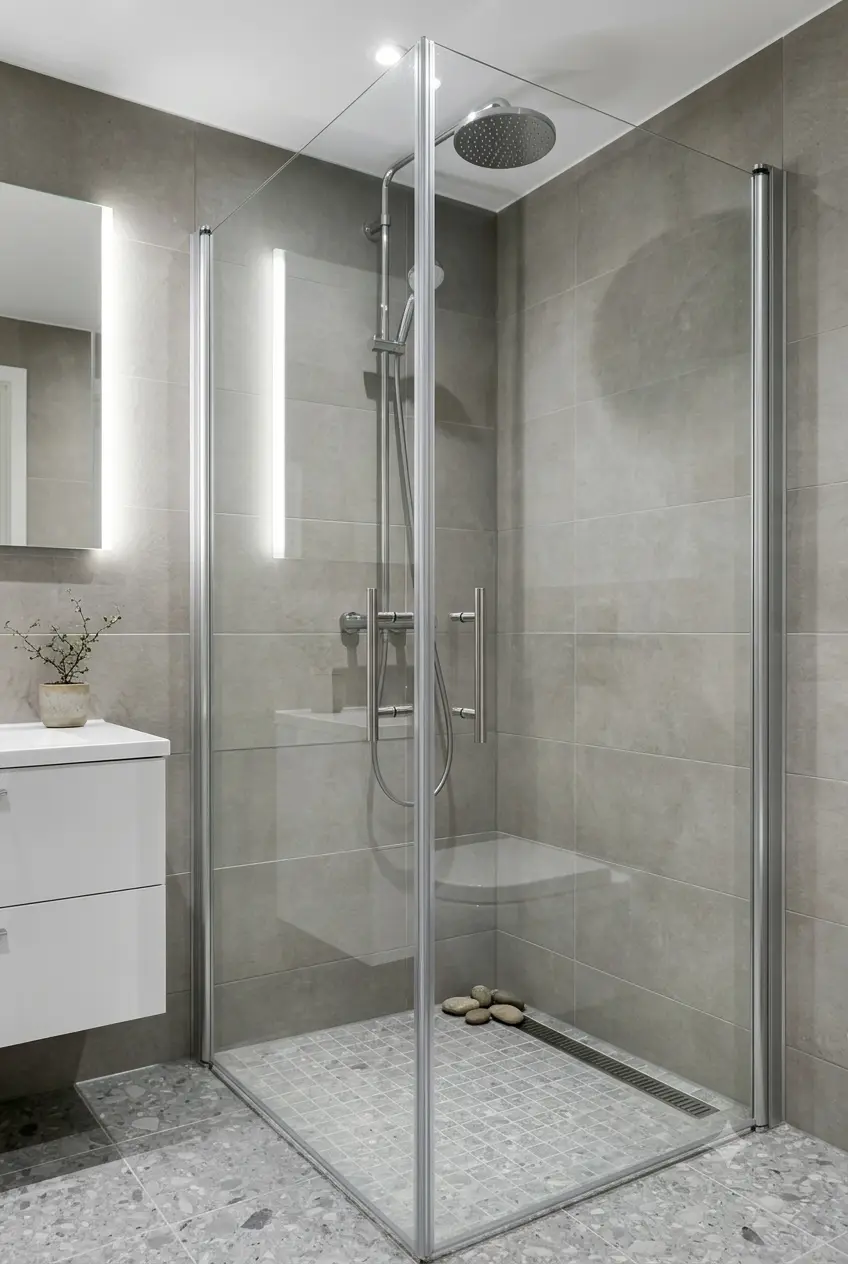

Multifamily housing is a volume business with thin margins per unit, and the shower enclosure is one of the few components that touches every single bathroom in the building. Choose wrong and you pay for it hundreds of times over: units that leak, doors that jam in year two, maintenance tickets that never stop. Choose right and one well-specified space-saving enclosure repeats across every floor plan, installs fast, and stays serviceable for years.
This article walks through how a space-saving shower enclosure program actually deploys across a multifamily development — from specification and structural review, through sampling and mass production, to packaging and handover. It is written as a stage-by-stage deployment case, based on how KJ Bath, ein Hersteller von Duschabtrennungen in Foshan, China seitdem 1999, runs multi-unit projects for apartment, Hotel, and senior-living clients. Rather than inventing a fictional building, it uses the real mechanics of the process: what you send the factory, what comes back, what gets inspected, and where programs typically go wrong.
Wichtige Erkenntnisse
- Multifamily programs succeed or fail at specification: one enclosure format mapped cleanly across all unit types beats a different model per floor plan.
- Space-saving formats — diamond, Sektor, and folding enclosures such as KJ Bath’s JL139 and JK1934 — exist precisely for compact multifamily bathrooms.
- Deployment runs in four stages: structural review (24-hour feedback), Probenahme (um 15 Arbeitstage), Massenproduktion (um 30 working days first order), and packaged handover.
- Hardware durability is a per-unit cost multiplier: Rollen bewertet bis 100,000 push-pull cycles hold down maintenance across hundreds of units.
- Packaging engineered for drop testing is what protects glass through container transit and last-mile handling to site.
- Every batch should ship with certification copies, eine Installationsanleitung, and a spare parts pack of wear items.
Why Multifamily Housing Favors Space-Saving Enclosures
A multifamily bathroom is usually a small bathroom. Developers fit more units per floor when each wet area is compact, which pushes the shower into a corner and shrinks the clear floor space around it. In that environment the enclosure has to do three things at once: occupy the least possible footprint, contain water completely, and survive daily use by residents who did not choose it and will not baby it.

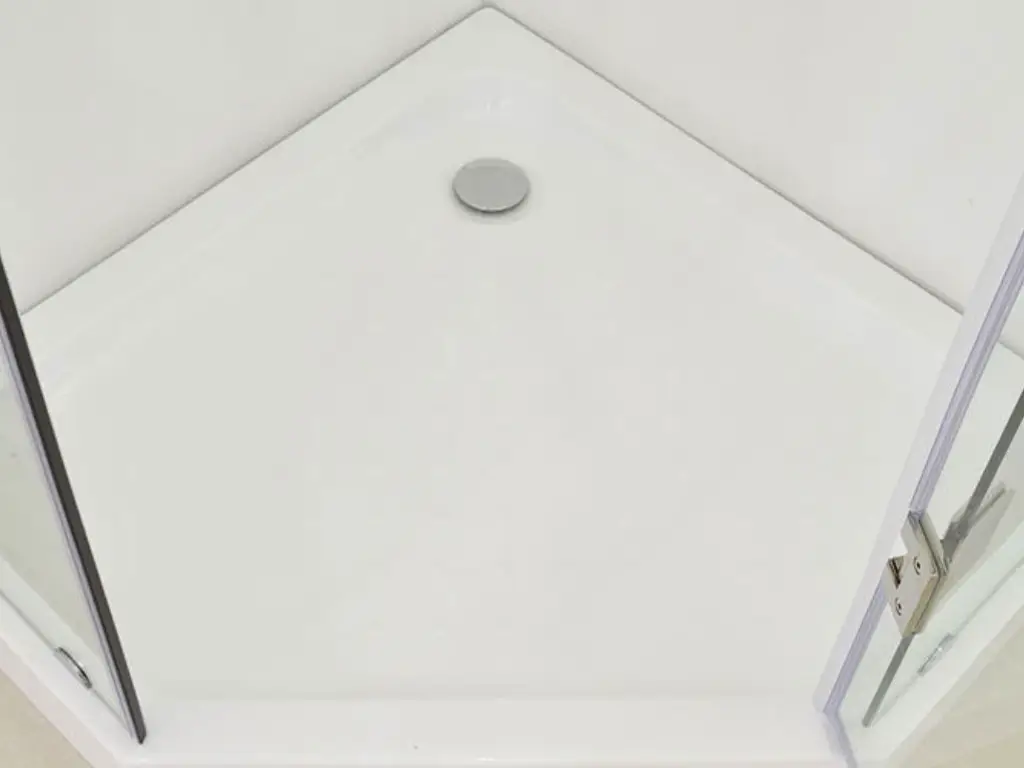
This is exactly the problem space-saving shapes were engineered to solve. Diamond and sector enclosures cut the protruding corner out of the room so residents can walk past; sliding and folding doors open without swinging into a vanity or toilet. KJ Bath’s JL139 and JK1934 models were developed specifically for this scenario — small apartment bathrooms where a standard square unit wastes walkway space. The trade-offs between the shape families, and how they map to North American unit dimensions, werden in unserem Ratgeber verglichen space-saving enclosure shapes for B2B buyers.
There is a fourth requirement that is easy to miss: Konsistenz. A property manager does not want three enclosure models with different seals and different spare parts across one building. The specification that wins in multifamily is one format, repeated, with a documented parts list. That principle shapes every stage of the deployment below.
Deployment Stage 1 — Specification and Structural Review
The program starts with drawings, not product pages. The developer or contractor sends the bathroom floor plans — CAD or 3D if available — along with the project schedule and any certification requirements. On KJ Bath projects, the engineering team treats this as a structural pre-check rather than a formality: they look for waterproofing blind spots, wall conditions that complicate fixing, and any dimension where the enclosure design fights the building.
Feedback comes back within 24 Std., including optimization suggestions. This matters more in multifamily than in any other segment, because a flaw caught at review is fixed once on paper, while a flaw that survives to installation is repeated in every unit of the building. Typical catches at this stage include:
- Door swings that collide with vanities or accessibility clearances in the compact floor plans.
- Enclosure footprints that fit the plan but leave no realistic installation tolerance for out-of-plumb walls.
- Glass thickness specified below what a frameless panel needs at the planned width.
Specification also fixes the commercial frame of the program: Glasstärke von 6 mm bis 12 mm, Hardware-Finish (PVD-coated matte black and brushed gold for premium units, chrome for value programs), tray integration, and the unit count mapped to each floor-plan type. Sizing standards and clearance minimums are worth confirming against our reference on compact enclosure dimensions and clearances before the drawing set is frozen.
Deployment Stage 2 — Sampling and Approval
Mass production never starts on drawings alone. A sample unit is produced in about 15 Arbeitstage, including any special-size glass processing, and shipped for physical approval. In a multifamily program the sample review is not just a quality check — it is the moment the whole delivery chain agrees on what “done” sieht aus wie.
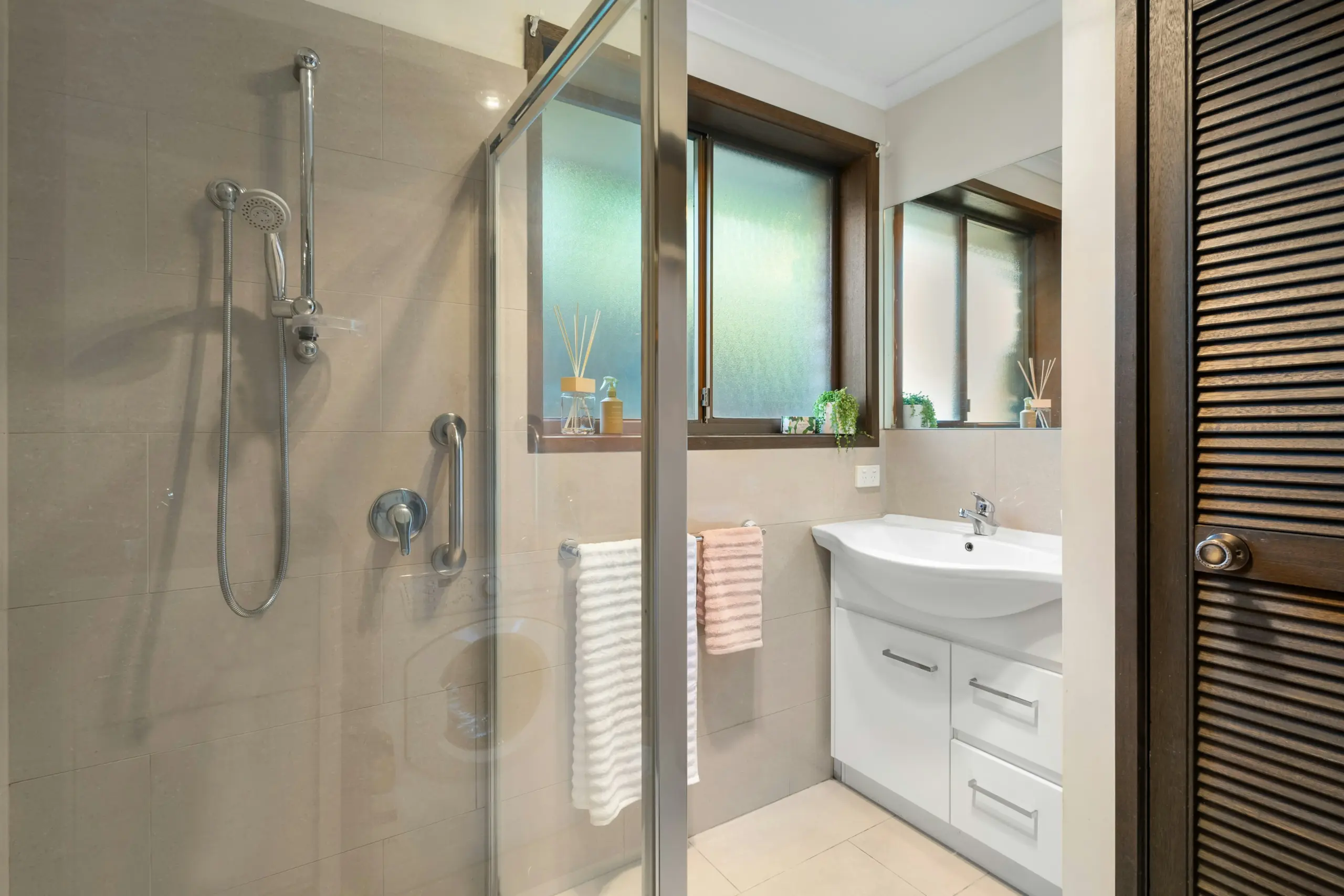
What the approval side should physically verify on the sample:
- Glas: tempering stamp, Kantenarbeit, Klarheit, and coating if an easy-clean finish is specified.
- Hardware: finish consistency across hinges, Griffe, and channels; smooth operation through repeated cycles.
- Robben: magnetic strips close cleanly, bottom seals contact the tray evenly along the full width.
- Verpackung: the export carton and corner protection that will carry hundreds of identical boxes to site.
Paperwork is approved alongside the physical unit: SGCC certificate copies for North American projects (CE für Europa), the quality inspection report format, and the installation manual that site crews will actually use. KJ Bath supplies hotel-project documentation as standard — the company has manufactured for Hilton, Marriott, and Hyatt projects — and multifamily buyers benefit from the same discipline. Der project case studies page collects delivered examples of this way of working.
Deployment Stage 3 — Mass Production and Batch Consistency
With the sample approved, production runs about 30 working days for a first order, tightening to 20-25 bei Wiederholungen. For multifamily volumes the factory side is a consistency exercise: hundreds of units must match the approved sample, not merely each other. KJ Bath runs this from a 15,000 sqm plant with four dedicated workshops — aluminum processing, Glasschneiden und Härten, Montage, and automated packaging — a 12-person R&D-Team, and a monthly capacity of 1,000 Sätze, which is the scale that lets a mid-size multifamily phase run as a single consistent batch.
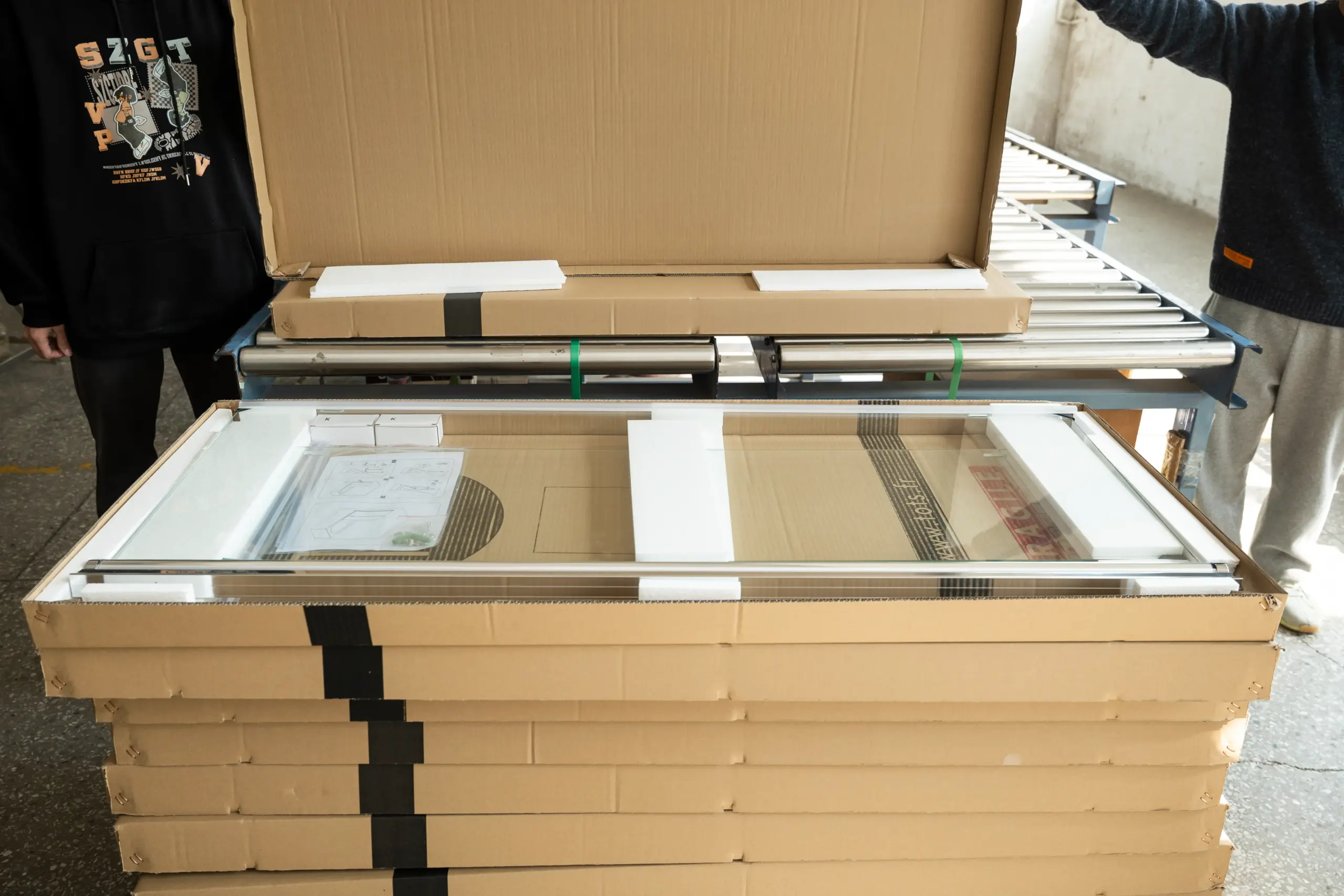
Quality gates in production mirror the sample: every order passes tempering verification, Schlagprüfung, Fallprüfung von Verpackungen, Salzsprühtests an Hardware, und Push-Pull-Zyklustests an beweglichen Teilen. Glass is tempered in-house from Xinyi original sheets. For the enclosure’s hardest-working part — the moving hardware — rollers are rated to 100,000 Push-Pull-Zyklen, which maps to roughly a decade of daily residential use before wear items need attention.
Two program-management practices keep this stage on rails. Erste, vor der Restzahlung prüfen: standard terms are 30% Anzahlung und 70% nach Inspektion vor dem Versand, so use that inspection window on real units, not paperwork alone. Zweite, schedule phases around lead time rather than wishful dates — repeat batches at 20-25 working days can be chained to construction phases, but the first 30-day run cannot be compressed by asking nicely.
Deployment Stage 4 — Packaging, Versand, and Handover
Container transit and site handling are where marginal packaging becomes broken glass. On multifamily programs KJ Bath packs in standardized honeycomb cartons with reinforced wooden crating for the long haul, a spec validated by drop testing — the same packaging engineering offered to e-commerce sellers who need units to survive individual parcel handling. Site delivery then lands as identifiable, sequenced cartons rather than anonymous boxes.

The handover package is designed to make installation crews self-sufficient:
- A quality inspection report per batch, covering the tempering, Auswirkungen, Salzsprühnebel, und Zyklustestdaten.
- SGCC/CE certificate copies that travel with the shipment for customs and project acceptance.
- An illustrated installation manual written for the specific enclosure model, not a generic sheet.
- A spare parts pack of wear items — rollers and seal strips — so the property team can service units without a procurement cycle.
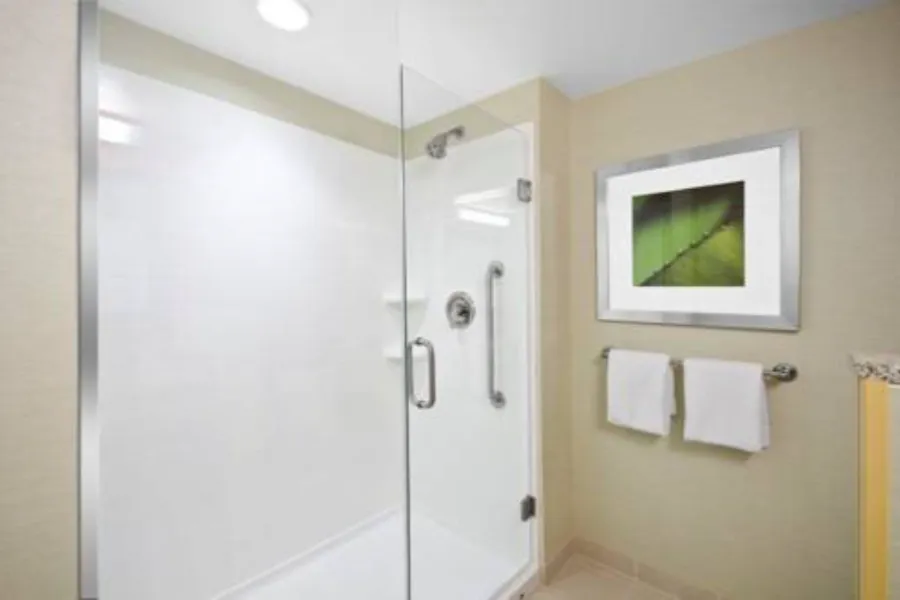
Spec Strategy: Unit-by-Unit Custom vs. One Format Repeated
The most consequential decision in a multifamily enclosure program is made before any stage above: how many different enclosure specifications the building will carry. This comparison shows why experienced project buyers converge on one format.
| Dimension | Unit-by-Unit Custom Spec | One Space-Saving Format Repeated |
|---|---|---|
| Produktion | Multiple small batches, more changeovers | One consistent batch per phase |
| QC complexity | Every variant needs its own checks | One approved sample governs the run |
| Installation speed | Crews re-learn each variant | Crews ramp up fast on one assembly sequence |
| Ersatzteile | Multiple seal/roller SKUs to stock | One parts list covers the building |
| Unit cost | Higher — fragmented volumes | Lower — volume concentrated on one SKU |
| Best used when | Genuinely irregular rooms, retrofits | New-build floors repeating a few plan types |
The hybrid that works in practice: standardize on one space-saving format for the repeated floor plans and reserve custom sizing for the small number of irregular units — accessible layouts, end-cap units — that genuinely need it. Durchsuchen Sie die platzsparendes Gehäuseprogramm to see which formats can carry that standardization load.
Lessons That Transfer to Your Next Project
Run enough multi-unit programs and the same patterns repeat. The ones worth carrying into your next development:
- Freeze the enclosure specification with the floor plans, not after framing. Late enclosure changes ripple through tiling, Sanitär, and door hardware.
- Use the 24-hour structural review properly — send real drawings and challenge the feedback. It is the cheapest engineering you will ever buy.
- Approve the sample in person if you can. Finish and seal quality are hard to judge from photos.
- Treat the cycle-test rating as a maintenance budget: Hardware bewertet für 100,000 cycles means fewer work orders per unit per year.
- Insist on the full handover package — inspection report, Zertifikate, Handbuch, spare parts — as contract deliverables, not favors.
Planning a Multifamily Bathroom Program?
Send your floor plans for a structural review with feedback inside 24 Std.. KJ Bath supplies space-saving enclosures at a 10-set MOQ, um 30 working days for first production, certification paperwork for customs and acceptance, and spare parts support for the property team. See delivered work on the case study page or talk to the project team directly.
Warum sollten Sie sich für KJ Bath entscheiden?

KJ Bath (Foshan Nanhai Kangjian Sanitärartikel) stellt seitdem Duschabtrennungen her 1999. Der 15,000 Die qm-Fabrik betreibt vier Werkstätten – Aluminiumverarbeitung, Glasschneiden und Härten, Montage, und automatisiertes Verpacken – mit 151 Personal, ein 12-Personen-R&D-Team, und monatliche Ausgabe von 1,000 Sätze. All glass is tempered in-house from 6mm to 12mm using Xinyi original sheets, und jede Bestellung besteht fünf QC-Tests: Überprüfung der Temperierung, Auswirkungen, Verpackungsabfall, Salzsprühnebel, und Push-Pull-Zyklus. Zu den Zertifizierungen gehört ISO 9001, ISO 14001, ISO 45001, SGCC, und CE, mit Hilton, Marriott, and Hyatt projects among delivered work. MOQ ist 10 Sätze, Proben dauern ca 15 Arbeitstage, first production about 30, and every shipment carries a 5-year enclosure warranty and 3-year hardware warranty. Erfahren Sie mehr über KJ Bath.
Häufig gestellte Fragen
Which shower enclosure format works best for compact multifamily bathrooms?
Corner-format space-saving enclosures — diamond, Sektor, and folding types such as KJ Bath’s JL139 and JK1934 — are engineered for exactly this case. They cut the protruding corner out of the walkway and pair with sliding or folding doors that open without swinging into fixtures.
How long does a multifamily enclosure program take from drawings to delivery?
Structural review feedback comes within 24 hours of sending drawings. Sampling takes about 15 Arbeitstage, first mass production about 30 Arbeitstage, and repeat batches 20-25. Ocean freight adds transit time on top, quoted by your forwarder.
What is the MOQ for a multifamily shower enclosure order?
KJ Bath legt Mindestbestellmenge fest 10 Sets für Hauptmodelle, which lets a developer pilot one enclosure format on a single floor before committing the full building. Full phases then run as consolidated batches at the same specification.
How do you keep hundreds of enclosures consistent across a building?
Consistency comes from producing repeated units as one batch governed by an approved sample, with QC gates on tempering, Auswirkungen, fallen, Salzsprühnebel, and cycle testing. One specification, one parts list, and one installation manual then serve the whole property.
What documentation ships with a multifamily enclosure order?
Each batch ships with a quality inspection report (Temperierung, Auswirkungen, Salzsprühnebel, cycle data), SGCC or CE certificate copies for customs and acceptance, an illustrated installation manual for the specific model, and a spare parts pack of wear items like rollers and seal strips.