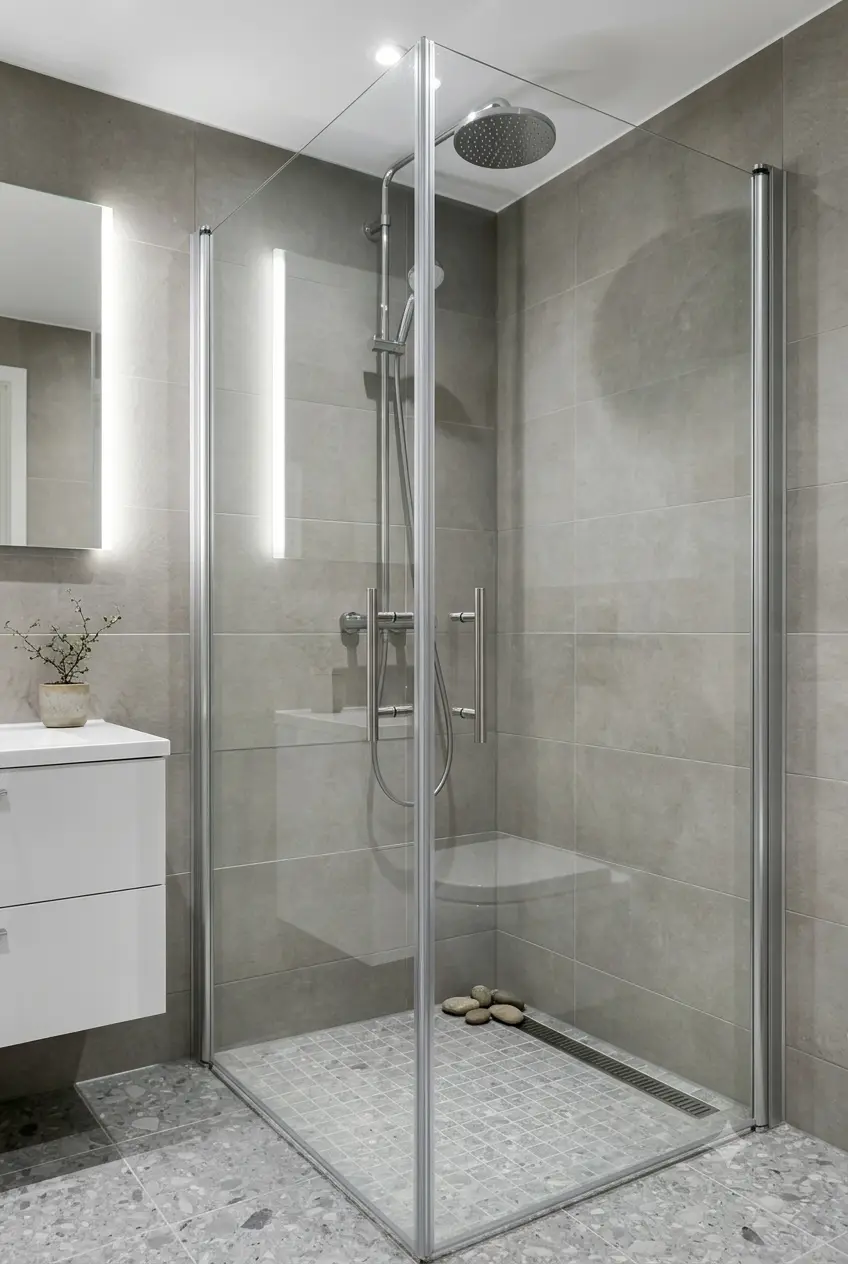
On a hotel renovation, the frameless slider is the fixture most likely to pass inspection on day one and generate the first callback on day ninety. Not because the glass or the hardware fails, but because a track set two millimetres out of level, a wall anchor into uncovered blocking, or a seal cut short turns a smooth door into a dragging, weeping one. Crews that treat the unit like a kit to assemble instead of a system to align produce exactly that result.
This guide is the sequence we hand to commercial contractors with every project order — the pre-delivery checks that catch site problems before glass arrives, the step-by-step installation order for a frameless sliding door, the multi-room rollout workflow that keeps a 150-room floor consistent, and the failures that generate callbacks. Where a decision is yours, the reasoning is given; where the manufacturer should be carrying the risk, that is stated too.
ประเด็นสำคัญ
- Ninety percent of slider callbacks are decided before the unit leaves the crate: out-of-level tracks, missing blocking, and floors without fall are site conditions, not hardware defects.
- Verify finished dimensions against the site survey while packaging is still in the room — a frameless unit cannot be scribed to a wall the way a framed one can.
- The head track is the datum for everything: set it dead level along its span and plumb at its ends, or every later adjustment is chasing an error you built in.
- Hang, adjust, then seal — roller height and alignment are corrected on the hangers, not with silicone, and sealant is the last defence, never the first.
- On multi-room work, build one pilot room, get it signed off, then replicate with a per-room snag sheet; the hardware is only consistent if the process is.
- Hand over the installation manual, the numbered spare-parts pack and the warranty registration on day one — they are what keep year-three service calls cheap.
Before the Crates Open: The Site Checks

A frameless slider is unforgiving by design. There is no metal channel deep enough to absorb a wandering wall, and glass cut to size cannot be scribed on site. That means the checks below belong before delivery, while there is still time to fix the building instead of blaming the door:
- Finished dimensions against the survey. Confirm the rough opening against the shop drawing at finished floor and finished wall level — tile thickness included. Re-measure diagonals for square; a 5mm skew across an opening will not stop the door, but it will show in every sightline.
- Substrate and blocking. Head track fixings land on solid blocking or structural backing at every anchor point, including mid-span where the drawing calls for it. Wall channels need fastener-holding substrate along their full height. Chase this now, not when the anchor spins.
- Level datum and floor fall. Establish the room’s level line before anything is marked. Check the curb or tray fall toward the drain: a frameless slider is a water-management system with a gap in it, and the floor is what closes that gap.
- Receipt and staging. Inspect every panel on uncrating — edge chips travel as claims later — and stage units upright, padded, in the room order they will be installed. On a 150-room floor, crate sequencing is schedule management.
If your supplier has done its job, none of this is guesswork: KJ Bath ships a detailed illustrated installation manual written for the specific project configuration, and for structural or layout questions the factory’s engineering team — the same group that pre-checks project drawings within 24 hours of receipt — answers on request at a committed 12-hour response.
เครื่องมือ, Crew and the Order of Work
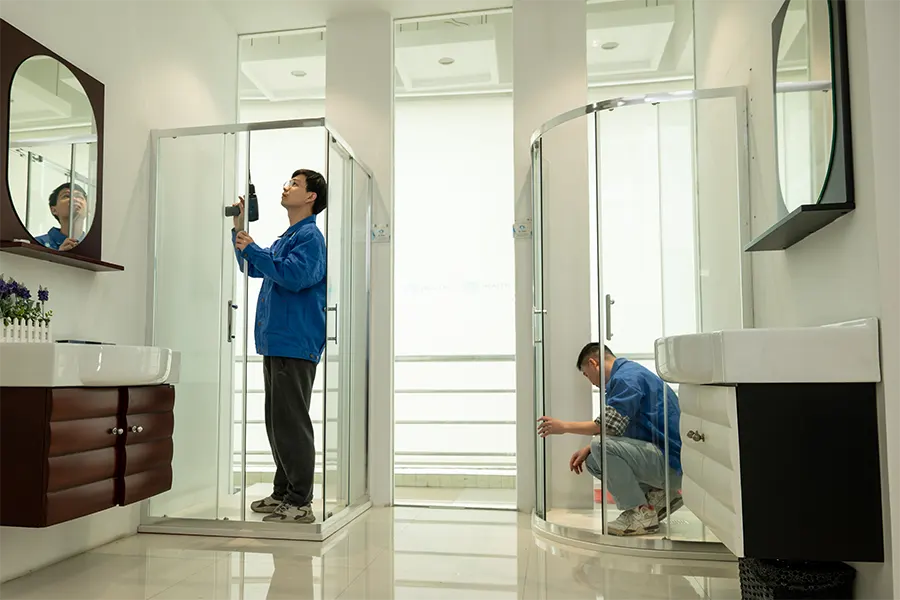
Assume a two-person crew, a full laser level, quality suction cups for every leaf, carbide drill bits for tile where the wall channel must be anchored, a torque driver you actually set to a value, and the manufacturer’s sealant recommendation. The work order never varies:
- Mark the datum: track centreline and end positions from the level line, not from the wall or the curb — either can lie.
- Fix the head track: anchors at every specified point, dead level along the span, checked again after the last fastener.
- Install wall channels and fixed panels: channel to the datum, glass into the channel with the supplied packing, clamps started but not torqued.
- Hang the moving leaves: rollers into the track, panel height set on the adjustable hangers, leaves running full travel before final torque.
- Fit the sealing system: bottom guides, interlock strips between passing panels, threshold deflector at the curb.
- Attach handles and end-caps, then cycle the door twenty times and correct any drag on the hangers.
- Sealant where the drawing says sealant — and nowhere else.
- ทำความสะอาด, protect, and sign the room off against a snag sheet while the crate is still in it.
The Head Track First: Set the Datum Right
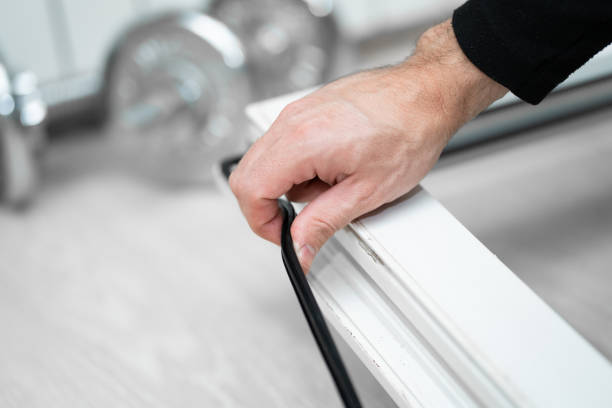
Everything a slider is — smooth, aligned, watertight — inherits from the head track, so the track earns the most scrutiny. Fixings at the spacing the manufacturer specifies (every anchor point, not “most of them”), into blocking, with the profile dead level along its length: a track that slopes a few millimetres end-to-end gives the door a permanent preference to drift open or hold shut, and no amount of roller adjustment after the fact will argue the point away.
Two details separate careful crews from fast ones. อันดับแรก, respect the unsupported span: if the drawing calls for a mid support or a taller header over a wide bypass opening, that is a structural instruction from the cycle- and load-tested system, not an optional bracket — the span and load reasoning is laid out in our frameless sliding door specification guide. ที่สอง, pack the channel correctly at the wall: the gap the packing absorbs is how an out-of-plumb wall disappears from the finished line.
Hanging and Adjusting the Leaves
With fixed panels clamped (pad seats clean, torque to the specified value — an over-torqued glass clamp is a future edge chip with a date on it), the moving leaves go in next. The adjustment philosophy matters: panel parallelism, running height and the overlap at the interlock seal are all set on the hanger eccentricities and the roller adjusters. A door that rubs at one point in its travel is a mis-set hanger, not a track that needs shimming, and forcing it smooth wears the wheel tread unevenly from week one. The rollers you are trusting with this job should carry a documented cycle rating — what makes one credible is covered in our guide to 100,000-cycle roller testing.
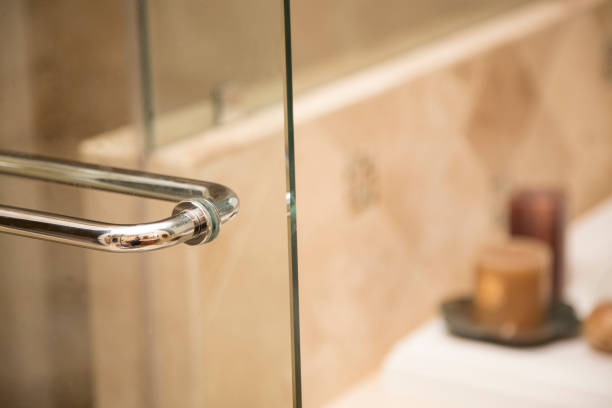
Then the twenty-cycle check before any sealant tube touches the joint: เปิด, close, release. The leaf should stop where it was left, not creep toward either end, and the sound through the travel should be a consistent whisper. Anything else goes back to the hangers now, while the room is still open.
The Multi-Room Rollout: Pilot, Replicate, Snag
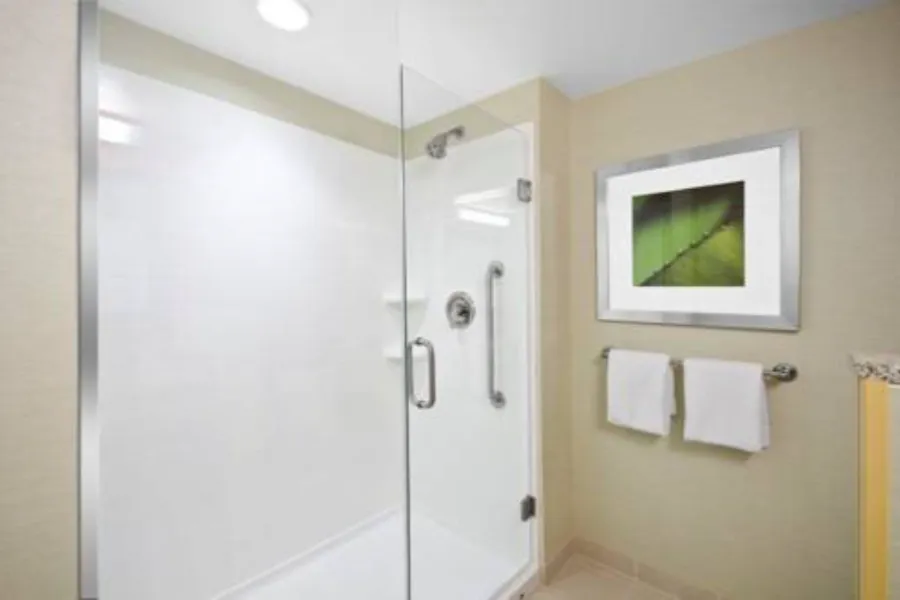
On single units, craftsmanship carries the result. On a hundred identical bathrooms, process carries it, because variance across a floor is what turns individual imperfections into a pattern the owner’s rep photographs. The workflow that prevents that: build one pilot room start to finish with the full sequence above, walk it with the inspector or owner’s representative, and get it signed as the standard of replication. Then run crews in matched pairs against a fixed daily target, each pair closing rooms with the same snag sheet — travel check, seal seating, clamp torque witnessed, sightlines, cleanliness — signed before the crate leaves the room.
Two more project habits pay for themselves. Keep the rooms’ batches in the same order the units were packed and labelled, and photograph each completed snag sheet into a per-room log; when the owner’s punch list arrives, the evidence of what passed and when is already filed. The specification-side discipline this builds on is covered in our guide to specifying enclosures for hotel projects, and the hospitality program context in our hospitality solutions page.
The Five Failures That Generate Callbacks
| Callback symptom | Usual real cause | Prevented by |
|---|---|---|
| Door drifts open or shut | Head track not level along its span | Re-check level after the final fastener; twenty-cycle release test before sealant. |
| Water at the threshold | Missing floor fall, or deflector seal skipped | Fall checked at handover; seal set installed per drawing, not per habit. |
| Grinding after months | Open bearings plus track grit | Specify sealed rollers on contract; put the channel in housekeeping’s routine. |
| Loose wall channel | Anchors without blocking | Blocking verified in the wall before tile, on the manufacturer’s anchor layout. |
| Edge chip weeks later | Over-torqued or unpadded glass clamp | Torque driver set to spec; witnessed clamp check on the snag sheet. |
Handover Documents: The Part the Owner Actually Keeps
When the last room closes, the deliverable is not only 150 working doors. The packet that protects everyone afterward: the project-specific installation manual (it is also the cleaning and adjustment reference for facilities staff), the numbered spare-parts list with the quantities shipped — rollers, bottom guides, interlock and deflector seals as wear items — and the warranty registration: on KJ Bath projects, five years on the enclosure and three on hardware, with lifetime online technical support for anything a facilities team hits later. How those terms work in practice is spelled out in the warranty and after-sales policy. A contractor who hands this packet over with the keys is the contractor the owner calls first on the next tower.
Installing on a Project and Wanting the Drawings Reviewed First?
KJ Bath pre-checks project layouts within 24 ชั่วโมง, ships illustrated installation manuals per configuration, and answers installer questions within 12 hours while the crew is still on site. Send the bathroom sheets and we will flag the anchor and fall details before you mobilise.
Why Choose KJ Bath

เคเจ บาธ (เครื่องสุขภัณฑ์ Foshan Nanhai Kangjian) ได้ผลิตตู้อาบน้ำตั้งแต่นั้นเป็นต้นมา 1999. ที่ 15,000 sqm factory runs four dedicated workshops — aluminium processing, การตัดกระจกและการแบ่งเบาบรรเทา, การประกอบ, and automated packaging — with 151 พนักงาน, ร.12 คน&ทีมดี, and monthly output of 1,000 ชุด. Project orders ship with a configuration-specific illustrated installation manual, a numbered spare-parts pack, and engineering pre-check of layouts within 24 ชั่วโมง; hardware is rated to 100,000 push-pull cycles and verified by salt spray testing on every order. Glass is tempered in-house from Xinyi original sheets in 6-12mm, and the company holds ISO 9001, ไอเอสโอ 14001, ไอเอสโอ 45001, การรับรอง SGCC และ CE, supplying Hilton, Marriott and Hyatt projects. Warranty terms are five years on the enclosure, three on hardware, with lifetime online technical support. ดู sliding shower door range หรือ more about the factory.
คำถามที่พบบ่อย
Can one person install a frameless sliding shower door?
Track and channel work can go solo, but no — a 10 or 12mm leaf is a two-person lift once it is on suction cups and heading for a clamp at height. The honest crew cost on a frameless slider is two people and a torque driver; schedules that assume otherwise are where dropped panels, and the claims that follow them, come from.
How level does the head track really have to be?
Dead level along the span, plumb at the ends — it is the datum every other component inherits. A few millimetres of slope over the length gives the door a permanent drift that roller adjusters cannot cancel, because they change ride height, not gravity. Check it once when marked, again after the final fastener, and log it on the snag sheet.
Where does sealant go — and where should it never go?
Where the drawing says: typically the wall-channel-to-tile joints and the curb interfaces that are static and outside the drainage plane. Never in the track’s wheel path, never under a seal that must flex, and never as the fix for an alignment problem — silicone that had to bridge a gap is a diagnostic note saying the track or channel moved, and it will fail at the next cleaning cycle.
What should the manufacturer supply for a contractor install?
สี่สิ่ง: configuration-specific shop drawings with anchor locations, an illustrated installation manual written for the exact system shipped, a numbered spare-parts pack covering rollers and seals as wear items, and a real support channel for installer questions — KJ Bath commits to a 12-hour response and reviews project layouts within 24 hours before anything is cut. If a supplier cannot name those four, budget for rework.
How should a crew protect installed doors until final inspection?
Leave the protective film on the glass until handover week, keep leaves cycling daily so fresh sealant never bonds a panel in place, and bar the room from other trades once the snag sheet is signed. Painters and tile setters leaning on a frameless leaf is the number-one source of pre-handover realignment visits — the door is fine; the datum it was set to is not.