Selecting the right bathroom vanity materials dictates the functional lifespan of high-traffic washrooms. Relying on subpar substrates like standard particleboard accelerates swelling and structural decay, driving up costly warranty claims and replacement labor.
This analysis benchmarks engineered composites against traditional natural slabs. We evaluate the waterproof integrity of solid PVC and the dimensional stability of marine-grade plywood to help you align material specifications with harsh commercial environments.
ما هي أفضل المواد لغرور الحمام? (Quick Answer by Use Case)
Your selection depends on the specific project environment—balancing humidity resistance against budget constraints. Use the technical benchmark below to identify the ideal substrate for your use case.
Use Case Recommended Material Why It Wins High-Humidity / تجاري Solid PVC 100% waterproof; prevents mold and structural swelling in steam-heavy zones. B2B Multi-Unit Projects Marine-Grade Plywood Superior dimensional stability and screw-holding power at a balanced cost. رفاهية / ضيافة Solid Hardwood Unmatched aesthetic ROI; requires strict ventilation and periodic sealing. Budget Residential MDF (High Density) Smooth finish for paint; resists minor warping better than standard particleboard. Heavy-Duty Countertops Engineered Quartz Non-porous and scratch-resistant; zero maintenance (no sealing required). Modern Industrial الفولاذ المقاوم للصدأ Lifetime durability; fire-rated and impervious to extreme moisture. Pro Tip: For high-traffic commercial builds, prioritizing Solid PVC أو Plywood cores reduces long-term warranty claims caused by substrate decay.
Key Factors When Choosing Bathroom Vanity Materials
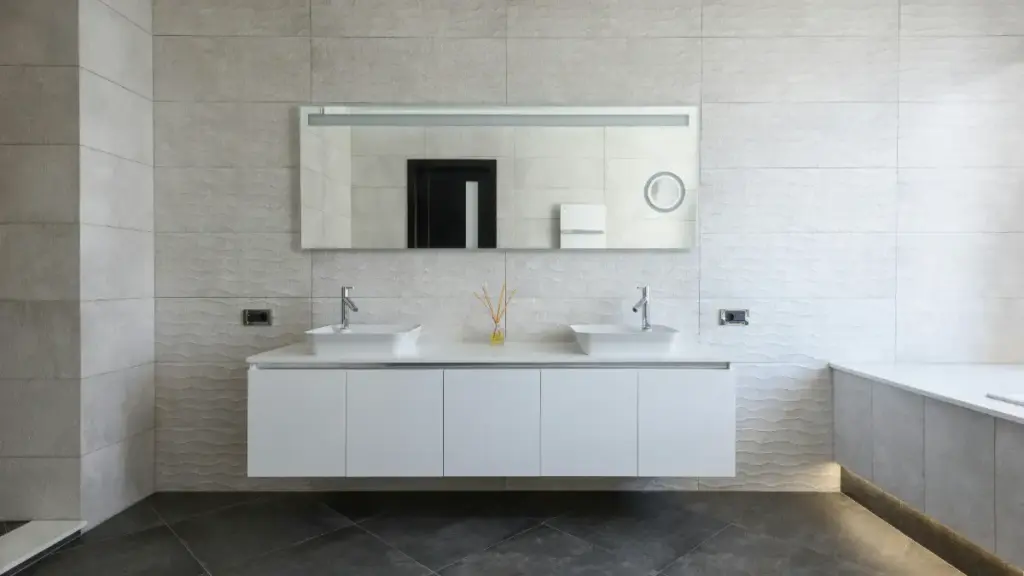
Choosing the right vanity material requires balancing moisture resistance with long-term durability. Engineered woods and quartz dominate modern bathrooms, while solid wood serves high-end, low-moisture needs.
Moisture Resistance
Bathrooms function as high-humidity environments. If a material cannot handle constant steam and direct splashes, it will fail rapidly, regardless of its initial aesthetic appeal. Your selection dictates the functional lifespan of the installation.
- حجر (Quartz, Granite, Marble): Quartz delivers the highest resistance by blocking stains, mildew, and bacteria without any sealing. Granite requires resealing every 12 ل 18 شهور, while marble absorbs liquids quickly due to its porous nature.
- Engineered Wood: Layered construction gives this material reliable medium-tier resistance, actively preventing the warping that destroys lesser materials in damp spaces.
- Solid Wood: Natural wood offers low resistance out of the box. It swells and warps when exposed to moisture and demands strict, ongoing sealing.
- Laminate, Metal, and HDPE: These synthetic and metal materials deliver top-tier resistance against dampness, rust, قالب, and mildew.
Durability and Lifespan
A vanity must survive daily wear, حركة مرور عالية, and constant temperature shifts. Quality construction limits warping, peeling, and structural failure over time.
- Stone and Metal: These rate at the absolute top for lifespan. Quartz outperforms granite in sheer hardness, resisting scratches, حرارة, and abrasions in high-traffic bathrooms.
- Engineered Wood: Strong, warp-resistant internal layers push this into a high-durability category.
- Solid Wood: Hardwoods like oak, maple, and cherry fight off physical dents well but rely entirely on continuous surface coatings for survival.
- Laminate: A medium-durability option that handles standard daily use but lacks the heavy-duty strength of natural stone or fabricated metal.
Cost and Budget Considerations
Pricing scales directly with material density, origin, and fabrication methods. Opting for standard, off-the-shelf vanities keeps material costs controlled, while specifying custom selections drives the total project expense up significantly.
- حجر: Sits at the high end of the pricing spectrum. Granite vanity tops average $150 ل $600, and marble runs $120 ل $450 depending on slab size and exact quality.
- Metal: Hits the moderate pricing tier, offering an effective balance between commercial performance and upfront cost.
- Solid Wood: Prices swing wildly depending on the exact hardwood species used, differentiating standard oak from premium cherry.
- Engineered Wood and Laminate: These occupy the budget-friendly end of the market. They replicate the look of expensive materials without the heavy financial burden.
متطلبات الصيانة
Long-term material survival depends entirely on the maintenance schedule. Selecting easy-to-clean finishes ensures the vanity holds up against the relentless humidity and daily chemical exposure in a bathroom.
- Quartz, Laminate, and HDPE: These demand the least effort. They require only a quick wipe down and completely bypass the need for chemical sealing.
- Engineered Wood: Pairs perfectly with simple painted finishes for straightforward, daily cleaning.
- Granite and Marble: Demand strict periodic sealing. Granite needs a fresh coat every 12 ل 18 months to block permanent stains from water, soaps, and shampoos.
- Solid Wood: Requires vigilant, regular sealing to keep its protective barrier intact against deep moisture damage.
Design and Aesthetic Flexibility
The material you select dictates the entire visual language of the bathroom space. Modern manufacturing allows base materials to adapt to both custom luxury builds and practical off-the-shelf designs.
- حجر: Owns the luxury market. Granite brings unique natural patterns, marble offers classic veining, and quartz provides sleek, uniform color palettes.
- Solid Wood: Anchors traditional designs with classic grains. Oak projects natural strength, while cherry ages into a deep, rich finish over time.
- Engineered Wood and Metal: These are the standard choices for modern and industrial spaces, providing smooth surfaces ready for minimalist paints or stark metal finishes.
- HDPE and Melamine: High-density polyethylene and melamine deliver endless colors and textures, expanding aesthetic options for versatile commercial or high-traffic residential applications.
Engineering-Grade Shower Doors for Commercial Projects
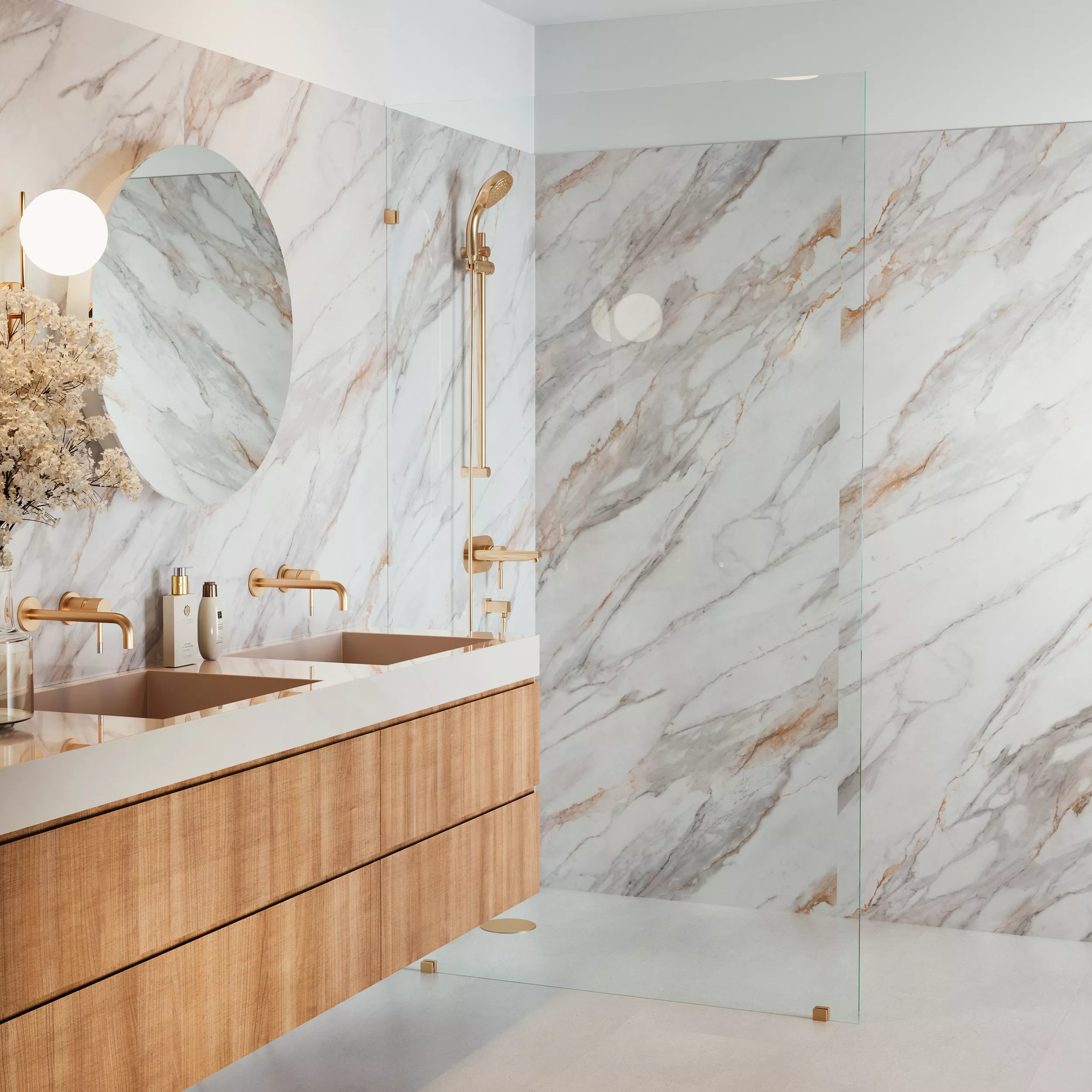
Engineered Materials vs Natural Materials
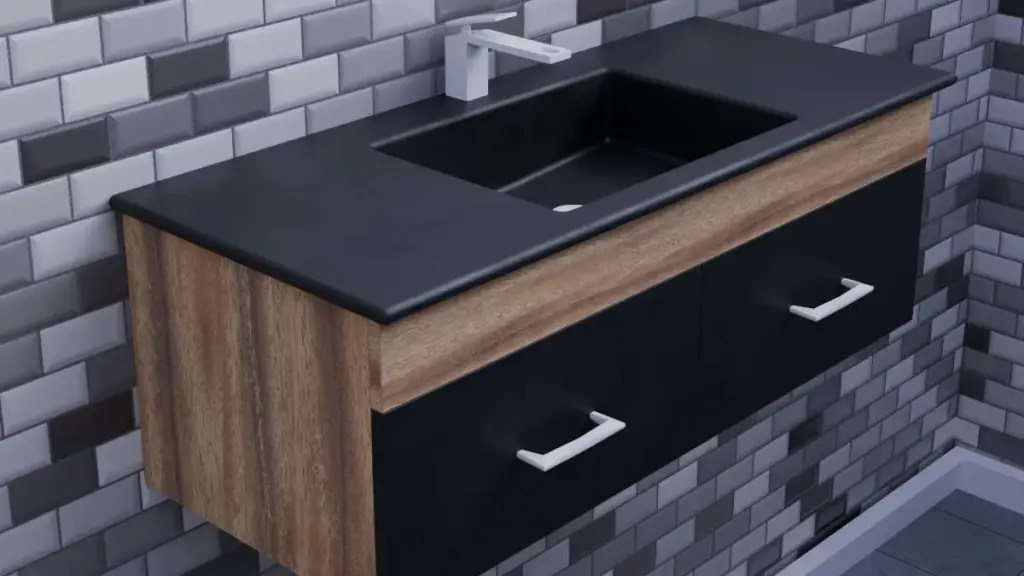
Engineered materials like MDF and PVC dominate commercial bathroom projects due to superior moisture resistance and budget-friendly consistency, while solid wood remains a high-maintenance luxury niche.
What Are Engineered Materials? (MDF, Particle Board, بولي كلوريد الفينيل)
Manufacturers create engineered materials by binding wood fibers, جزيئات, or plastics with specialized resins. This process yields stable, uniform substrates perfectly suited for the demanding, humid conditions of commercial bathrooms.
- Medium-Density Fiberboard (MDF): Features fine compressed wood fibers that deliver a smooth surface. It actively resists warping when installers apply proper sealants.
- Particle Board: Offers a budget-friendly base using glued wood chips. It functions well in dry areas but risks severe water damage without protective laminates.
- Polyvinyl Chloride (بولي كلوريد الفينيل): Acts as a fully waterproof plastic sheet. It repels humidity and scratches to create a seamless finish over engineered cores.
These manufactured options guarantee exact consistency in color, نمط, and thickness. This uniformity is a massive advantage for large 2026 commercial production runs where visual deviation causes costly installation delays.
What Are Natural Materials? (Solid Wood)
Solid wood consists of natural hardwood or softwood slabs cut directly from trees. It delivers a classic aesthetic featuring distinct, one-of-a-kind grain patterns that buyers expect in premium spaces.
- Core Strength: Hardwoods like oak and maple supply exceptional structural durability.
- احتياجات الصيانة: These natural slabs require vigilant upkeep and regular sealing to prevent cracking in steamy bathrooms.
- Labor & يكلف: Heavy natural wood significantly increases installation labor and upfront material costs.
Owners can sand and refinish these surfaces multiple times to extend their lifespan, provided they keep the wood in strictly controlled, well-ventilated environments.
Which One Is Better for Commercial Projects?
Engineered options heavily outperform solid wood in high-traffic commercial bathrooms. They offer superior moisture resistance and dimensional stability that natural slabs simply cannot match in wet environments.
MDF and PVC combinations drastically reduce daily maintenance demands. Facility teams can quickly wipe surfaces clean instead of repeatedly scheduling protective sealant applications. While solid wood fits perfectly in low-traffic premium niches, its inherent vulnerability to humidity drives up long-term repair costs.
Builders consistently favor engineered cores for their commercial projects. They rely on the economical pricing, lighter handling weight, and reliable visual uniformity to streamline installations across massive hotel or public restroom build-outs.
Regional Preferences: North America vs Europe vs China
Global vanity demand splits regionally: North America prioritizes premium remodeling, Europe demands strict eco-certification, and China scales rapidly through space-efficient modular designs.
| منطقة | Market Drivers & Growth | Material Preferences | تصميم & المعايير |
|---|---|---|---|
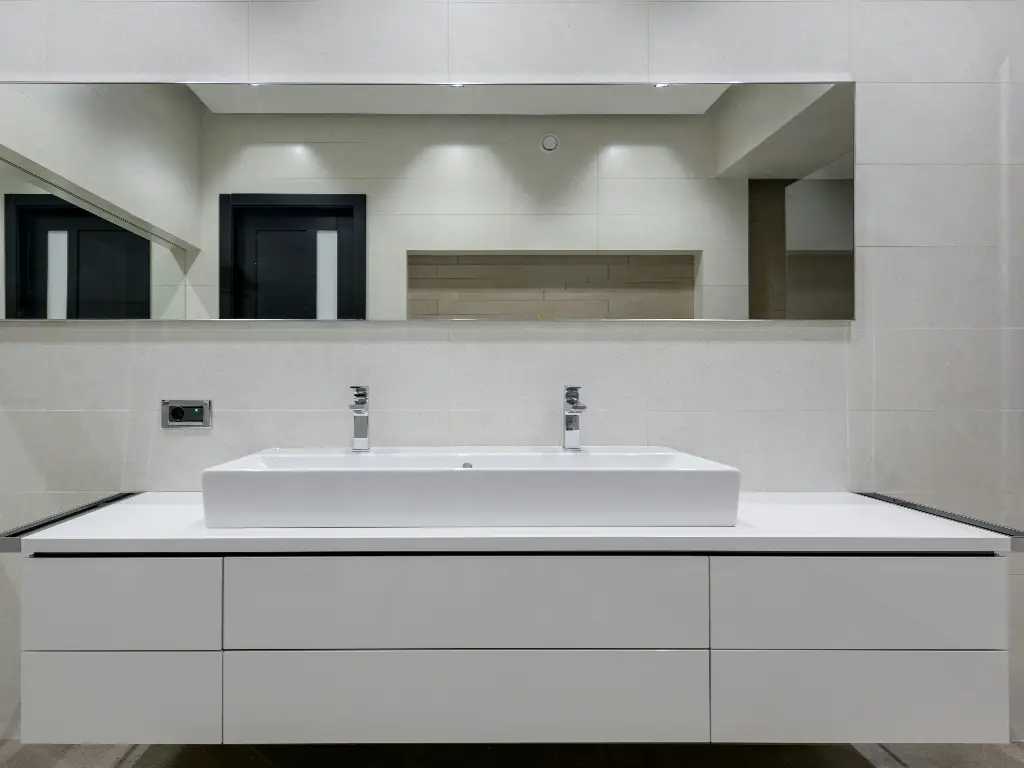
| أمريكا الشمالية (28.64% Market Share) | Driven by high-end residential remodeling and premium home equity investments. High consumer spending on master suite upgrades. | Engineered Wood: Heavy reliance on high-grade Plywood and MDF with durable painted finishes. | Modern wall-mounted (floating) vanities; high demand for oversized, dual-sink configurations. |
| أوروبا (Mature Market) | Growth fueled by urban renovation projects and retrofitting aging housing stock in Germany, France, and the UK. | Sustainability Focus: FSC-certified timber, recyclable metal components, and zero-VOC water-based coatings. | Minimalist aesthetics; strict adherence to eco-labels and CE safety certifications for export. |
| الصين / APAC (10.8% CAGR Growth) | Rapid urbanization and middle-class expansion. Massive supply chain scaling for domestic and global export. | الحجر الهندسي: Dominates global supply of quartz/sintered stone tops and cost-effective PVC substrates. | كفاءة في استخدام المساحة, modular designs; highly integrated smart-storage solutions and LED functionality. |
How to Identify High-Quality Bathroom Vanity Materials
Inspecting vanity materials comes down to moisture resistance and structural density. Skip the particleboard and prioritize marine-grade plywood, solid PVC, and heavy-duty joints to prevent long-term humidity damage.
Evaluating Core Cabinet Materials
The base of your cabinet dictates its lifespan. Bathrooms present a harsh, humid environment that destroys subpar materials. You need substrates that fight off moisture daily.
- Solid wood and marine-grade plywood: These bases handle high humidity exceptionally well. They resist warping and structural decay far better than standard particleboard, which absorbs moisture and swells.
- Non-porous PVC: For bathrooms with heavy daily use and poor ventilation, solid PVC is the ideal choice. It actively resists swelling and stops mold growth in its tracks.
- Countertop surfaces: Prioritize non-porous engineered quartz or sealed natural stone. These materials deliver long-term stain and water resistance, preventing water from seeping into the cabinet core below.
Checking Construction and Finish Quality
Material specs on paper only tell half the story. Physical inspection reveals the true build quality of a vanity. You can verify construction standards using three physical checks:
- Weight test: Lift or push the vanity. Heavier units indicate dense wood or thick plywood construction. Lightweight cabinets usually rely on hollow composites that fail under stress.
- Drawer joints: Inspect the drawer boxes for dovetail joints. This interlocking construction provides significantly more strength than basic glued butt joints, which snap under heavy loads.
- Edges and hardware: Examine the cabinet perimeters and metal components. Look for seamless waterproof edge banding that blocks water entry. Ensure the manufacturer uses corrosion-resistant stainless steel or brass hinges to prevent rust.
الأفكار النهائية
Specifying high-performance vanity materials is a strategic move to safeguard commercial investments against humidity-driven structural failure. While cheap composites lower upfront costs, investing in marine-grade plywood or solid PVC is the only way to defend your profit margins against frequent warranty claims and labor-intensive replacements.
كانجيان specializes in engineering-grade vanity substrates designed for high-traffic hospitality and residential sectors. We invite you to verify our structural density and waterproof edge banding firsthand. Contact the Kangjian team today to request a professional sample kit, review our 2026 OEM catalog, and finalize your project’s technical specifications.
الأسئلة المتداولة
What is the most durable material for a bathroom vanity?
Metal, specifically stainless steel, stands as the most durable option. It delivers lifetime longevity and exceptional resistance to warping, cracking, and rust. Quartz ranks second as a highly durable, non-porous stone surface. Solid hardwoods like oak and maple provide strong durability when you properly seal them, while plywood offers balanced structural integrity at a lower cost.
Is solid wood or MDF better for bathrooms?
Solid wood delivers superior long-term durability and strength, but you must seal it regularly to stop moisture damage. MDF serves as a budget-friendly alternative that resists minor moisture changes without warping, making it ideal for painted finishes. Choose solid wood if you prioritize longevity and have the budget. MDF provides excellent value for sleek designs in well-ventilated spaces.
What is the best waterproof vanity material?
Solid PVC ranks as the absolute top choice for complete waterproofing. It acts as a non-porous, mold-proof barrier and requires zero resealing. Stainless steel also delivers 100% moisture-proof performance. If you prefer a wood-based option, marine-grade plywood provides the best moisture resistance thanks to waterproof adhesives and sealed edges.
How long does a bathroom vanity usually last?
A typical bathroom vanity lasts 10 ل 20 سنين. You can push this lifespan to 50 years or more by investing in high-quality materials like treated solid wood, حجر, or stainless steel and maintaining them properly. You maximize longevity by controlling humidity with exhaust fans, wiping spills immediately, and reapplying sealants as needed.
Which materials are best for rental properties?
Rental properties require durable, صيانة منخفضة, and cost-effective materials. Quartz countertops pair excellently with sealed plywood or MDF cabinets. This combination resists stains, التأثيرات, and tenant wear while keeping your budgets in check. Solid surface materials also perform exceptionally well because their integrated sinks make daily cleaning simple for tenants.
Are metal vanities good for high-humidity areas?
نعم, metal vanities perform exceptionally well in high-humidity environments. Stainless steel repels water, handles steam, and completely avoids the warping or swelling that ruins wood materials. We recommend 316 marine-grade stainless steel for coastal or very damp bathrooms to prevent rust and ensure long-term stability.