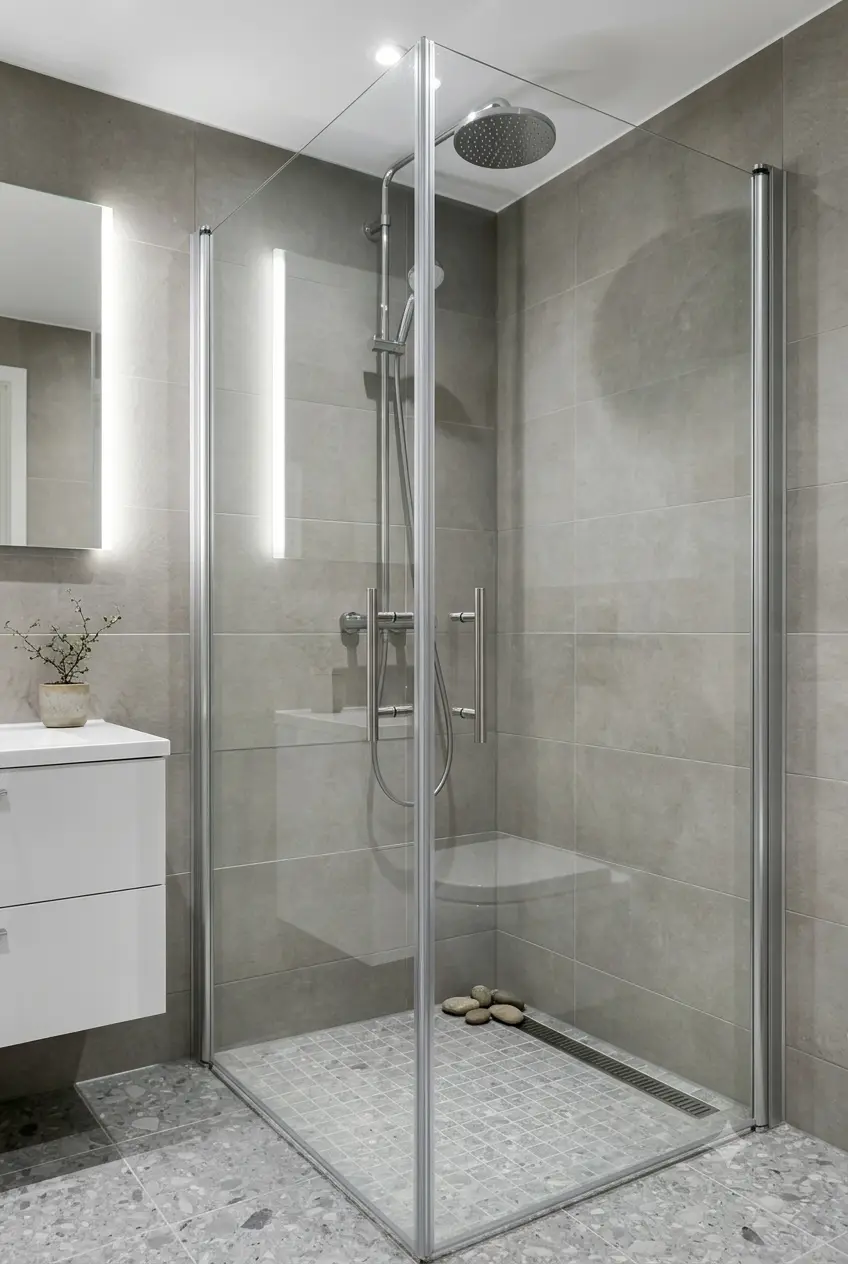

Modular shower pods are changing how hotels, student housing operators, and senior living facilities approach bathroom construction. Instead of traditional stick-built bathrooms that take trades weeks to complete floor by floor, a factory builds the entire shower unit, tests it, and delivers it ready to connect. The concept is straightforward, but the delivery format varies, and the choice between formats affects your shipping cost, site access requirements, and installation schedule more than most project managers realize before the first container arrives.
This article compares the two formats that dominate commercial modular shower pod procurement: one-piece units that arrive fully assembled from the factory, and knocked-down units that ship flat and are assembled on site. Both have legitimate uses. The wrong choice for your project conditions, لكن, can add thousands of dollars in crane rentals or weeks of delay to what was supposed to be a fast-track installation.
الوجبات السريعة الرئيسية
- One-piece pods arrive fully assembled with plumbing, electrical, and finishes installed; assembled (knocked-down) pods ship flat and are put together on site.
- One-piece pods cost more to ship per unit but install in hours; assembled pods save on freight but require more on-site labor and time.
- Site access, crane availability, and floor level determine which format is practical for your project.
- Factory quality control is stronger with one-piece pods because the entire unit is tested before shipping.
- For high-rise and urban projects, assembled pods are usually the only viable option; for ground-level or suburban builds, one-piece pods offer the fastest path to completion.
What Is the Difference Between One-Piece and Assembled Shower Pods?
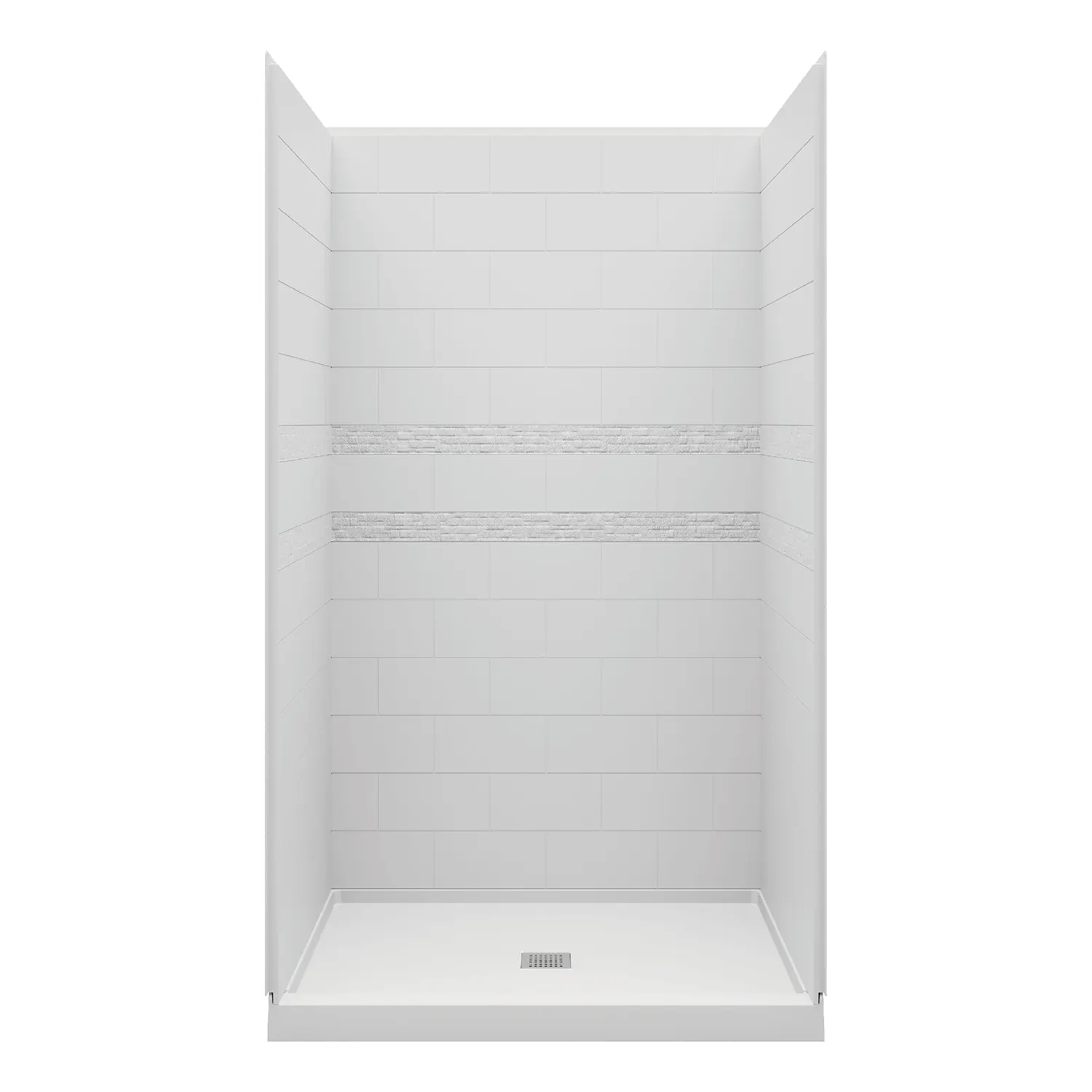
A one-piece modular shower pod is a fully manufactured, self-contained bathroom unit built entirely in a factory. The walls, floor tray, ceiling, plumbing connections, electrical wiring, lighting, ventilation fan, showerhead, الضوابط, باب, and seals are all installed and tested before the unit leaves the production line. When it arrives on your project site, it needs only utility connections and a level base to become operational.
An assembled shower pod, also called a knocked-down or flat-pack pod, ships as a kit of pre-manufactured components. The wall panels, base tray, ceiling panel, door frame, and hardware pack are bundled into a flat package that fits more efficiently into a shipping container. On site, a trained crew follows the manufacturer’s assembly instructions to put the unit together, connect the plumbing, and seal all joints.
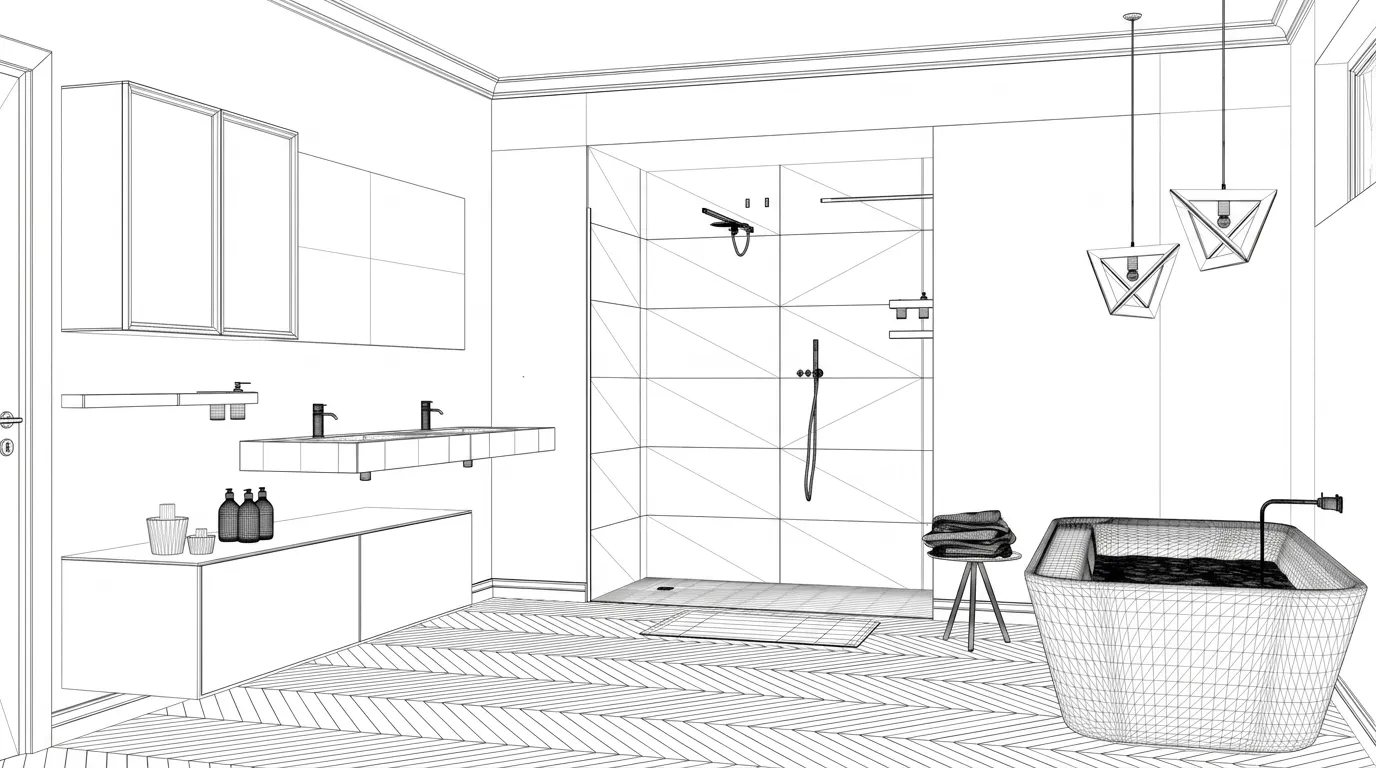
The core difference is where the labor happens. With one-piece pods, the labor is concentrated in the factory where conditions are controlled and repeatable. With assembled pods, a significant portion of that labor shifts to the project site, where weather, crew skill, and access conditions all introduce variables.
Shipping and Logistics: Where the Real Cost Difference Lives
For international buyers, the shipping format is usually the first and most consequential decision. A one-piece pod occupies a large volume in a container because the unit is already three-dimensional. A standard 40-foot high-cube container typically fits two one-piece pods, depending on their footprint dimensions. That means the freight cost per unit is high relative to the product cost itself.
An assembled pod, by contrast, ships as flat-pack panels stacked on a pallet. The same 40-foot container can hold four to six pod kits, roughly halving the per-unit freight cost. The panels are individually wrapped and protected, and the base tray, which is the heaviest single component, still ships as one piece but takes significantly less space than a fully assembled unit.
| عامل | One-Piece Pod | Assembled (Flat-Pack) Pod |
|---|---|---|
| تحميل الحاويات | 2 units per 40ft HC | 4–6 kits per 40ft HC |
| Per-unit freight cost | أعلى | أدنى (roughly 40–50% less) |
| On-site installation time | 4–8 hours per unit | 1–2 days per unit |
| On-site crew required | 2–3 people (positioning and connections) | 3–5 people (full assembly) |
| Crane or forklift needed | نعم, for positioning | Forklift sufficient for unloading |
| Damage risk in transit | أدنى (factory-sealed structure) | Slightly higher (loose components) |
| Quality verification before shipping | Full water test and electrical check | Component-level checks only |
The freight difference becomes decisive when the project site is far from the port of discharge. Shipping two one-piece pods from Foshan to Houston, على سبيل المثال, costs considerably more per unit than shipping six assembled kits in the same container. For a 200-unit hotel project, that difference compounds into a meaningful line item in the overall budget.
Site Access and Installation: What Determines Feasibility
Shipping cost is only half the logistics equation. The other half is getting the unit from the truck to its final position in the building.
A one-piece pod weighs several hundred kilograms and arrives as a single rigid structure. Placing it requires a crane or a heavy-capacity forklift, plus clear access from the delivery point to the installation position. If the project is a ground-level hotel building with wide corridors and no elevation changes, this is manageable. If it is an urban high-rise with narrow streets, overhead wires, and a service elevator that cannot accommodate the pod’s dimensions, the one-piece format becomes impractical or prohibitively expensive to install.
Assembled pods solve this problem. The flat-pack components fit through standard doorways and in standard service elevators. A crew of three to five people can carry the panels to the installation floor and assemble them in position. No crane is needed, and the delivery truck does not require special access.
For high-rise projects above four or five stories, assembled pods are almost always the practical choice, not because one-piece pods are inferior in quality, but because the physical constraints of the building make one-piece installation too expensive or impossible.
Installation Timeline: Hours Versus Days
The installation speed difference between the two formats is the main reason project managers choose one-piece pods when site conditions allow it.
A one-piece pod can be positioned, connected to the water supply and waste line, connected to the electrical circuit, sealed to the adjacent walls and floor, and tested in four to eight hours. A small crew of two or three people handles the entire process. On a hotel project with 50 القرون, the installation phase can be completed in roughly two weeks of work, assuming the utility rough-ins are ready.
An assembled pod requires panel assembly, frame squaring, plumbing connections, sealant application, door hanging, and a full water test after the sealant has cured. The sealant curing step alone typically adds 12 ل 24 hours of waiting time. A crew of three to five people needs one to two days per unit. The same 50-unit project takes six to ten weeks.
The trade-off is not just about total calendar time. Assembled pods allow other trades to work concurrently in adjacent rooms while the assembly crew moves from unit to unit. One-piece pods, because they are installed so quickly, require a more sequential workflow where the positioning crew, the connection crew, and the testing crew each move through the building in a coordinated sequence.
رقابة جودة: Factory Testing Versus On-Site Assembly
One of the strongest arguments for one-piece pods is the quality control that a factory environment provides. When a pod is fully assembled in the factory, every plumbing joint can be pressure-tested, every electrical connection can be verified for continuity, every waterproof seal can be inspected, and the door can be hung and adjusted on a level surface.
With assembled pods, the quality of the final installation depends heavily on the skill and diligence of the on-site crew. Sealant application, panel alignment, and plumbing connections are all subject to workmanship variation. A poorly sealed joint that passes a visual inspection may not reveal a leak until weeks of daily use have passed.
Manufacturers that produce both formats address this risk differently. For one-piece pods, the factory runs a complete water test on every unit before it ships, holding water at working pressure for a set duration and checking every joint, ختم, and connection. For assembled pods, the manufacturer provides detailed assembly instructions, specifies the sealant type and application method, and may offer on-site technical supervision for the first batch of units to verify the crew’s work meets the standard.
When evaluating suppliers, ask for the factory acceptance test protocol for one-piece pods and the on-site quality verification procedure for assembled pods. A manufacturer that can document both processes in writing gives you a basis for holding them, and your installation crew, accountable.
Which Format Fits Which Project?
The choice between one-piece and assembled pods is rarely a matter of one being universally better. It depends on the specific conditions of your project.
One-piece pods are the stronger choice when the site is at ground level or low-rise with good access for crane equipment, when the project timeline is tight and the faster installation justifies the higher freight cost, and when the project is in a suburban or industrial location where wide roads and loading areas can accommodate large deliveries. Hospitality projects with two to four stories and ample site access are typical one-piece pod applications.
Assembled pods are the stronger choice when the site is a high-rise building with elevator constraints, when the project is in an urban area with narrow streets or limited delivery access, when the freight cost for one-piece units would consume too much of the bathroom budget, or when the project timeline allows for the longer on-site installation period. Student housing and senior living facilities in dense urban areas are typical assembled pod applications.
| Project Condition | Recommended Format | Reason |
|---|---|---|
| Ground-level hotel, suburban | قطعة واحدة | Easy crane access, fast installation |
| High-rise apartment, urban | Assembled | Fits in service elevator, no crane needed |
| Fast-track renovation, 4 أسابيع | قطعة واحدة | Hours per unit, not days |
| سكن الطلاب, 500+ وحدات | Assembled | Lower freight cost at scale |
| Senior living, 3-story, elevator | Assembled | Elevator may not fit one-piece unit |
| Remote resort, limited local labor | قطعة واحدة | Minimal on-site skill required |
Warranty and After-Sales Considerations
The warranty structure differs between the two formats in ways that affect long-term project risk.
With a one-piece pod, the manufacturer’s warranty typically covers the entire unit as delivered, including the plumbing connections, الأختام, door hardware, وينتهي. If a leak develops within the warranty period, the manufacturer is responsible for diagnosing and fixing it, because the unit left their factory in a tested and verified condition. The warranty is straightforward: the factory built it, the factory stands behind it.
With an assembled pod, the warranty is more complex. The components are manufactured by the factory, but the assembly, ختم, and plumbing connections are performed by the on-site crew. If a leak develops, the manufacturer may argue that the assembly was at fault, while the installer may argue that a component was defective. This kind of dispute is not uncommon and can delay resolution for weeks.
To protect your project, make sure the warranty terms for assembled pods clearly define where the manufacturer’s responsibility ends and the installer’s begins. A good supplier will provide a detailed assembly checklist that, when signed off by the installer, establishes a clear record of what was done correctly and what the manufacturer warrants.
Planning a Modular Shower Pod Project?
KJ Bath produces both one-piece and assembled modular shower pods for hospitality, سكن الطلاب, and senior living projects. Our factory in Foshan runs full water and electrical testing on every one-piece unit before shipping, and provides detailed assembly protocols and on-site technical support for flat-pack deployments. Send us your project drawings and we will recommend the format that fits your site conditions and timeline.
How to Choose Between One-Piece and Assembled
The decision comes down to three questions that you can answer before requesting a quote.
- What is the site access situation? If cranes and heavy equipment can reach the installation point, one-piece is viable. If the units must go through elevators or narrow corridors, assembled is the practical choice.
- What is the project timeline? If speed is critical and the budget can absorb higher freight, one-piece pods install in hours. If the schedule allows weeks of on-site assembly, assembled pods save on shipping.
- What is the total quantity? For large projects with hundreds of units, the per-unit freight savings of assembled pods add up to a significant budget item. For smaller projects under 50 وحدات, the freight difference may not justify the longer installation time.
Answer these three questions first, then request a quote that specifies the format, the freight terms, and the warranty coverage for each option. A manufacturer that offers both formats can give you an honest comparison rather than pushing you toward the one they specialize in.
لماذا تختار KJ باث
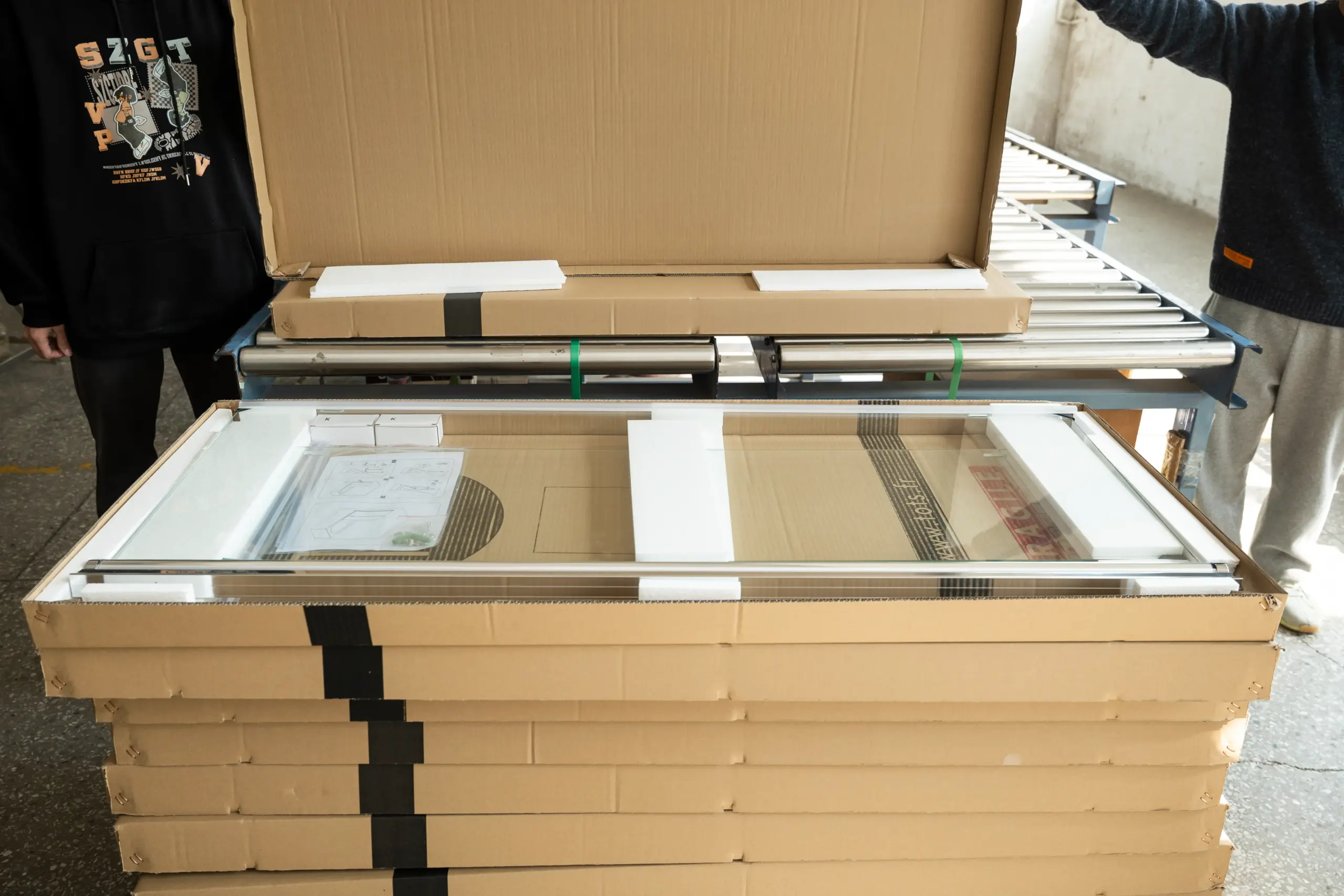
KJ باث (فوشان نانهاي كانجيان للأدوات الصحية) has manufactured shower enclosures and modular bathroom solutions since 1999. ال 15,000 sqm factory in Foshan operates four dedicated workshops — aluminum processing, قطع الزجاج وتلطيفه, حَشد, والتعبئة الآلية - مع 151 طاقم عمل, ر 12 شخص&فريق د, والانتاج الشهري 1,000 مجموعات. يتم تقسية جميع الزجاج من 6 مم إلى 12 مم باستخدام صفائح Xinyi الأصلية ويجتاز خمسة اختبارات لمراقبة الجودة: التحقق من هدأ, تأثير, قطرة التعبئة والتغليف, رذاذ الملح, ودورة الدفع والسحب. الشركة حاصلة على شهادة الأيزو 9001, ايزو 14001, ايزو 45001, SGCC, وشهادات CE وزودت هيلتون, ماريوت, ومشاريع حياة. موك هو 10 مجموعات, تأخذ العينات 15 أيام, إنتاج 30 أيام, كل ذلك مدعوم بضمان لمدة 5 سنوات وضمان على الأجهزة لمدة 3 سنوات. اعرف المزيد عن KJ Bath.
الأسئلة المتداولة
Can a one-piece modular shower pod fit in a standard elevator?
Most one-piece pods exceed the dimensions of a standard passenger elevator. They typically require crane access or a ground-level installation path. For upper-floor installations in buildings with elevator-only access, assembled flat-pack pods are the practical choice because their components fit through standard doorways and in service elevators.
How many modular shower pods fit in a 40-foot shipping container?
A 40-foot high-cube container typically holds two fully assembled one-piece pods or four to six flat-pack assembled pod kits, depending on the unit dimensions. The flat-pack format roughly doubles the container loading capacity, which significantly reduces per-unit freight cost on large orders.
What is the installation time difference between one-piece and assembled pods?
A one-piece pod can be positioned, connected, and tested in four to eight hours with a crew of two to three people. An assembled pod requires one to two days with a crew of three to five, including time for sealant curing. For a 50-unit project, one-piece pods complete in roughly two weeks while assembled pods take six to ten weeks.
Does the factory test one-piece pods before shipping?
نعم. Every one-piece modular shower pod undergoes a full water pressure test, electrical continuity check, and waterproof seal inspection before leaving the factory. The testing protocol is documented and travels with the shipment so the site team can verify each unit’s test status on arrival.
What warranty does KJ Bath offer on modular shower pods?
KJ Bath provides a 5-year warranty on the shower enclosure structure and a 3-year warranty on hardware components including door rollers, يتوقف, and seals. For one-piece pods, the warranty covers the entire factory-assembled unit. For assembled pods, the warranty covers manufactured components, with assembly workmanship covered under the installation team’s responsibility.