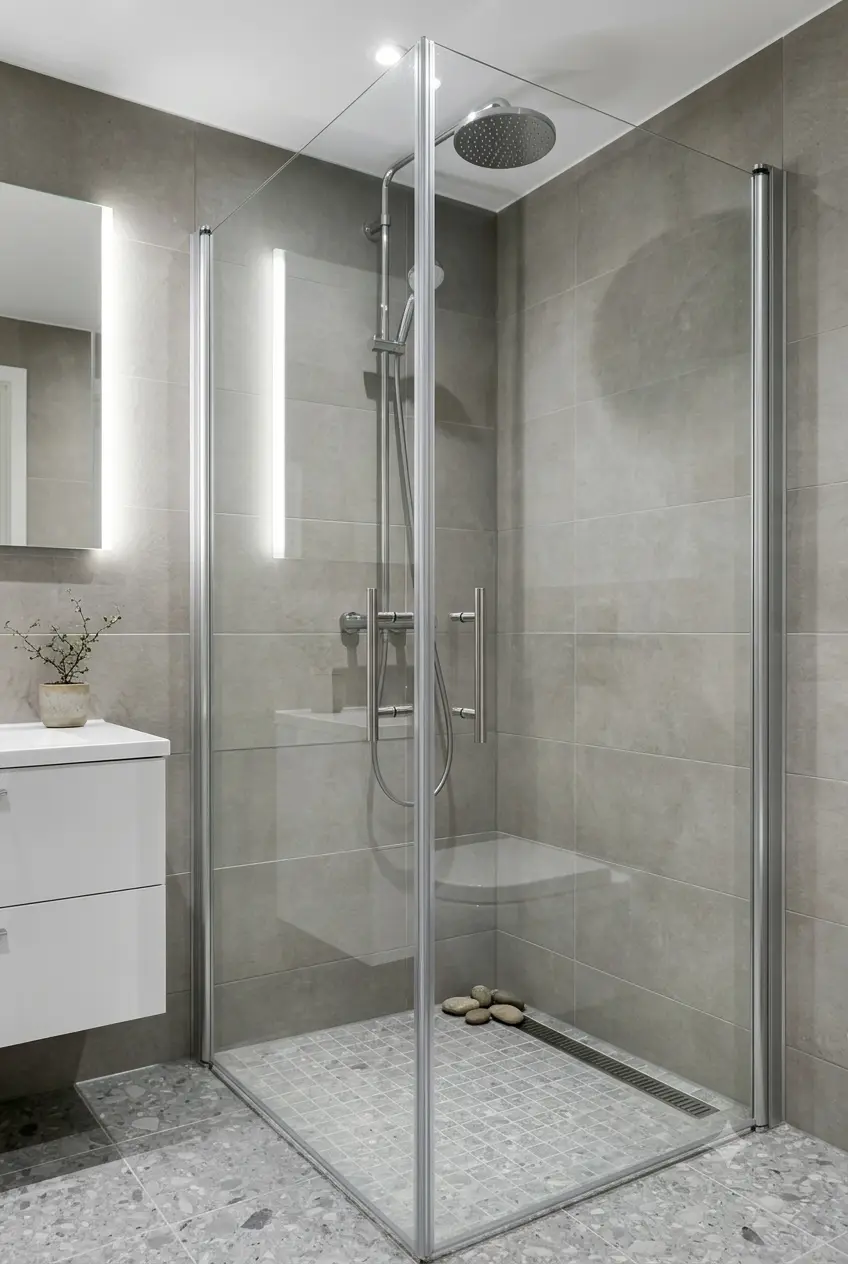
Нео-угол, алмаз, and quadrant shower enclosures all do the same job – they occupy a corner and pull the front of the shower off the two walls so the floor in front stays clear. For an architect or specifier working a North American project, though, they are three different answers, and the wrong pick quietly costs either usable shower space or the circulation the enclosure was bought to protect. The difference is entirely geometric: how many walls the front meets, whether that front is flat, angled, or curved, and how much room the door is allowed to claim. This comparison lays those differences out on the dimensions a B2B schedule actually decides by.
- All three are corner geometries; they differ only in how the front face and entry are arranged.
- Neo-angle = flat front on cut corners (widest entry); diamond = entry on the diagonal; quadrant = curved front (most floor reclaimed).
- Decide on three numbers: ширина входа, floor footprint, and door-swing clearance.
- North American projects specify 6–12 mm tempered glass to ANSI Z97.1 / СГКК; KJ Bath fits all three to 1:1 drawings at a 20 mm tolerance.
- Standardise glass and hardware, vary only the plan – MOQ from 10 наборы, body-plus-hardware spare-parts kit.
Why the Geometry Choice Matters on a Job
A square shower projects its full face into the room and stalls the floor in front of it; an angular enclosure cuts or rounds that face so the room flows around the corner. That single move is why these shapes recur in compact guest bathrooms, multifamily, and retrofit work where every inch of slab is priced. But the three angular families are not interchangeable. A flat-fronted neo-angle behaves very differently from a curved quadrant when the door has to clear a vanity, and each carries a different cost and sealing profile. Picking correctly at the drawing stage avoids a change order at the rough-in stage.
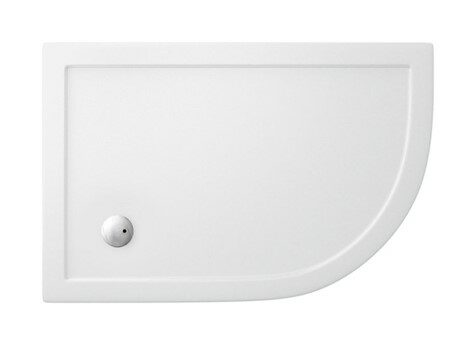
The base-tray plans below make the shared idea obvious: the wet zone is pulled into the corner so the walking line stays open.
Нео-угол: A Flat Entry on Cut Corners
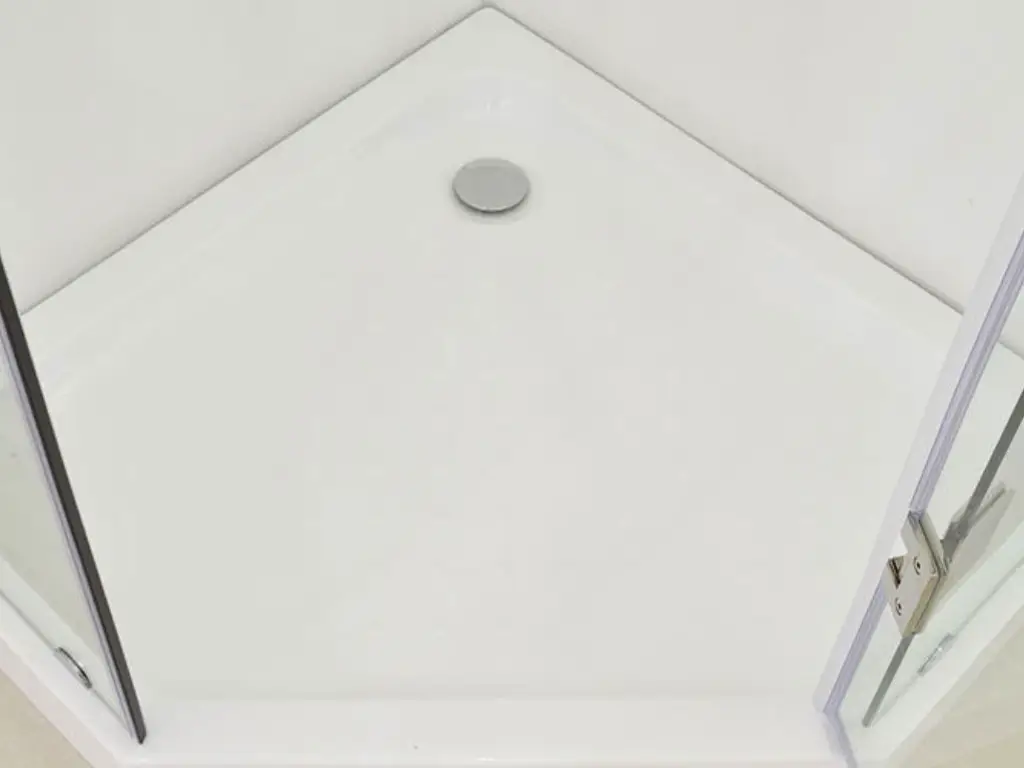
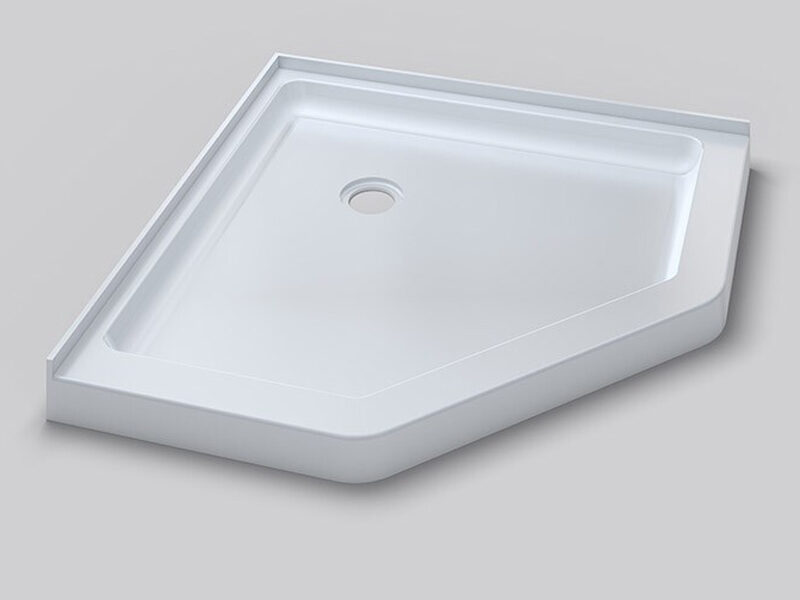
A neo-angle enclosure meets the corner with two short chamfered side returns and a flat front panel. The flat front is its advantage: it holds the widest practical opening for a given corner footprint and keeps two flat interior walls for shelving and body room. On a US guest bathroom laid out on nominal 36″ or 38″ corner modules, the neo-angle usually gives the broadest, easiest entry, typically closed by a bi-fold or pivot door on that flat face. The pentagonal tray below shows the chamfered plan that defines the family.
Алмаз: The Entry Set on the Diagonal
The diamond is the neo-angle’s symmetric cousin. Rather than running the front parallel to one wall, it sets the entry fully on the diagonal so the opening runs corner-to-corner and points away from both walls into the open floor. This suits a corner where two equal walls meet and the room is tight on both sides at once – the door reaches into free floor rather than toward an obstruction. The trade is a little interior flat-wall space and a hardware line that meets the corner returns at a non-90° angle. Within KJ Bath’s space-saving range the diamond is built as the JL139 “алмаз” geometry; the four shape families are defined side by side in the руководство по компактному корпусу, and the door families they pair with are disambiguated in the terminology glossary.
Квадрант: Curved Front, Smallest Footprint
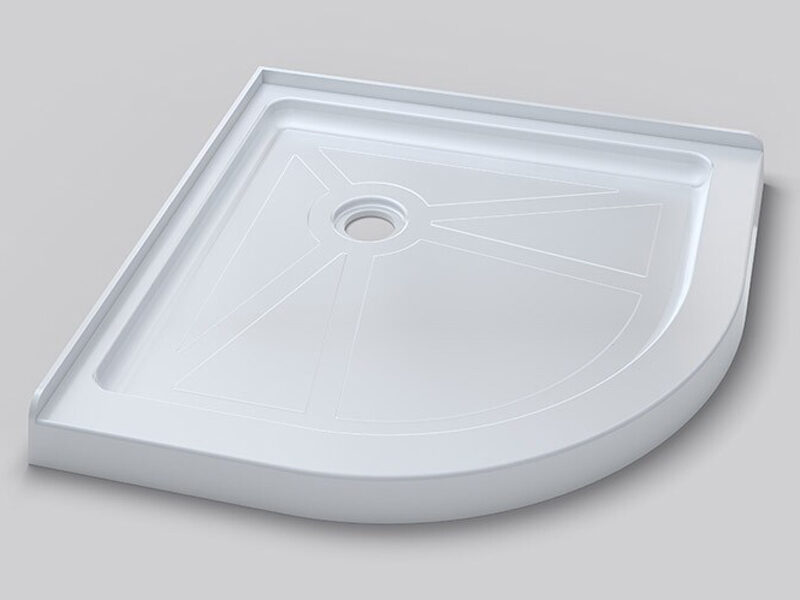
The quadrant rounds its entire front into a quarter-circle, so it retracts the least floor of the three – a curved face stays closer to the corner than any flat or angled panel. That makes it the default where the bathroom is genuinely narrow and no floor can be spared for a swing. The costs are a narrower effective opening and a curved panel that is harder to seal and dearer to form than a flat one, which is why quadrant units often carry a framed or semi-frameless structure for rigidity. KJ Bath supplies this as the JK1934 “fan/quadrant” geometry, and an компенсировать quadrant recovers still more room when a corner is shallow or a window intrudes.
Head-to-Head on the Numbers That Decide
For a project schedule, reduce the choice to entry width, floor footprint, дверной зазор, and sealing effort, then hold all three to the same glass and hardware standard:
| Geometry | Front face | Ширина входа | Floor kept clear | Уплотнение / расходы | Best when |
|---|---|---|---|---|---|
| Нео-угол | Плоский + two chamfers | Самый широкий | Середина | Easiest, lowest | You want a broad flat opening |
| Алмаз | On the diagonal | Corner-to-corner | Good both sides | Умеренный, angled seals | Two equal tight walls meet |
| Квадрант | Curved quarter-round | Уже | Largest | Harder, curved glass | The room cannot spare floor |
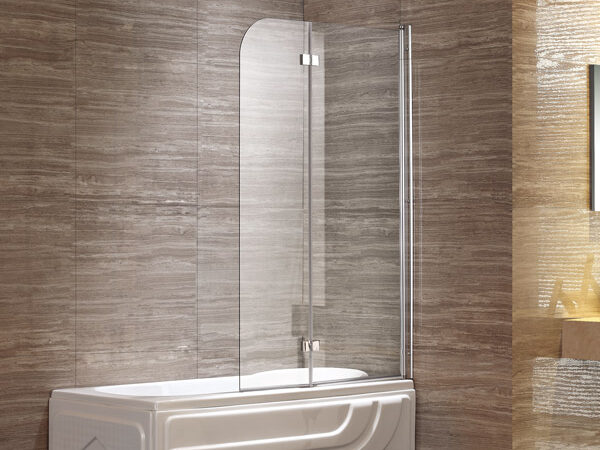
Hardware follows the geometry. A flat neo-angle front takes a straight bi-fold or pivot run – the simplest arrangement to seal, because the bottom sweep meets one straight threshold. A diamond breaks the seal line across its apex, and a quadrant’s radius cannot accept a straight sweep at all, relying instead on curved channel seals and tighter forming. Where a schedule can accept it, standardising most keys on neo-angle or diamond and reserving the quadrant only for the tightest rooms keeps both the glass make-up and the spare-parts kit smaller.
North American Sizing and Glass Specification
North American tenders are dimensioned in inches and graded on tempered-glass safety, so the geometry is locked against an ANSI/SGCC glass schedule rather than a millimetre datasheet. KJ Bath supplies 6–12 mm fully tempered safety glass from Xinyi Glass (КИГ), certified to АНСИ Z97.1 / КПСК 1201 и СГКК (the scheme is summarised at sgcconline.org), с CE available for mixed portfolios. Panels are cut to 1:1 CAD layouts to a 20 минимальный допуск мм, so a nominal 36″ neo-angle or 38″ quadrant can be reconciled to finished tile dimensions before ordering – essential when a guest-room bathroom repeats the same corner across hundreds of keys. Because the shape and the glass standard are decoupled, a project can hold one panel schedule and vary only the plan, the same logic behind specifying glass, отслеживать, and rollers on a sliding unit.
Choosing by Room Constraint
The practical selection rule is a constraint test rather than a style preference. If the room cannot spare any floor in front of the entry, а квадрант protects circulation. If you need the widest, easiest opening and have a little room to give, а нео-угол delivers the most entry for its footprint. If the corner is tight on two equal walls and the door must reach into open floor, а алмаз is the cleanest fit. Where the constraint is really a door-swing problem rather than a shape problem, the answer may be a different door on the same corner – the trade-off is worked through in the compact commercial bathroom door guide.
Часто задаваемые вопросы
What is the difference between a neo-angle and a diamond shower enclosure?
Both meet the corner on angled returns, but a neo-angle keeps a flat front panel holding the widest square opening, while a diamond sets its front fully on the diagonal so the entry runs corner-to-corner. Neo-angle favours interior flat walls and the easiest seal; diamond favours a corner with two equally tight walls.
Is a quadrant shower enclosure smaller than a neo-angle?
For the same corner, the quadrant’s curved front projects the least into the room and reclaims the most floor for circulation, at the cost of a narrower opening. The neo-angle’s flat front gives a wider, easier entry but reaches further into the floor – so the quadrant wins on clearance, the neo-angle on accessibility.
Which angular enclosure suits a small North American bathroom?
If the room cannot spare any floor, a quadrant protects circulation best; if you need a wide entry, a neo-angle gives the largest opening for the footprint; a diamond fits a corner tight on both walls. Specify any of them on 6–12 mm ANSI Z97.1 / SGCC tempered glass fitted to 1:1 CAD drawings at a 20 mm tolerance.
Can one project mix neo-angle, алмаз, и квадрантные ограждения?
Да. All three share a corner footprint and can run on a single glass and hardware schedule, so a development varies the plan by room type while standardising panels, ролики, печати, and the spare-parts kit across the build. MOQ от 10 sets with a 15-day sample supports a mixed room-type schedule.
Lock the right geometry per room type
Send your corner plans. We will recommend neo-angle, алмаз, or quadrant geometry against your entry, footprint, and clearance targets, on 6–12 mm ANSI Z97.1 / SGCC certified glass fitted to 1:1 рисунки, MOQ от 10 sets with a body-plus-hardware spare-parts kit – for your серия компактных корпусов.