
Sie haben zwei oder drei Fabriken für Duschschiebetüren in die engere Wahl gezogen. Proben sind eingetroffen, Glas sieht klar aus, Die Ausführungen passen zu Ihren Farbfeldern, und die Preise liegen nur wenige Prozentpunkte voneinander entfernt. Dies ist genau die Phase, in der die falsche Entscheidung getroffen wird: Eine Mustertür, die sanft in einem Ausstellungsraum gleitet, sagt fast nichts darüber aus, wie sich das gleiche Design im dritten Jahr über einer Hotelbadewanne verhält, Und ein Zitat sagt nichts darüber aus, was passiert, wenn im neunzehnten Monat eine Walze ausfällt.
Die Unterschiede, die an dieser Stelle wichtig sind, sind Technik und Service, nicht das Aussehen. Dieser Leitfaden unterteilt die abschließende Bewertung in drei gewichtete Bereiche – Raupen- und Rollensysteme, Garantiebedingungen, und After-Sales-Support – und zeigt Ihnen, welche dokumentierten Nachweise Sie von jedem verlangen können. Es ist für Importeure geschrieben, Händler, und Markeninhaber, die sich darauf vorbereiten, einen Produktionsauftrag bei a zu erteilen Hersteller von Schiebetüren, nicht für einen einmaligen Einzelhandelskauf.
Wichtige Erkenntnisse
- Schienen- und Rollenbeschläge versagen im kommerziellen Einsatz vor Glas, Daher verdient es den größten Anteil an Ihrem Bewertungsgewicht.
- Fordern Sie Testnachweise, keine Adjektive: Zyklentestberichte für Rollen, Salzsprühstunden für Hardware, und die Materialqualität hinter beiden.
- Lesen Sie vor dem Preis die Garantiestruktur. Eine 5-jährige Gehäuse- und 3-jährige Hardware-Aufteilung, schriftlich, signalisiert eine Fabrik, die das Scheitern ehrlich eingepreist hat.
- After-Sales ist messbar: Reaktionszeitverpflichtungen, Ersatzteilpakete, die mit der Ware verschickt werden, und Handbücher, die für Ihre tatsächlichen Installationsteams geschrieben wurden.
- Überprüfen Sie die Referenzen, die auf Ihren Markt übertragen werden – SGCC für Nordamerika, CE für Europa, ISO 9001 zur Prozesskontrolle – mit Zertifikatskopien, die mit der Sendung transportiert werden.
- Führen Sie einen Pilotauftrag mit einem Anspruch auf defekte Teile durch, bevor Sie sich für ein Vollcontainerprogramm entscheiden.
Warum Schienensysteme über das Ergebnis eines Schiebetürprogramms entscheiden
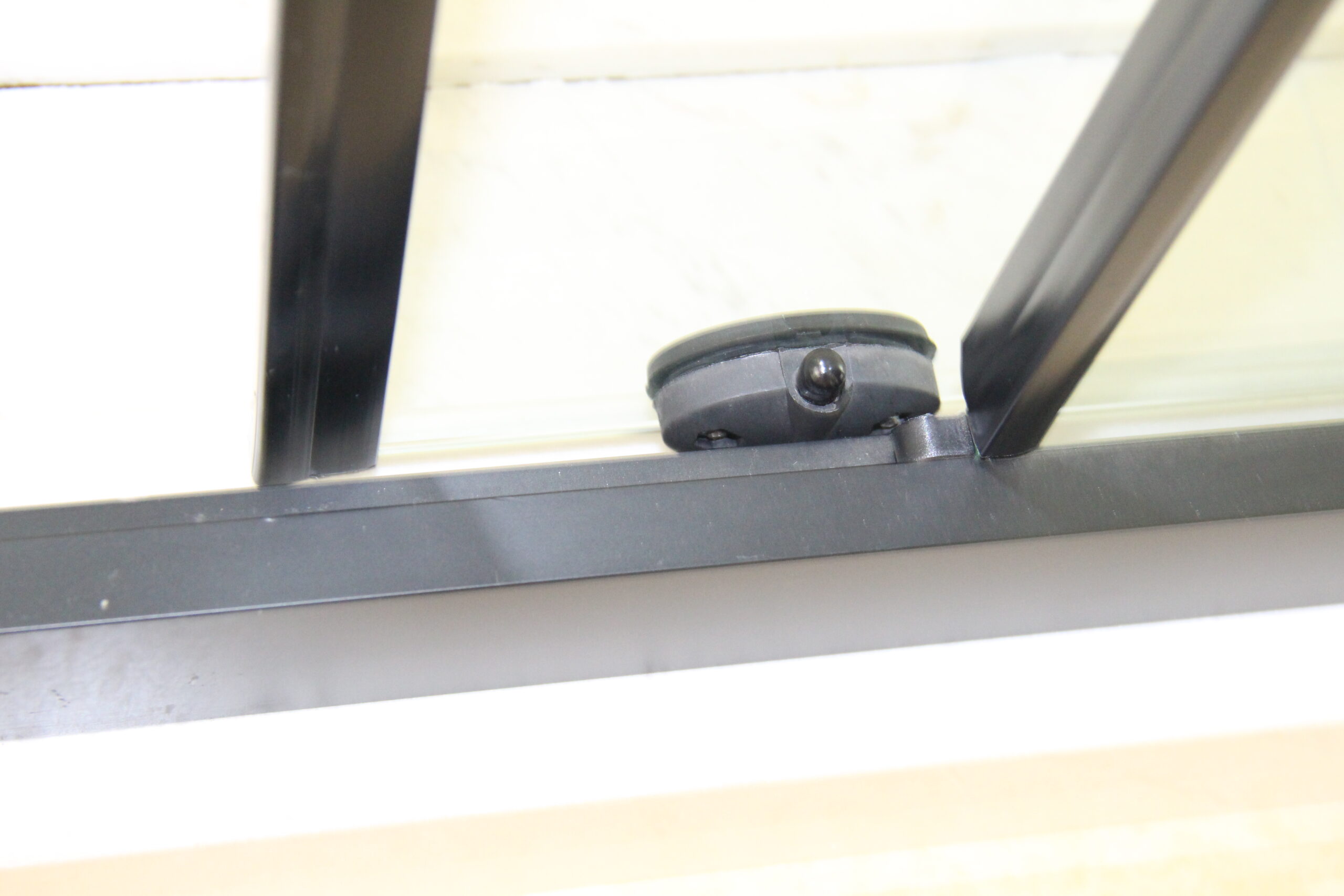
Auf einem Bypass- oder Inline-Schiebegehäuse, Die bewegliche Hardware trägt den gesamten Arbeitszyklus. Die Glasscheibe ist passiv; die Rollen, Schiene, und Führungen absorbieren jedes Öffnen und Schließen. In einem Hotelzimmer kann die Tür täglich zehn bis fünfzehn Zyklen von Gästen und Zimmermädchen erfahren, Das sind mehrere tausend Zyklen pro Jahr und Raum. Multiplizieren Sie das mit 200 Räume und Sie können sehen, warum Hardware – und nicht Glas – die meisten Garantieansprüche in kommerziellen Schiebetürprogrammen auslöst.

Deshalb sollte das Gleissystem den größten Anteil an Ihrem Bewertungsgewicht haben. Drei Fragen unterscheiden einen technikorientierten Hersteller von einem Monteur:
- Welche Zyklenbewertung haben die Walzen?, und wo ist der Bericht? Betriebe, die den Test tatsächlich durchgeführt haben, geben eine Nummer an und übergeben die Testzusammenfassung. KJ Bath, Zum Beispiel, bewertet seine Walzen mit 100,000 Push-Pull-Zyklen – eine Zahl, die etwa einem Jahrzehnt täglicher Hotelnutzung entspricht, bevor die bewegliche Hardware Aufmerksamkeit erfordert.
- Aus welchem Material besteht das Fahrwerk?? Grad 304 Rollen und Lager aus Edelstahl widerstehen der Feuchtigkeit und Reinigungschemikalien in gewerblichen Badezimmern weitaus besser als plattierter Kohlenstoffstahl, welche Gruben, dann zieht es, dann Marmelade.
- Wie wird das Gleis vor Korrosion geschützt?? Fordern Sie einen Salzsprühtest-Nachweis für die fertige Hardware an, nicht der Rohstoff. Eine handelsübliche Armatur sollte eine längere Einwirkung von Salznebel ohne sichtbaren Rost überstehen; wenn der Lieferant den Bericht nicht erstellen kann, Betrachten Sie die Korrosionsbehauptung als unbewiesen.

Wenn Sie mehr über die zugrunde liegende Logik erfahren möchten – wie Zyklentests tatsächlich durchgeführt werden und was eine 100.000-Zyklen-Bewertung für einen bestimmten Immobilientyp bedeutet – lesen Sie unsere spezielle Aufschlüsselung von Gleitrollen für Duschtüren und Schienentests.
So überprüfen Sie die Technik, bevor Sie sich verpflichten
Ansprüche sind günstig; Dokumentation nicht. Wenn Sie nach Beweisen fragen, Ein fähiger Hersteller antwortet mit Einzelheiten und ein schwacher antwortet mit Verzögerung. Arbeiten Sie vier Prüfpunkte ab:
1. Zyklus- und Belastungstestaufzeichnungen
Fordern Sie den Rollrad-Testbericht für genau das Modell an, das Sie kaufen, und bestätigen Sie, dass die getestete Konfiguration mit der gelieferten übereinstimmt – gleicher Raddurchmesser, gleiche Glasgewichtsklasse, gleiches Gleisprofil. Das Ergebnis von 100.000 Zyklen bei einer leichten Haustür lässt sich nicht auf ein rahmenloses 10-mm-Paneel übertragen, das dreimal so viel wiegt.
2. Salznebelberichte über fertige Hardware
Korrosion in Badezimmern ist sowohl chemischer als auch feuchter Natur: Das Reinigungspersonal sprüht chlor- und säurehaltige Reinigungsmittel ein, die die Beschichtung an den Rändern angreifen. Ein Salzsprühkammertest an der fertigen Walze, Halterung, und Griff – nicht nur ein Beschichtungszertifikat – ist der Beweis, der zählt. Bestätigen Sie die geprüften Stunden und die Bestehenskriterien schriftlich.

3. Design-Review-Funktion
Schicken Sie der Fabrik Ihre Zeichnungen – oder die Abmessungen Ihres Badezimmers – und beobachten Sie, was zurückkommt. Ein Hersteller mit einem Ingenieurteam sendet eine markierte Zeichnung zurück, in der die Wandlottoleranz in Frage gestellt wird, die Glasdicke für die Plattenbreite, oder die Abflussposition relativ zum Türöffner. Diese Rezension, manchmal auch DFM oder Value Engineering genannt, Erfasst Probleme auf dem Papier statt an Ihrem Installationsort. Hier befindet sich auch ein R. für 12 Personen&D-Team verdient seinen Lebensunterhalt.

4. Glas- und Prozessnachweise
Gehärtetes Glas sollte über eine marktrelevante Zertifizierung verfügen – SGCC-Listung basierend auf ANSI Z97.1 für nordamerikanische Projekte, CE für Europa – mit Kopien des Zertifikats, die zusammen mit der Ware versandt werden, damit die Papiere den Zoll und die Inspektion vor Ort mit dem Produkt erfüllen. Erkundigen Sie sich auch, woher das Glas kommt und welche Vorspannprüfung betriebsintern durchgeführt wird.
Lesen Sie die Garantiebedingungen wie ein Projektkäufer
Die Garantiestruktur gibt Aufschluss darüber, wie ein Hersteller das Risiko preist. Ein Hersteller, der keine schriftliche Garantie anbietet, hat entschieden, dass die Fehlerkosten zu Ihren Lasten gehen. Eine Fabrik, die eine lange Garantie mit vagen Ausschlüssen anbietet, hat gelernt, die Nummer zu vermarkten und dabei nur wenige Ansprüche zu bezahlen. Die kaufwürdige Struktur sieht so aus:
| Garantieklausel | Schwache Version | Version, die es wert ist, signiert zu werden |
|---|---|---|
| Deckungsaufteilung | Eine Decke “2-Jahr Garantie” ohne Komponentenausfall | Komponentenbezogene Begriffe, z.B. 5 Jahre an der Duschtür und 3 Jahre auf Hardware, jeweils im Vertrag angegeben |
| Anspruchsauslöser | “Herstellungsfehler” ohne Prüfprotokoll | Definierte Beweise: Chargennummern, Fotos, und ein angegebenes Entscheidungsfenster |
| Reaktionsverpflichtung | “Wir werden so schnell wie möglich antworten” | Eine Uhr, schriftlich – zum Beispiel eine 12-Stunden-Reaktionszusage bei internationalen Anfragen |
| Ersatzteile | Bestellen Sie Ersatzteile später, gegen Aufpreis, nach dem Scheitern | Ein Ersatzteilpaket mit Verschleißteilen – Rollen und Dichtungsstreifen – wird im Rahmen der ursprünglichen Bestellung geliefert |
| Lebenslange Unterstützung | Nicht erwähnt | Der technische Support wird über die Garantiezeit hinaus für die gesamte Lebensdauer des installierten Produkts fortgesetzt |
Zwei Gewohnheiten schützen Sie, unabhängig davon, bei wem Sie kaufen. Erste, Nehmen Sie die Garantiebedingungen in den Kaufvertrag auf, nicht in einen E-Mail-Thread. Zweite, Bewahren Sie die Inspektions- und Qualitätskontrollberichte des Werks von der Lieferung auf – sie sind Ihr grundlegender Beweis für den Fall, dass eine Anspruchsverhandlung sie jemals benötigt. Für einen umfassenderen Rahmen, wie glaubwürdige Begriffe in der gesamten Kategorie aussehen, Sehen Sie sich unseren Leitfaden an Garantie und After-Sales-Richtlinie für Duschabtrennungen.
Kundendienst: Die Benchmarks, auf die es ankommt
Ein After-Sales-Misserfolg führt dazu, dass aus einem guten Produkt eine schlechte Lieferantenbewertung wird. Wenn eine Walze auf einer Gästeetage platzt, Ihre Frage ist nicht, ob das Werk es irgendwann ersetzen wird, sondern wie viele Tage Ihr Auftragnehmer auf das Teil und die Anweisungen wartet. Bewerten Sie vier messbare Verpflichtungen:
- Reaktionsuhr. Eine schriftliche Verpflichtung zur Reaktionszeit – 12 Stunden ist ein realistischer Maßstab für in China ansässige Exporteure, die westliche Zeitzonen abdecken – übertrifft jedes Versprechen “engagierter Service.”
- Ersatzteile mit der Ware. Verschleißteile fallen laut Statistik durch, nicht zufällig. Eine Fabrik, die der Originallieferung Ersatzwalzen und Dichtungsstreifen beilegt, hat diese Realität in Ihrem Namen akzeptiert.
- Dokumentation, die Ihre Teams nutzen können. Für projektspezifische Produkte, Eine bebilderte Installationsanleitung, die für das tatsächliche Modell geschrieben wurde – kein allgemeines Faltblatt – senkt die Fehlerquote Ihres Installateurs und Ihre Rückrufkosten.
- Unterstützen Sie die vergangene Garantie. Lebenslanger technischer Online-Support bedeutet, dass Sie auch im sechsten Jahr noch eine Antwort erhalten können, wenn die Garantie für das Gehäuse längst abgelaufen ist, Sie sich aber noch in Ihrer Kundenbeziehung befinden.
Die gleiche Logik gilt auch für die Logistikabwicklung. Wenn Ihr Kanal E-Commerce oder Paketversand ist, Bitten Sie um einen Nachweis für einen Falltest der Verpackung – eine verpackte Einheit, die aus einer bestimmten Höhe fällt, um die Handhabung durch einen Kurier zu simulieren –, denn Schäden beim Transport werden zu Ihren After-Sales-Kosten, auch wenn das Werk kein Verschulden trifft.
Rote und grüne Flaggen im Überblick
| Bewertungsbereich | Rote Fahne | Grüne Flagge |
|---|---|---|
| Zyklustest | “Unsere Walzen sind sehr langlebig” ohne Nummer, kein Bericht | Angegebene Bewertung mit Testzusammenfassung, z.B. 100,000 Push-Pull-Zyklen |
| Hardware-Korrosion | Kein Salzsprühnebelbericht; Beschichtungsspezifikationen “verhandelbar” | Spuren von Salzsprühnebel auf fertigen Teilen; 304 Edelstahlfahrwerk serienmäßig |
| Garantie | Mündliche Versprechen; Pauschale Abdeckung ohne Aufteilung der Komponenten | 5-Jahrestür / 3-Jahres-Hardware-Struktur im Vertrag festgeschrieben |
| Zertifizierung | Zertifikate werden als Bildschirmfotos angezeigt; Kopien “später verfügbar” | SGCC/CE-Kopien werden mit der Bestellung geliefert; ISO 9001 Prozess vorhanden |
| Maschinenbau | Akzeptiert jede Zeichnung ohne eine einzige Frage | Gibt markierte Zeichnungen und Toleranzfragen vor der Werkzeugbereitstellung zurück |
| Ersatzteile und Handbücher | Alles nach dem Verkauf als Extra angegeben | Ersatzrollen- und Dichtungspaket sowie modellspezifisches Handbuch im Lieferumfang |
Überprüfen Sie die Werksnachweise und die Kapazität
Keiner der oben genannten überlebt den Kontakt mit einer überlasteten Fabrik. Vor der endgültigen Entscheidung, Überprüfen Sie, ob die Pflanze hinter den Versprechen Ihr Programm tatsächlich umsetzen kann:
- Zertifizierung des Managementsystems. ISO 9001 (Qualität), ISO 14001 (Umwelt), und ISO 45001 (Arbeitssicherheit) Geben Sie eine dokumentierte an, überprüfbarer Prozess statt Werkstattimprovisation.
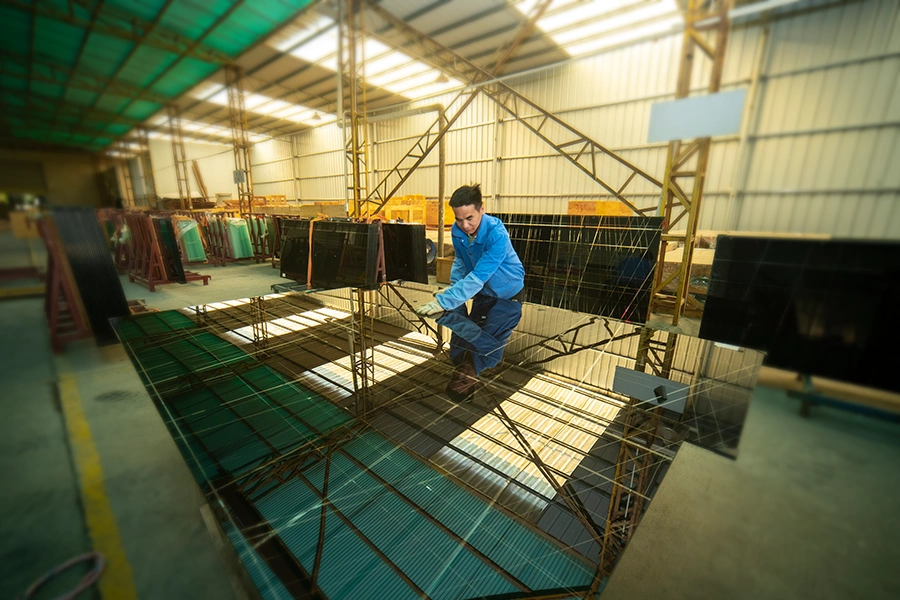
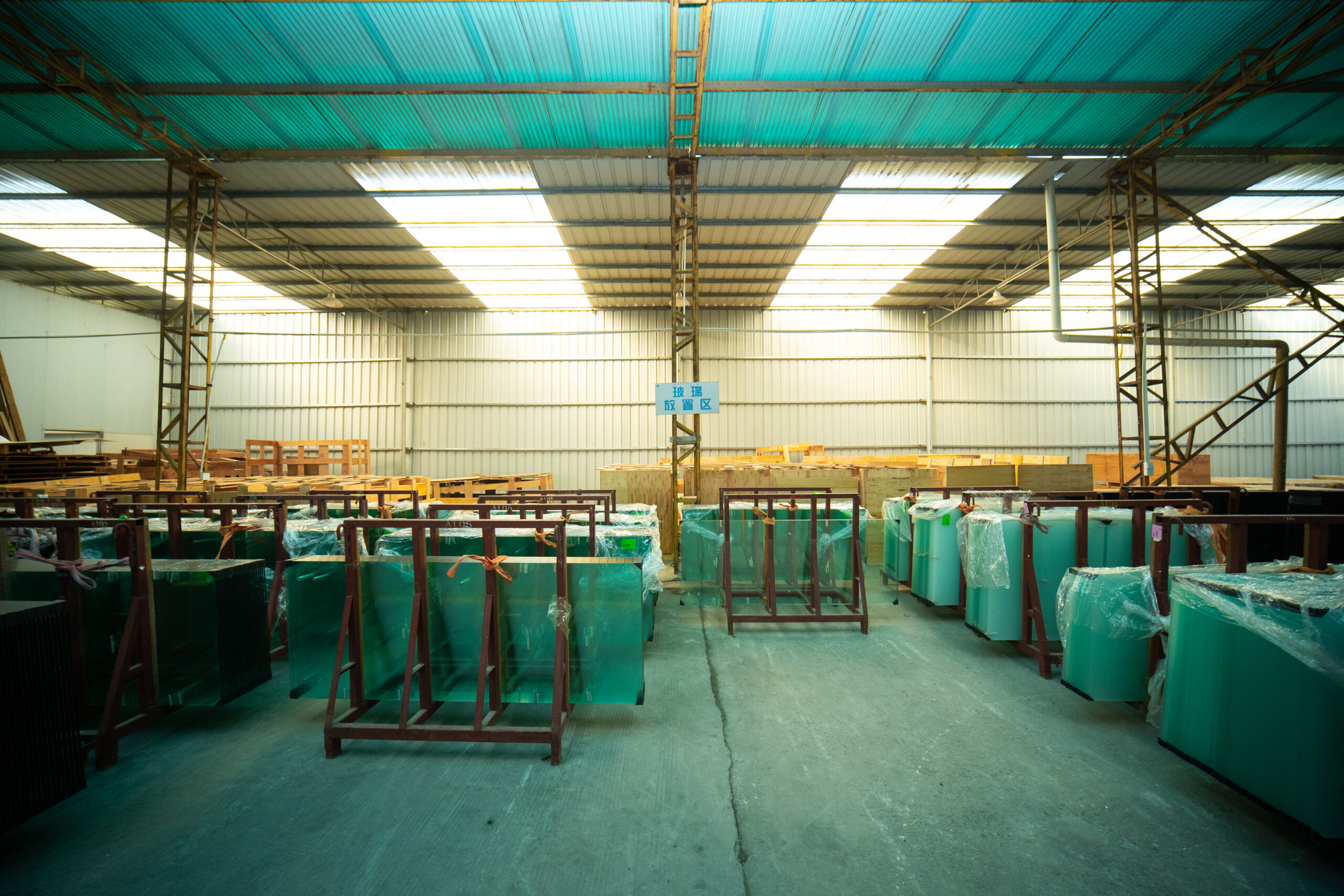
- Eigene Glasverarbeitung. Eine Fabrik, die schneidet, Gemüter, und prüft sein eigenes Glas – anstatt fertige Scheiben zu kaufen – kontrolliert den Zeitplan und die Qualität der einzelnen, empfindlichsten Komponente. KJ-Badewannen aus Xinyi-Originalglas in Stärken von 6 mm bis 12 mm vor Ort.
- Vorlaufzeit mit einer zweiten Quelle der Wahrheit. Typische Struktur: um 15 Arbeitstage für Proben, 30 für einen ersten Produktionslauf, 20–25 bei Nachbestellungen. Fragen Sie, was bei einer Wiederholung konkret verkürzt wird, und halten Sie sie daran fest.
- MOQ, das zu Ihrem Testplan passt. Mit einem Mindestbestellwert von 10 Sätzen für die Hauptmodelle können Sie einen echten Pilotversuch durchführen – mit echten Installateuren und ein oder zwei echten Ansprüchen –, bevor Sie sich auf die Serienproduktion festlegen. Wenn die Fabrik bei einer Erstbestellung auf Mindestmengen im Containermaßstab besteht, die Pilotphase verschwindet.
Auch Sicherheitsprüfungen gehören in diesen Kontrollpunkt. Schlag- und Bruchtests an gehärteten Platten, im Qualitätsprüfbericht dokumentiert, stehen zwischen Ihrer Marke und einem Haftungsgespräch. Unser Überblick über Qualitätstests, die Käufer verlangen sollten listet den vollständigen Satz auf; Auch Verpackungs-Falltests sind wichtig, wenn die Waren per Paket transportiert werden.
Eine funktionierende Evaluierungscheckliste
Verwandeln Sie den Rahmen in ein geritztes Blatt. Bewerten Sie jeden Kandidaten in jeder Zeile mit 0–2 und lassen Sie die Gesamtsumme entscheiden – die Entscheidung liegt bei den Beweisen und nicht beim Verkäufer.
- Roller-Cycle-Bewertung angegeben, mit Testbericht für das genaue Modell (0 / 1 / 2)
- Salzsprühtestbericht über fertige Hardware, Stunden und Bestehenskriterien schriftlich festhalten (0 / 1 / 2)
- Qualität des Rollen- und Lagermaterials bestätigt, 304 rostfrei oder gleichwertig (0 / 1 / 2)
- Glaszertifizierung für Ihren Markt – SGCC/ANSI Z97.1 oder CE – mit Kopien, die der Ware beiliegen (0 / 1 / 2)
- Die Garantie wird nach Komponenten aufgeteilt und in den Vertrag aufgenommen (0 / 1 / 2)
- Zugesagte Reaktionszeit in Stunden angegeben, keine Adjektive (0 / 1 / 2)
- Ersatzteilpaket und modellspezifische Einbauanleitung im Lieferumfang enthalten (0 / 1 / 2)
- Vor dem Angebot wurde eine Überprüfung der Zeichnung mit technischen Fragen zurückgegeben (0 / 1 / 2)
- Durchlaufzeitstruktur und MOQ kompatibel mit einem Pilotauftrag (0 / 1 / 2)
Evaluierung von Schiebetürlieferanten für Ihr nächstes Programm?
KJ Bath untermauert jede Behauptung in diesem Artikel mit Unterlagen: 100,000-Fahrradrollenbewertungen, Berichte über Salzsprühnebel, SGCC/CE-Zertifikate werden mit der Ware geliefert, eine 5-jährige Tür- und 3-jährige Hardware-Garantie, und Ersatzteile liegen Ihrer Bestellung bei. Senden Sie uns Ihre Spezifikationen und wir werden Ihnen innerhalb von kürzester Zeit antworten 12 Stunden – einschließlich der Fragen unserer Ingenieure zu Ihren Zeichnungen.
Warum KJ Bath diese Bewertung besteht
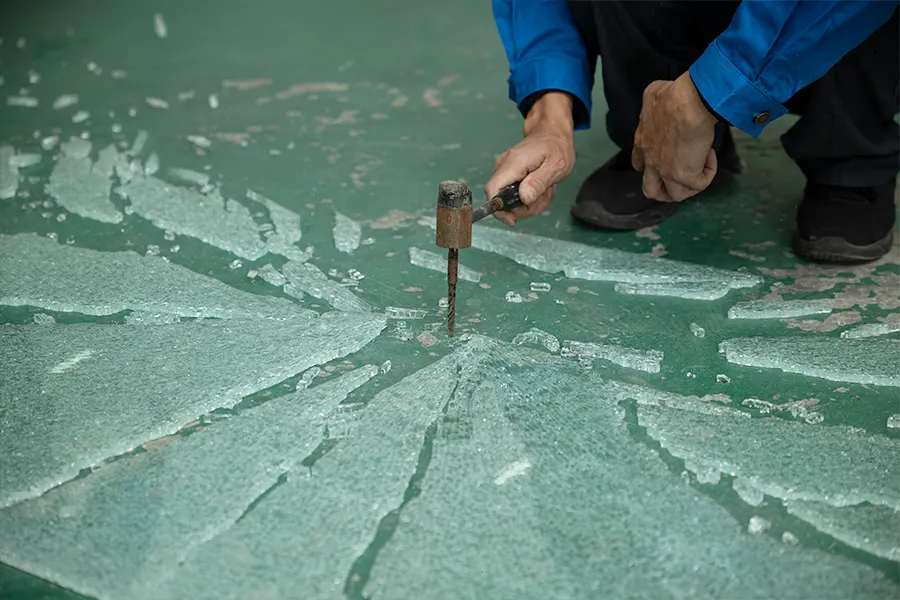
KJ Bath (Foshan Nanhai Kangjian Sanitärartikel) stellt seitdem Duschabtrennungen her 1999 und liefert Schiebetürprogramme für Gastgewerbe- und Mehrfamilienprojekte, einschließlich Hilton, Marriott, und Hyatt-Hotels. Der 15,000 m²-Anlage betreibt Aluminiumverarbeitung, Glasschneiden und Härten, Montage, und automatisiertes Verpacken unter einem Dach, mit 151 Personal, darunter ein 12-Personen-R&D-Team und einer monatlichen Kapazität von 1,000 Sätze. Das Glas wird im eigenen Haus aus 6 mm bis 12 mm dickem Xinyi-Plattenmaterial gehärtet, und die Hardware besteht die Zyklus- und Salzsprühtests mit dokumentierten Ergebnissen. Zu den Zertifizierungen gehört ISO 9001, ISO 14001, ISO 45001, SGCC, und CE. Kommerzielle Bedingungen gelten für Käufer in der Evaluierungsphase: eine Mindestbestellmenge von 10 Sätzen, 15-Tagesproben, 30-Tag erste Produktionsläufe, eine 5-jährige Gehäuse- und 3-jährige Hardware-Garantie, Ersatzteile bei jeder Lieferung, und 12-Stunden-Antwort auf alle Anfragen. Durchsuchen Sie das Sortiment an Schiebetüren für die Dusche oder Erfahren Sie mehr über das Unternehmen.
Häufig gestellte Fragen
Was sollte ich zuerst prüfen, wenn ich einen Hersteller von Schiebetüren für die Dusche bewerte??
Beginnen Sie mit dem Schienen- und Rollensystem, Denn durch das Verschieben von Beschlägen entstehen die meisten Garantieansprüche bei kommerziellen Schiebetürprogrammen. Fordern Sie die Rollerfahrrad-Testbewertung an, die Materialgüte des Fahrwerks, und Salzsprühtestnachweise an fertiger Hardware – dann geht es weiter zu den Garantiebedingungen und Kundendienstverpflichtungen.
Was bedeutet eigentlich eine Walzenleistung von 100.000 Zyklen??
Die Rollenbaugruppe wird maschinell durchgeprüft 100,000 Auf-Zu-Zyklen unter Last. In einem Hotelzimmer werden täglich zehn bis fünfzehn Türzyklen beobachtet, Diese Bewertung entspricht einer Betriebsdauer von etwa einem Jahrzehnt, bevor die bewegliche Hardware Aufmerksamkeit erfordert, Aus diesem Grund veröffentlicht KJ Bath ihn als Standardmaßstab für seine Walzen.
Welche Garantiestruktur ist für gewerbliche Duschtüren sinnvoll??
Achten Sie auf eine komponentenbewusste Aufteilung und nicht auf eine pauschale Zahl. KJ Bath, Zum Beispiel, bietet 5 Jahre Garantie auf Duschtüren und 3 Jahre Garantie auf Beschlagkomponenten, mit im Vertrag festgelegten Bedingungen und Ersatzteilen, die der Originalsendung beiliegen.
Wie schnell sollte ein Hersteller von Duschtüren auf Kundendienstprobleme reagieren??
Eine schriftliche Zusage zur Reaktionszeit ist der Maßstab – 12 Stunden sind für Exporteure, die westliche Zeitzonen abdecken, realistisch, und KJ Bath verpflichtet sich, alle internationalen Anfragen innerhalb des Unternehmens zu beantworten 12 Std., mit lebenslangem technischen Online-Support, der über das Garantiefenster hinaus fortgesetzt wird.
Welche Zertifizierungen sind beim Import von Duschschiebetüren wichtig??
Für Nordamerika, Die SGCC-Zertifizierung basiert auf der Sicherheitsverglasungsnorm ANSI Z97.1; für Europa, CE. ISO 9001, 14001, Und 45001 weisen auf eine dokumentierte Prozesskontrolle im Werk hin. Kopien von Zertifikaten sollten mit der Sendung transportiert werden, damit die Waren den Zoll passieren und die Inspektion vor Ort ohne Verzögerungen bestehen.