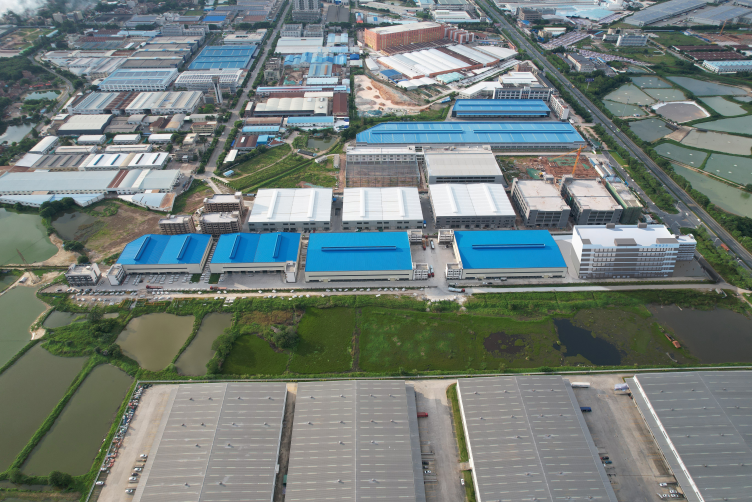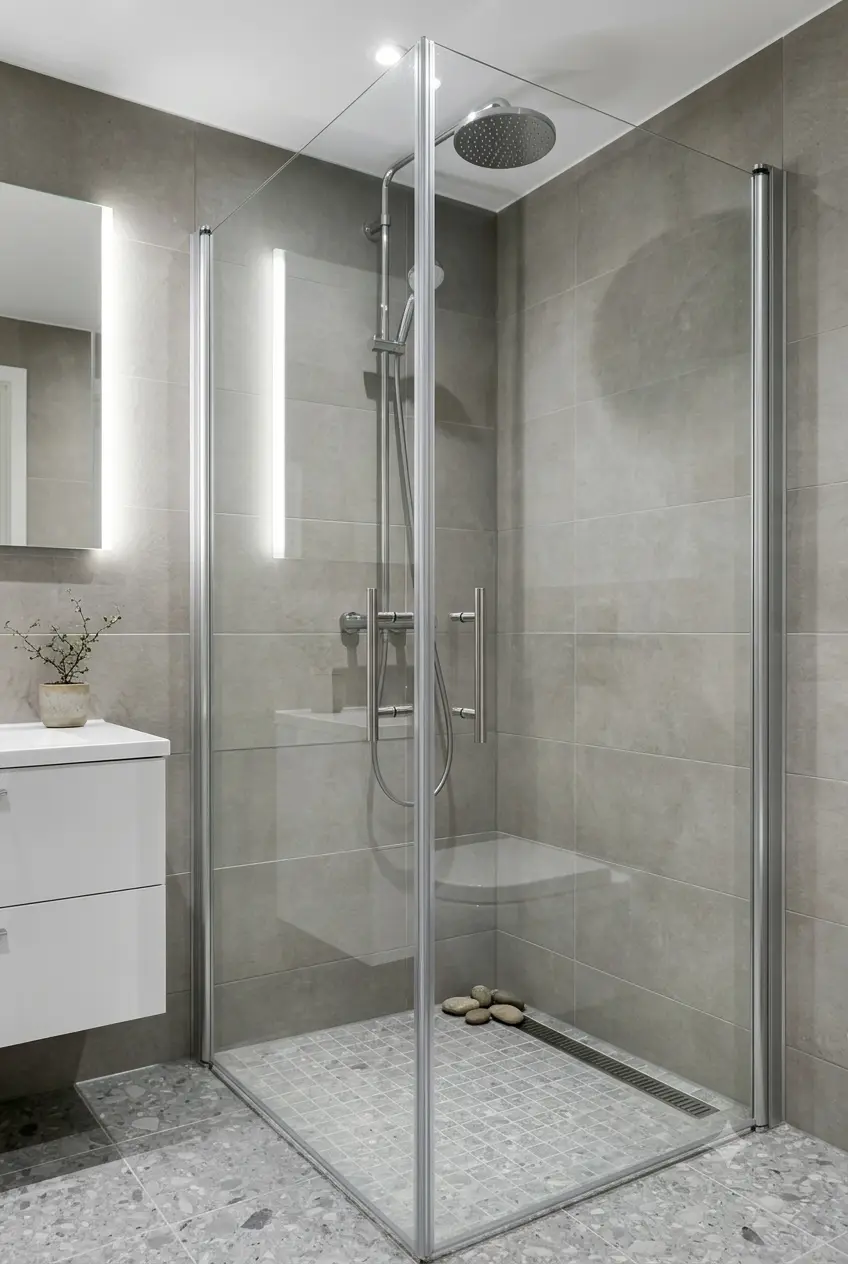

Hotels, Studentenwohnheime, and senior living facilities look different on a brochure but share one operating reality: dozens or hundreds of near-identical bathrooms, each expected to survive constant use by people who are not your staff, cleaned daily with harsh chemicals, and off-line for as little time as possible. That is exactly the environment prefab shower pods were built for.
The question a developer or asset manager faces is not whether pods exist but where they pay back. A pod compresses the fit-out schedule on a repeat-room tower, protects waterproofing quality from site variability, and standardizes the units your maintenance team learns once and services forever. A pod is the wrong tool for a single signature master bath, and the right tool for the 180 identical guest rooms below it.
This guide walks through three application scenarios where prefabricated shower pods earn their place, what each segment actually demands from the unit, and how to specify so the pods arrive ready for the environment they will live in.
Wichtige Erkenntnisse
- Repetitive-bathroom programs — hotels, Studentenwohnheime, senior living — are where pods return the most value, because factory consistency compounds across many identical units.
- Hotels optimize for guest perception and fast, quiet room turnover; pods standardize the wet area and cut fit-out time per floor.
- Student housing optimizes for abuse resistance and low downtime; a pod’s molded base and panelized walls remove the grout and membrane failures that drive call-backs.
- Senior living and care optimize for accessibility and safety: level-entry drainage, reinforced grab-bar fixings, and slip-resistant surfaces decided at the engineering stage.
- Specify per segment — same underlying system, different emphasis on glazing cert, hardware cycle rating, and access detailing.
Why Three Segments Point at the Same Product
Every one of these buyer types is, underneath, managing the same three constraints:
- Repetition. When a bathroom layout repeats 100 mal, a defect repeated 100 times becomes a program risk, and a few hours saved per unit becomes months of schedule. Factory production rewards repetition; site craft does not.
- Unknown users. Guests, students, and residents treat a bathroom far harder than an owner does. The unit must survive cleaning chemicals, dropped objects, and misuse that no spec sheet politely mentions.
- Downtime cost. A bathroom out of service is a room that cannot be sold or a resident that must be relocated. Speed and reversibility of the wet area matter more than its appearance.
A prefabricated shower pod addresses all three because the risky work — waterproofing, glass tempering, Hardware-Montage, dimensional control — happens once on a production line under QC, nicht 100 times on 100 dusty floors. If the underlying concept is unfamiliar, our primer on what a modular shower pod is covers the components before you read the segment detail below.
Hotels: Konsistenz, Perceived Quality, and Fast Turnover
For a hotel developer or GC, the shower is one of the most-touched surfaces in the room and one of the loudest signals of quality in guest reviews. Two things drive pod adoption in hospitality:
Room-Block Repetition Compresses the Schedule
A guest-room tower is the same wet area stacked floor after floor. When the pod arrives pre-engineered, the site sequence collapses into position, connect drainage, and fix to walls — removing the waterproofing cure time and multi-trade coordination that usually gate each floor. On a program where handover dates are contractual, taking wet-trade dependency out of the critical path is the value, not the fixture itself.
Perceived Quality and Longevity Under Daily Housekeeping
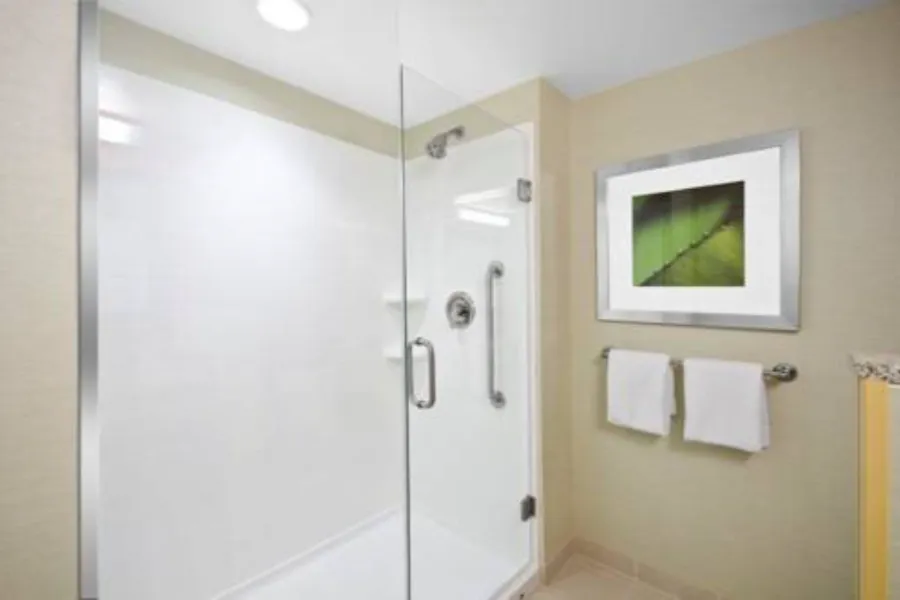
Guests read a bathroom through its glass and its seams. Factory-finished wall panels and consistent glazing keep the “new” look across hundreds of rooms, while molded bases eliminate the grout lines and membrane edges that housekeeping chemicals slowly attack. The hardware behind the glass — rollers and seals — must survive daily cycle counts, which is where a 100,000-cycle rating and salt-spray-tested finishes separate commercial product from residential stock.
KJ Bath has supplied shower systems into Hilton, Marriott, and Hyatt brand projects, so a hotel specifier can ask for the certification package and QC reports that these flag-brand acceptance processes expect rather than assemble them from a first-time supplier. The guest-room design logic pairs well with our guide to the best shower enclosure design for hotels.

Student Housing: Abuse Resistance and Minimal Downtime
Student accommodation is the unforgiving end of the market. Bathrooms see the highest use-per-fixture of any residential type, a rotating population that does not care for them, and vacation windows that are the only realistic time to do planned work. Pods answer three specific pain points:
- Molded one-piece bases remove the leak paths — tray-to-wall joints, drained-floor membranes — that generate the water-damage call-backs most expensive to fix in an occupied building.
- Panelized walls take a hit and, if damaged, swap as a panel rather than being re-tiled around a live bed-space.
- Standardized units let the estates team stock one set of spare rollers, Siegel, and hinges for an entire residence hall instead of learning a different layout per room.
The practical buying decision here is durability-per-dollar and a supplier who can ship a matched kit that goes together without site rework. A high-traffic residence is not the place to test an unproven enclosure.

Senior Living and Care: Accessibility and Safety Designed In
In senior living, assisted living, and healthcare, the shower becomes an accessibility problem first and a finishes problem second. The features that keep a resident safe and independent — level or low-threshold entry, space for a seat or wheelchair, grab-bar support, slip-resistant flooring, and thermostatic control of water temperature — are structural, not cosmetic. A retrofitting contractor adds these after the fact, awkwardly and expensively; a pod engineer designs them into the unit.
Two specification points matter most in this segment:
Reinforcement for Fixings Is Engineered, Not Improvised
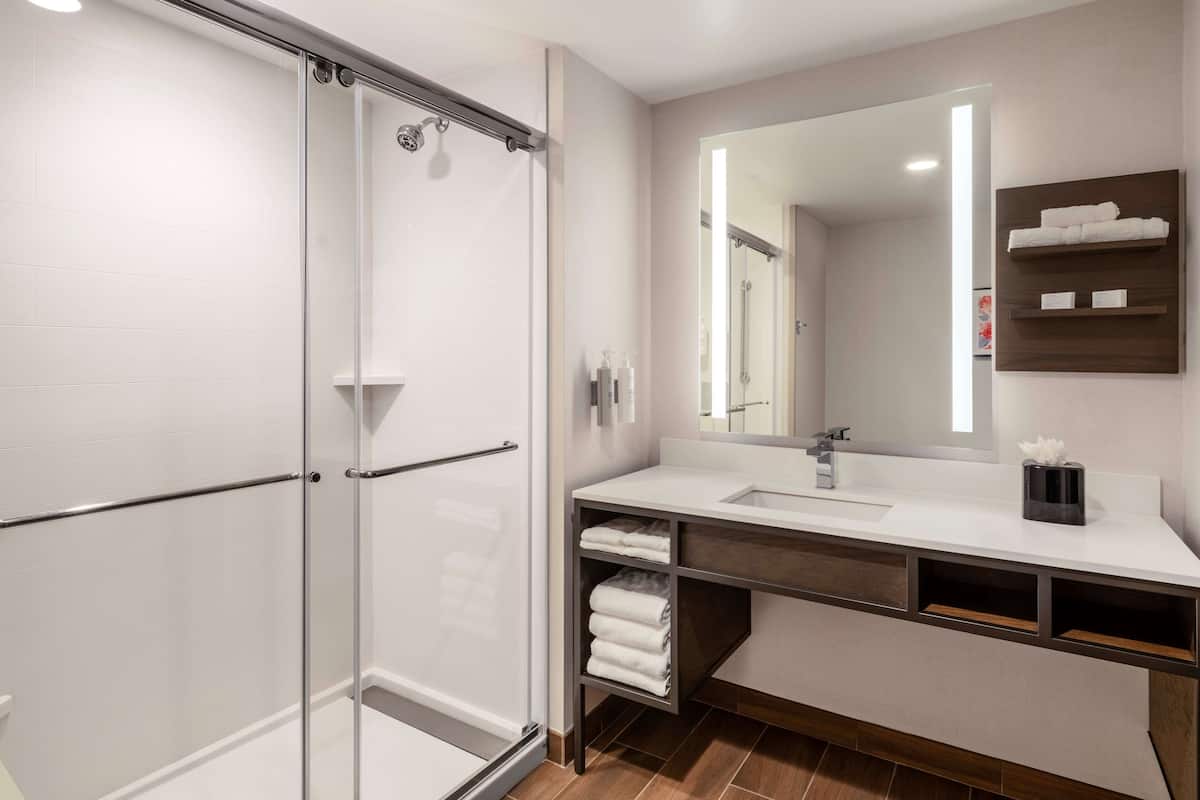
Grab bars and folding seats carry a person’s weight. Their load path goes into solid blocking or a reinforced substrate behind the wall, positioned to the resident’s reach — decided in the pod’s engineering, verified before it leaves the factory, and identical on every unit. On site-built bathrooms, that reinforcement depends on which tradesperson was on shift that week.
Consistent Dimensions Across Every Room
Care staff move residents between rooms and expect the same clearances, same handle heights, same transfer points. Factory tolerance control gives them that uniformity across a whole facility, which is both a safety benefit and a training-and-workflow benefit for the operating team.
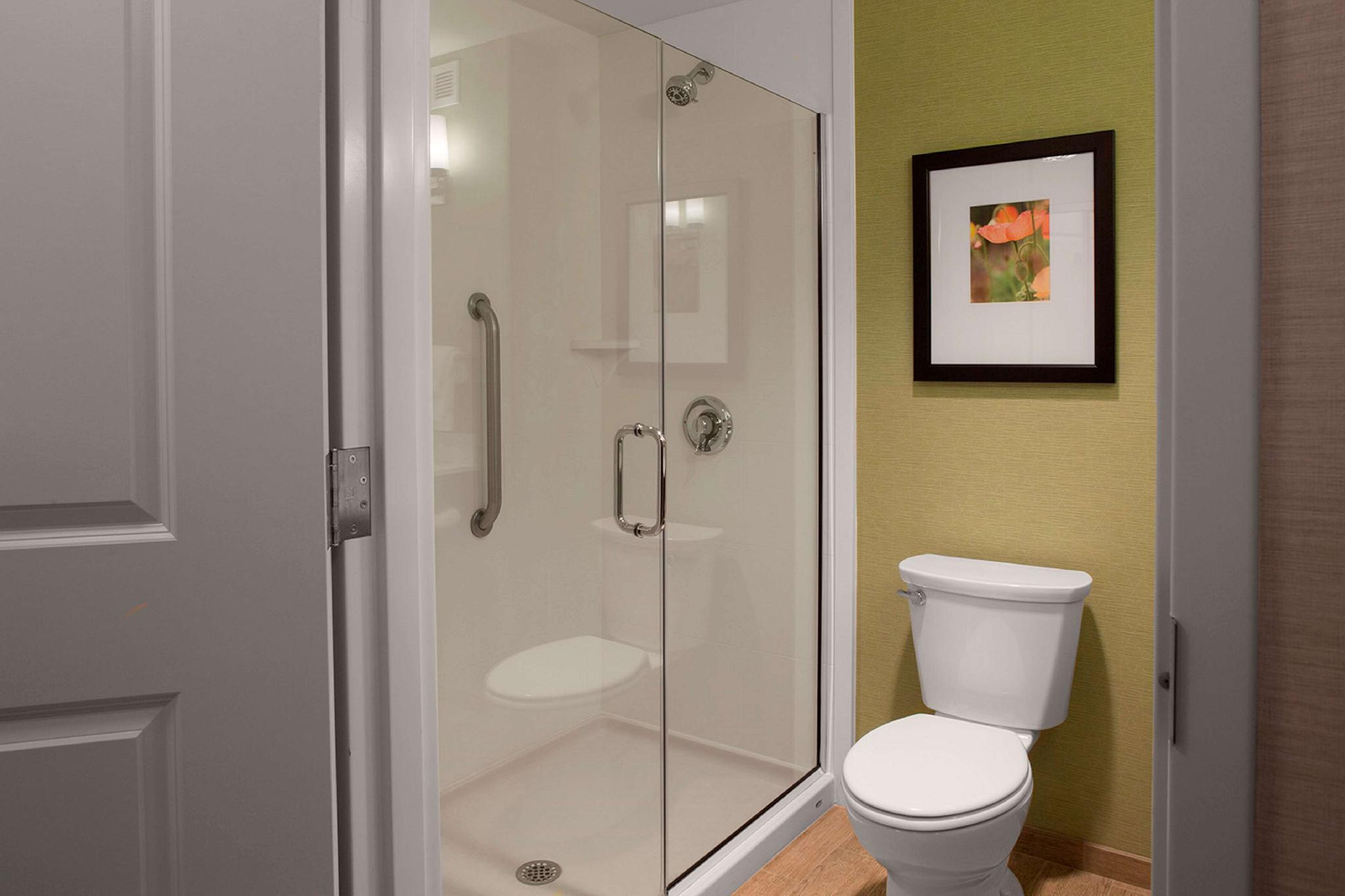
The Three Segments Side by Side
Same product family, different center of gravity. This is how the buying conversation shifts by segment:
| Faktor | Hotels | Student Housing | Senior Living & Care |
|---|---|---|---|
| Primary driver | Guest perception + Zeitplan | Haltbarkeit + low downtime | Sicherheit + Zugänglichkeit |
| Pod feature that matters most | Consistent glass/finish across rooms | One-piece molded base, swappable panels | Level entry, reinforced fixings |
| Failure to avoid | Visible seams, hardware that corrodes | Leaks into occupied rooms below | Grab-bar pull-out, trip thresholds |
| Hardware emphasis | High cycle rating, premium finish | Impact resistance, easy spares | Load-rated support, Rutschfestigkeit |
| Certification focus | SGCC/CE for brand-project acceptance | Temperieren + impact for busy rooms | Safety glazing + load testing |
| Volume pattern | Repeat guest-room blocks | Whole residence hall, phased | Uniform care rooms, high share accessible |
Specifying So the Pod Arrives Ready for Its Environment
Across all three segments the supplier-vetting checklist is the same, but you weight it differently. Bestätigen, schriftlich:
- Market certification for the glazing. SGCC for North American projects, CE for European ones, with copies traveling in the shipment so customs and site acceptance both clear. KJ Bath hält ISO 9001, ISO 14001, ISO 45001, SGCC, und CE.
- Test reports tied to your batch. Überprüfung der Temperierung, Auswirkungen, Salzsprühnebel, push-pull cycle, and packaging drop — generated for the units shipping to you, not a generic sample. Hotels lean on cycle and salt-spray; care settings lean on impact and load testing.
- MOQ and phasing that fit the rollout. A 10-set minimum order quantity lets you pilot one floor or one wing before committing the full tower; first production runs around 30 Arbeitstage, repeat runs shorter.
- Long-term parts and warranty. A 5-year enclosure warranty with 3-year hardware cover, plus a spares plan for rollers and seals, is what keeps an operating team from hunting a vanished supplier three years in.

For hospitality teams, our hospitality solutions page walks through how these programs come together end to end at the Badezimmerlösungen für das Gastgewerbe overview, and housekeeping-side upkeep is covered in our guide to Wartung und Austausch von Dichtungen für Hotelduschwände.
Specifying Pods for a Hotel, Dormitory, or Care Program?
Tell us the segment and the unit count, and KJ Bath will map the right configuration — glazing certification, hardware cycle rating, and accessibility detailing — to how your residents, guests, or students actually use the room. Backed by 25 years of manufacturing and hotel-brand project experience since 1999.
Häufig gestellte Fragen
Why use prefab shower pods in hotels instead of built-on-site bathrooms?
Because a hotel is hundreds of the same wet area repeated. Building each one on site means waterproofing and finishing quality varies by crew, and wet trades hold up every floor. A factory-built pod standardizes the wet area, cuts the fit-out schedule per floor, and gives a consistent look across the guest-room block — which is what shows up in guest reviews and handover inspections.
What matters most when specifying pods for student housing?
Durability and low downtime. Student bathrooms see the hardest use of any residential type, so prioritize a one-piece molded base that removes leak paths, wall panels that swap as a single piece if damaged, and a standardized unit the facilities team can stock spare rollers and seals for across the whole building.
How do pods help senior living and care facilities?
They let accessibility be engineered in rather than retrofitted on. Level or low-threshold entry, load-reinforced fixings for grab bars and folding seats, slip-resistant flooring, and consistent clearances across every room are decided in the pod’s design and verified in the factory, so every care bathroom is safe, uniform, and repeatable for staff.
What certifications should a hospitality pod supplier provide?
SGCC certification for North American glazing and CE for Europe, supported by ISO 9001, ISO 14001, und ISO 45001 for the factory behind them, plus order-specific reports for tempering, Auswirkungen, Salzsprühnebel, Zyklus, and drop testing. Flag-brand hotel projects usually require these certificates to travel with the shipment so customs clearance and site acceptance run without disputes.
Can one pod design serve all three segments, or do they differ?
The underlying system is the same, but the emphasis shifts: hotels lean on finish consistency and high-cycle hardware, student housing on impact resistance and swappable parts, and senior living on level entry and reinforced accessibility fixings. A capable manufacturer configures one base platform to each segment rather than forcing one spec to fit all three.